 Fitness, Nutrition, Health and Sports Blog In the HSNstore Blog you will find tips about Fitness, sport in general, nutrition, and health – HSNstore.com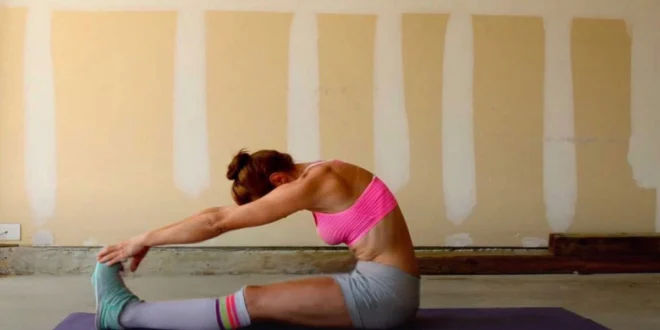

Flexibility is probably the most forgotten and underestimated physical quality, which is why it’s also one of the least known. However, just like any other quality of our body, we can “train” flexibility, avoiding the long-term damage caused by restricted movement
Index
What is Flexibility?
Flexibility can be defined as the range of motion a joint has or the level of extensibility that characterizes the tissue forming a muscle group. This means each joint or muscle group will have a different range of motion.
In this sense, some areas of the body will be stiffer, feeling some muscle restriction, or we’ll be able to move the muscle freely
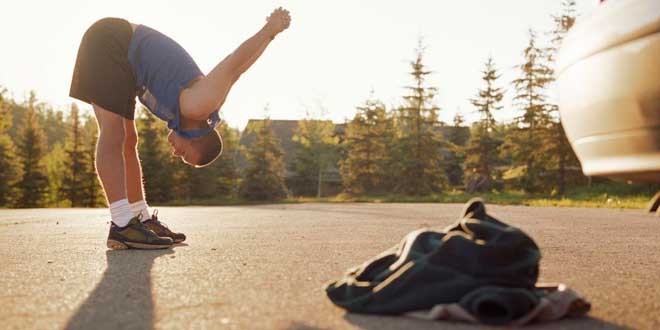
It’s the only regressive quality from birth, meaning it doesn’t increase with the natural development of the individual
Why is Flexibility so Important?
One way or another, flexibility is present in all the activities we do throughout our day. Right after getting out of bed. Taking the baby out of the crib, reaching for something on a shelf, or bending down to tie our shoelaces.
Without flexibility, we’re weak
If we’re not flexible enough, daily activities can become pretty tricky. The worst part is that we’ll develop unhealthy posture habits, affecting and compromising our mobility.
The best solution: stay active and contribute every day to reducing this loss of movement

Being flexible significantly reduces the chance of experiencing occasional and chronic back pain
Benefits of Training Flexibility
It’s super important to include flexibility training as an integral part of our regular routine. Improving flexibility is directly linked to a bunch of benefits, both in terms of performance and health:
Flexibility for Performance
With good flexibility, we avoid inefficient or uncomfortable movements, allowing joints greater freedom of movement, without restrictions, in what should be natural movement. Lack of flexibility is one of the main causes of poor technique.
For example, in a snatch squat, if the person can’t keep the bar properly above their head, they’ll hardly complete the exercise successfully, and it’ll be impossible to progress (increase the load to move).
Flexibility for Health
Another essential benefit of training flexibility is undoubtedly reducing injury risk. Most injuries during training happen due to a lack of muscle range of motion, causing muscle shortening, which then forces the tissue a lot when performing a certain exercise.
Lack of flexibility can also increase the incidence of muscle tears on one or both sides of a joint

If needed, it would be way more productive to cut training days to add flexibility training days. Just look at the high degree of flexibility athletes have
Loss of Flexibility
Maybe one reason why flexibility isn’t an inherent physical trait in a person is related to how it increases and decreases. The only way to increase flexibility is through specific physical activity that stretches muscles.
Factors Influencing Flexibility
Studies have shown flexibility isn’t a general trait people have, but it’s specific to each body area. For example, you might have great flexibility in your upper body but very little in your lower body.
Factors You Can Change
- Frequency and intensity of stretches,
- Choice and correct execution of exercises,
- Increase in strength and flexibility,
- General physical preparation.
Factors You Can’t Change
- Genetics,
- Body structure,
- Serious injury or disability,
- Age and sex.
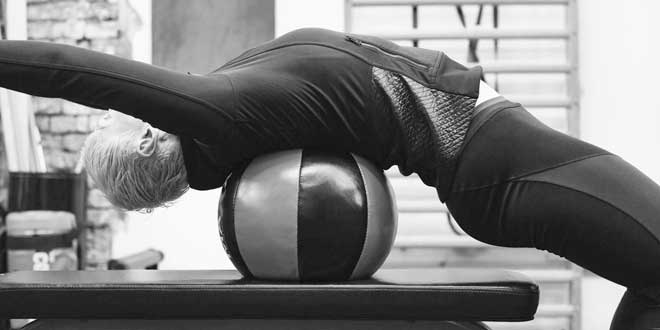
Age: Flexibility declines with aging, although much of this decline is related to reduced physical activity.
Sex: Generally, women are more flexible than men, especially regarding their spine, hips, and thighs. Also, women have higher levels of estrogen and progesterone, which help maintain flexibility.
Location: Flexibility is specific to each area, meaning it must be developed specifically. For example, a professional baseball pitcher may have a very flexible arm, while the other arm has the flexibility of a regular athlete.
Activity level: More active people are naturally more flexible than sedentary ones, and those who have exercised all their lives will be more flexible than those who start sports later.
Temperature: When body temperature rises through activity, like warm-up, the body becomes more elastic.

Strength training: Correct strength training exercises increase, not decrease, flexibility. Choose weight or resistance exercises that work muscles through their full range of motion.
Pregnancy: During pregnancy, the body releases a hormone called relaxin that increases flexibility of joints and ligaments in preparation for childbirth.
Exercise selection: Choosing a dozen exercises that work the muscles you’ll use in training is way more effective than doing thirty less specific exercises.
Technical execution: All stretching exercises must be done correctly to have the desired effect. Cheating won’t bring more benefits when gaining flexibility.
General physical preparation: Good overall physical preparation will contribute to good flexibility.
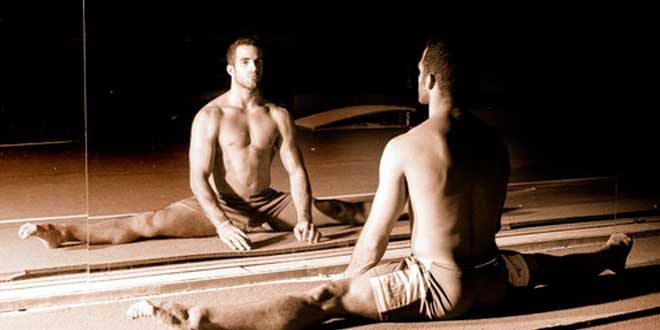
Some Methods for Developing Flexibility
Static Stretching
This involves moving a limb to the point where you feel tightness. When holding the position, inert structures gradually stretch, while muscle reflexes detect tension and allow the muscle to relax.
Active Stretching
Involves a active contraction of a muscle that requires the antagonist to stretch fully (stretching needed in most sports, ballet, and martial arts).

Ballistic Stretching
Involves performing wide and fast movements or small bounces. Repeat them at the end of the movement range.
PNF (Proprioceptive Neuromuscular Facilitation)
This means the performer must contract first the muscle to be stretched and hold the contraction for 10” to 20”. During this time, the Golgi tendon organs register the increased tension and produce inhibition that allows greater range of motion in the subsequent stretch.
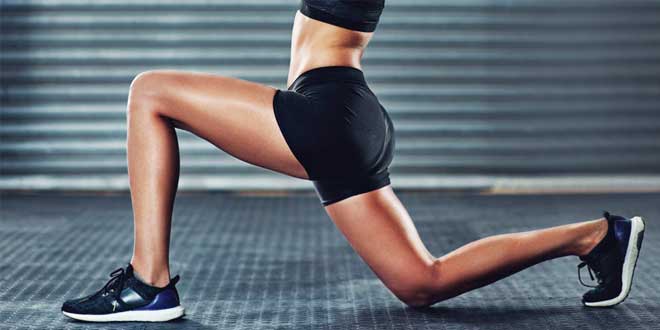
Stretches to Improve Flexibility
Why Stretch
Mainly it’s a method for injury prevention. Also, it produces an increase in elastic strength and stretch-shortening cycles, which helps us gain explosiveness, jump higher, and be faster and more reactive.

Stretching isn’t something you do for six months and then forget about. You need to practice it every training session and all the time
Guidelines
- Relax: tension should come from muscle lengthening during the stretch, not from contracting the muscles ourselves.
- Breathe: try to keep a slow and steady breath, allowing proper oxygen supply to muscles while helping with the first guideline.
- Progression: start the stretch at a point with minimal tension, gradually increasing it by expanding joint movement.
- Limit: aim to maximize tension without reaching pain. You’ll need to learn to differentiate discomfort from pain.

How and When to Stretch
- The muscle acts like jelly, if it’s cold and we force it, it breaks, but if it’s warm we can shape it without that risk, so before stretching it’s good to do some warm-up (a few jump sets, steady running…) or apply external heat (electric blankets, heat packs…).
- Specific work to improve flexibility shouldn’t be done before or after intense exercise, so our gain sessions will take place on days with little or no work. However, we can use flexibility blocks as part of warm-up in speed sessions (with medium range of motion and small bounces that activate muscles at their insertion points, without exceeding 8 seconds), and as cooldown after any session (gentle, continuous stretches without bouncing).
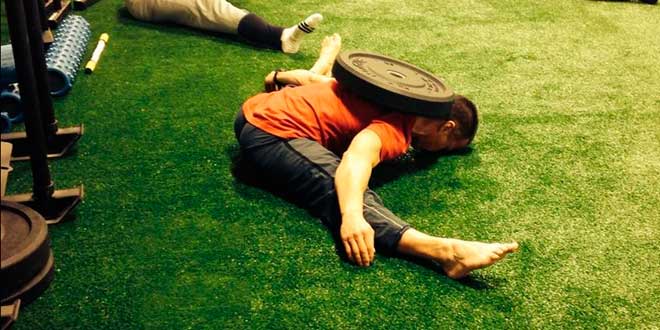
Strength and Flexibility
Does Flexibility Make You Stronger?
Yes, thanks to the stretch-shortening cycle, the body can store and use tension generated by a quick muscle stretch for a short time. A simple way to describe this cycle is a rubber band. When you stretch the band, it tightens and is ready to snap back with force when released.
The more flexible and elastic and the more you stretch, the greater the force generated when releasing

Imagine the movement of a baseball pitch. The pitcher stretches his arm to an almost superhuman position; at the point of maximum stretch, he contracts muscles to throw the ball.
Flexible Muscles
In your muscles, the process is a bit more complex but based on the same principle. When a muscle quickly lengthens, it stores a reserve of potential kinetic energy, which can be released much more efficiently and with less effort than a simple concentric contraction.
If this lengthening happened slowly, the energy stored in the stretch would be zero, and consequently the ball’s final speed would be much lower, because the force generated only by concentric contraction would be less. Achieving a full stretch and activating the stretch reflex of antagonist muscles to start the ball’s propulsion, flexibility greatly increases power and speed of the movement
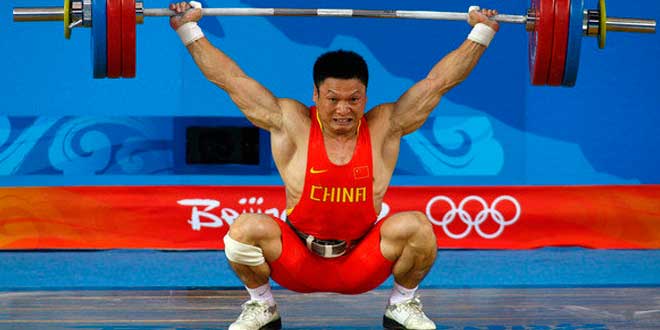
Improving your flexibility will help improve your strength and power lifts. It’s a fact that weightlifters do long sessions of stretching and flexibility work.
Sources
- KLEE, Andreas. WIEMAN, Klaus. (2010). Mobility and flexibility: practical stretching method. Ed. Paidotribo.
- NORRIS, Christopher M. (2004). The complete guide to stretching. Ed. Paidotribo.
Related Posts
- Benefits of Mobilizing
- Relationship between Warm-up and Performance