Fitness, Nutrition, Health and Sports Blog In the HSNstore Blog you will find tips about Fitness, sport in general, nutrition, and health – HSNstore.com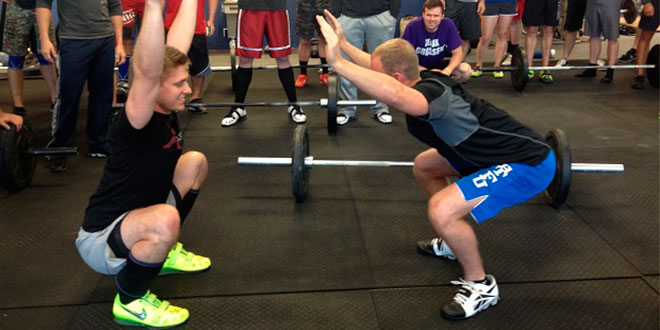

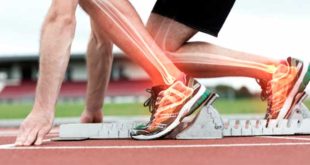
A ton of flexion-extension moves done in the sagittal plane need good ankle joint mobility: squats, running, jumping, changing direction, and more.
Joint Mobility and Movement Limitation
Going further, the different joints in the human body work like a machine, so a limitation in this joint will affect the overall balanced movement of the other joints responsible for flexion-extension: knees, hips, and spine.
So, any athlete wanting to be functionally optimal for performance should make sure this joint has a good ROM

Also, those who don’t do sports professionally but just for fun should know this is a movement pattern worth paying close attention to for preventing lower limb injuries
Ankle Mobility
Impact absorption during running or jumping, for example, is the job of the ankle plantar flexor muscles working eccentrically (mainly the calves and soleus).
In classic jump sports like volleyball, basketball, high jump, or long jump, it’s been shown that there’s up to a 13× higher risk of developing patellar tendinopathy in those with less than 36.5º dorsiflexion (a more obtuse angle between the shin and the foot’s instep).

Of course, the link between muscle chains means that limited ankle mobility can mess with knee mobility in the sagittal plane and also increase knee valgus; plus cause poor stabilization at the lumbo-pelvic level, as we’ll see shortly.
Dorsiflexion and Squat Depth
As we’ve covered in other articles, squat depth with proper posture technique is a great indicator of strength, flexibility, and mobility of the joints and muscle groups involved; even more so for the overhead squat (Overhead Squat).
Of course, at every training level, the squat should fit each person’s abilities, but the goal should always be to improve.
“I lack ankle flexibility, so I settle for partial ranges” can’t be an excuse. There’s ALWAYS room to improve
The active mobility of the ankle joint in an open kinetic chain (meaning without the toe or whole foot on the ground), bringing the foot’s instep closer to the shin, is 20-30º; but when the foot is fully on the ground, this range can increase by up to 10º (in absolute terms, this means a smaller angle between the shin and foot).
So, kinesiology-wise, is it really that bad for the knees to go past the toes when our own body (with individual differences) is built for it?

Avoid Joint Compensations
Whenever you try to assess ankle dorsiflexion or do any exercise involving this movement (Bulgarian split squats and pistol squats are clear examples), make sure there are no compensatory movements from limitations in nearby joints, like foot pronation or eversion or external knee rotation.

Exercises to Improve Ankle Dorsiflexion
Because of its (un)known importance in injury prevention, performance, and functionality even in older adults, let’s pay attention to improving it.
Our whole musculoskeletal system (like a machine?) will thank us
Here are some exercises aimed at increasing dorsiflexion ROM:
Sources
- Backman, L. J., & Danielson, P. (2011). Low range of ankle dorsiflexion predisposes for Patellar Tendinopathy in Junior Elite Basketball Players a 1-Year prospective study. The American journal of sports medicine, 39(12), 2626-2633.
- Cook, G. (2010). Movement. Functional Movement Systems. On Target Publications. Santa Cruz (CA)
- Fong, C. M., Blackburn, J. T., Norcross, M. F., McGrath, M., & Padua, D. A. (2011). Ankle-dorsiflexion range of motion and landing biomechanics. Journal of Athletic Training, 46(1), 5.
- Fry, A. C., Smith, J. C., & Schilling, B. K. (2003). Effect of knee position on hip and knee torques during the barbell squat. The Journal of Strength & Conditioning Research, 17(4), 629-633.
- Kapandji, I. A. (2012). Fisiologıa articular. Tomo II: Miembro inferior, 6a edición. Madrid. Ed. Médica Panamericana
- Menz, H. B., Morris, M. E., & Lord, S. R. (2006). Foot and ankle risk factors for falls in older people: a prospective study. The Journals of Gerontology Series A: Biological Sciences and Medical Sciences, 61(8), 866-870.
- Macrum, E., Robert Bell, D., Boling, M., Lewek, M., & Padua, D. (2012). Effect of limiting ankle-dorsiflexion range of motion on lower extremity kinematics and muscle-activation patterns during a squat. Journal of sport rehabilitation, 21(2), 144.
- Reinold, M. (2013). Ankle Mobility Exercises to Improve Dorsiflexion.
Related Posts
- Ankle Injury
- Ankle Strengthening Exercises