 Fitness, Nutrition, Health and Sports Blog In the HSNstore Blog you will find tips about Fitness, sport in general, nutrition, and health – HSNstore.com

The general factor system for counting calories is called Atwater, named after its creator. Atwater carried out a series of studies in the late 19th century – early 20th century, which he used to establish the basis of the counting system based on the combustion values of proteins, fats, and carbohydrates, corrected for losses in digestion, absorption, and urinary excretion of urea.
A general system is used to simplify things. In it, regardless of the food containing the macronutrients, the energy values are:
- CARBOHYDRATES (including fibers): 4,0 kcal/g
- PROTEINS: 4,0 kcal/g
- FATS: 9,0 kcal/g
- Alcohol: 7,0 kcal/g (not considered a macronutrient).
Expanding the generality
There’s an even broader system where separate factors are set for carbohydrates and fiber (2 kcal/g; assuming 70% fermentable), as well as for different saccharides (monosaccharides as reference with 3,75 kcal/g; but also including disaccharides and polysaccharides).
Merrill and Watt (1955) developed this system by integrating 50 years of research results to establish different factors for proteins, fats and carbohydrates, depending on the foods they come from. They emphasized that there are ranges in combustion values and digestibility coefficients of different proteins, fats, and carbohydrates, and these should be reflected in the energy values applied.
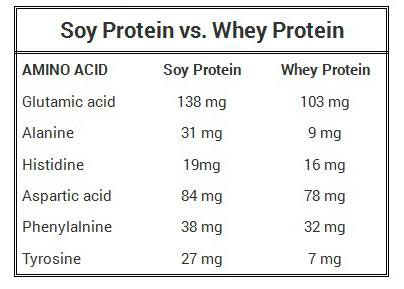
For example, proteins differ in their amino acid composition and as such, also differ in their combustion values. In this way, the combustion value of rice protein is about 20% higher than that of potato protein, and different energy factors should be used for each.
Likewise, the digestibility of a cereal can be affected by how it’s milled. Therefore, the energy from the same amount (weight) of whole wheat flour and coarsely milled or processed wheat flour (roughly, each grain would be 70% of a whole grain) will be different.
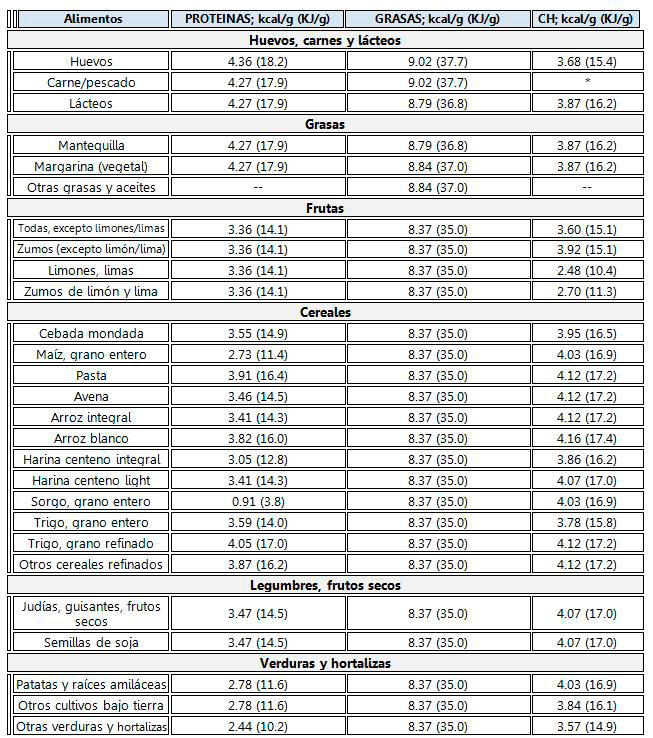
Based on these considerations, we present a table applying this to various foods, highlighting energy conversion factors such as:
- Foods mainly composed of simple carbohydrates (like juices) have a combustion value 35% lower (2,70 kcal/g) than those made up of complex carbohydrates (4,16 kcal/g) like rice.
- For some plant proteins, the calories provided (2,44 kcal/g) are lower than for animal proteins (4,36 kcal/g; for example, eggs).
- Foods richer in saturated fats provide slightly more calories from this macronutrient (9,02 kcal/g) than those rich in unsaturated fats (8,37 kcal/g). Saturated fats, as the name suggests, contain more bonds in the organic chain, so more energy is required to break and “use” them compared to oils (unsaturated fats).
Understanding its importance
This is an interesting aspect we can dive into to understand why some foods have specific timing and to go a step further in understanding the physiological combustion processes happening in our body through activation of different digestion and absorption pathways.
However, there’s no need to obsess over calories since applying general factors to a balanced diet like IIFYM can result in values only about 5 percent higher than those obtained with specific factors (a 3500 kcal diet with general factors would be 3325 kcal with specific ones).
Building a habit and sticking to it should be the priority; then, expand from rational balance
Sources
- Greenfield, H., & Southgate, D. A. (2003). Food composition data: production, management, and use. Food & Agriculture Org.
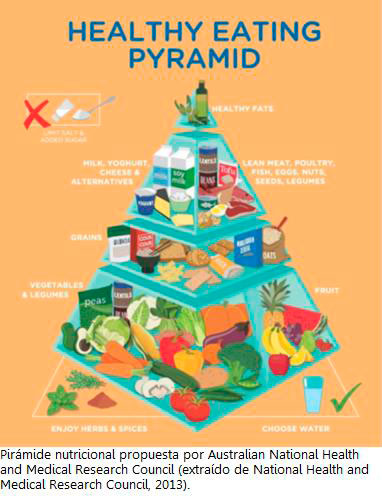
- National Health and Medical Research Council (2013) Australian Dietary Guidelines. Canberra: National Health and Medical Research Council.