 Fitness, Nutrition, Health and Sports Blog In the HSNstore Blog you will find tips about Fitness, sport in general, nutrition, and health – HSNstore.com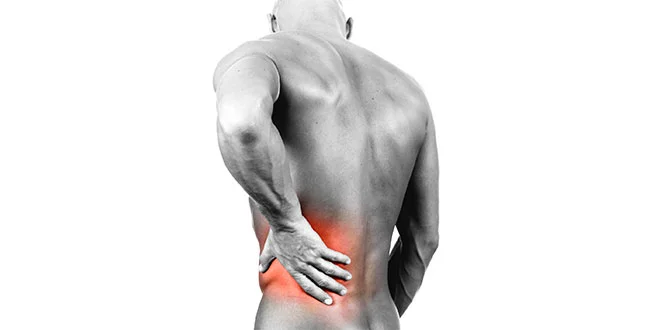

Lower back pain is definitely one of the most common issues, both for sedentary folks and regular gym-goers. Whether it’s due to bad posture, muscle imbalances, or overloads in the paravertebral and lumbar muscles, our intervertebral discs end up taking so much pressure and impact throughout the day that their size shrinks considerably because of the water they lose. It’s pretty common to measure 1 or 2 cm less at night than in the morning. Yep, our discs act like sponges: when compressed, water gets squeezed out, then refills at night when pressure drops thanks to lying down.
All these pressures and traumas make lower back pain a daily companion that doesn’t seem to go away anytime soon. But hey, there’s light at the end of the tunnel!
A 2009 study tried to prove the link between recovering intervertebral disc size and reducing lower back pain. They used a non-invasive spinal decompression treatment for 6 weeks with DRX9000 machines. Pain was measured on a verbal scale from 0 to 10. During treatment, lower back pain dropped from 6.2 (SD 2.2) to 1.6 (2.3), and disc size increased from 7.5 (1.7) mm to 8.8 (1.7) mm, confirming the connection between the two and suggesting that a 1 mm recovery in disc size could reduce pain by almost 30%.
Unfortunately, these machines cost around 15,000–20,000 € and sessions of 20 treatments run about 3,000 €, so they’re not the cheapest option. Still, knowing the study’s results, we can turn to simple exercises or tools that, while not as precise or effective as those machines, will at least help speed up recovery.
Ways to decompress
While the easiest and most common method is hanging by your hands on fixed or parallel bars, letting your legs hang free so gravity does its thing, there are some fairly accessible devices that can make it easier:
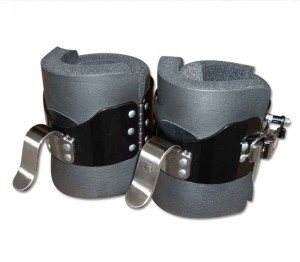
- Gravity boots
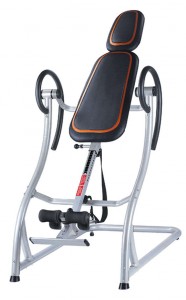
- Inversion tables
Inversion, with your head down and feet up, decompresses the spine, easing lower back pain and improving lymphatic circulation through natural drainage.
Precautions
The first few times you might feel uncomfortable, plus the insecurity of hanging upside down from a bar combined with blood pooling in your head. In these cases, try to gradually increase the time you hang, and usually, your body will adapt pretty quickly.
People with high blood pressure or heart conditions should be extra careful, since inversion can raise heart rate, blood pressure, and intraocular pressure.
Sources
- Apfel, C. Cakmakkaya, O. Martin, W. Richmond, C. Macario, A. George, E. Schaefer, M. Pergolizzi, J. (2009) Restoration of disk height through non-invasive spinal decompression is associated with decreased discogenic low back pain: a retrospective cohort study. 19/02/2014 at http://www.biomedcentral.com/imedia/1144960883315034_manuscript.pdf
- Delavier, F. Gundill, M. (2012) Strength training. The Delavier method. Ed. Hispano europea.