 Fitness, Nutrition, Health and Sports Blog In the HSNstore Blog you will find tips about Fitness, sport in general, nutrition, and health – HSNstore.com

Do you know African mango? Irvingia gabonensis is a fruit from the tropical rainforests of West Africa, known for its delicious taste and high nutritional value.
- The extract from its seed, used in weight loss diets, reduces appetite and is effective for treating fever, diabetes, and diarrhea.
- It’s rich in fiber, antioxidants, minerals, and vitamins.

African mango offers multiple health benefits, becoming a popular remedy for weight loss worldwide. Here are its main benefits.
- Helps control your weight
- Reduces appetite
- Boosts metabolism
- Prevents constipation
- Regulates blood sugar levels
- Lowers cholesterol and triglycerides
- Provides antioxidants
- Supports brain health and muscle development
Helps control your weight
African mango seed extract acts as an appetite suppressant, helping maintain proper levels of the hormones leptin and adiponectin, which regulate the feeling of hunger and fullness.
It also boosts metabolism and uses fat as an energy source, blocking the conversion of sugars into fat tissue.
Reduces appetite
Thanks to its natural properties, African mango can curb hunger, a trait used by West African tribes for centuries to prepare for long hunts.
Boosts metabolism
African mango shows real potential to speed up metabolism, making weight loss easier and promoting fat use as energy, supporting slimming down.
Prevents constipation
African mango seeds contain a high amount of water-soluble dietary fiber, which adds bulk to stools and can relieve constipation, helping eliminate toxins accumulated in the gut.
Regulates blood sugar levels
African mango slows down stomach emptying, resulting in a more gradual absorption of sugar from food and preventing blood sugar spikes typically seen after meals.
Lowers cholesterol and triglycerides
African mango benefits cardiovascular health by helping to reduce cholesterol and triglycerides in the body.
Provides antioxidants
African mango seeds are rich in beta-carotene, an effective antioxidant in preventing certain cancers, high blood pressure, infertility, heartburn, and some emotional and mental disorders.
Supports brain health and muscle development
African mango is important for brain health and muscle development thanks to its richness in vitamin B, calcium, iron, and healthy fatty acids like myristic, lauric, palmitic, stearic, and oleic acids.
How to take Irvingia gabonensis
To get the most out of its appetite-suppressing effect, it’s recommended to take African mango extract 30 minutes before main meals (breakfast, lunch, or dinner).
To boost its metabolism-stimulating properties and help control blood sugar and cholesterol levels, you can combine it with a green tea supplement.
Is your goal to lose weight?
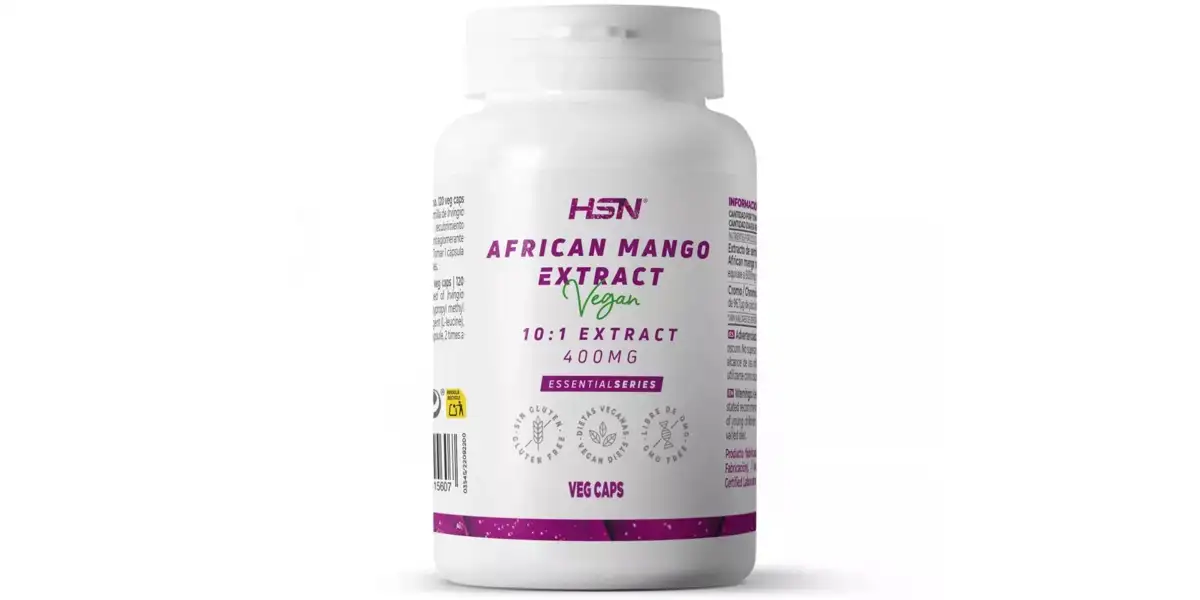
African Mango Extract (10:1) 400mg by EssentialSeries
At HSN we remind you to follow a balanced diet plan whenever you use supplements that promote or help you reach your goal. The diet should provide all essential nutrients for your body to function well, along with a regular physical exercise plan.
Contraindications of African Mango
According to experts and studies on this fruit, it may cause some side effects or contraindications, including:
- Gastric problems
- Headaches
- Gas
- Drowsiness
Bibliographic Sources
- Méndez-Del Villar M, González-Ortiz M, Martínez-Abundis E, Pérez-Rubio KG, Cortez-Navarrete M. Effect of Irvingia gabonensis on Metabolic Syndrome, Insulin Sensitivity, and Insulin Secretion. J Med Food. 2018 Jun;21(6):568-574. doi: 10.1089/jmf.2017.0092. Epub 2018 Jan 16.
- Ojo OA, Ojo AB, Ajiboye BO, Oyinloye BE, Akinyemi AJ, Okesola MA, Boligon AA, de Campos MMA. Chromatographic fingerprint analysis, antioxidant properties, and inhibition of cholinergic enzymes (acetylcholinesterase and butyrylcholinesterase) of phenolic extracts from Irvingia gabonensis (Aubry-Lecomte ex O’Rorke) Baill bark. J Basic Clin Physiol Pharmacol. 2018 Mar 28;29(2):217-224. doi: 10.1515/jbcpp-2017-0063.
- Onakpoya I, Davies L, Posadzki P, Ernst E. The efficacy of Irvingia gabonensis supplementation in the management of overweight and obesity: a systematic review of randomized controlled trials. J Diet Suppl. 2013 Mar;10(1):29-38. doi: 10.3109/19390211.2012.760508.
Related Links:
- Best supplements to control hunger
- Flax Seeds as allies for weight loss
- Do Raspberry Ketones work for slimming?