


 Fitness, Nutrition, Health and Sports Blog In the HSNstore Blog you will find tips about Fitness, sport in general, nutrition, and health – HSNstore.com
Heard of the term “Train Low, Compete High”? It’s basically training on reserve to make the most out of your fuel during competition.
What is “train low, compete high”
“Train low, compete high” is the anglicism used to describe a nutritional manipulation protocol where an endurance athlete (it doesn’t really make sense in other sports) trains with low glucose availability and glycogen stores in the body to boost performance on competition day when training under normal conditions.
The train low, compete high protocol is a hot topic right now, meaning it’s a widely discussed subject because it opens the door to improving bioenergetic efficiency (commonly known as metabolic flexibility, i.e., the ability to switch between energy sources depending on needs) and enhance performance.

What’s train low, compete high good for
Since the 1950s when Astrand started experimenting with the idea of manipulating muscle glycogen to boost sports performance, many approaches have emerged using this principle.
We know that during high-intensity exercise, glucose is the body’s main energy substrate, since it requires less oxygen to oxidize compared to fats, which need more oxygen to be used (Boron and Boulpaep, 2017).
Astrand and other researchers made a simple connection:
“If glucose limits intensity, and glucose is stored as glycogen in the body, which decreases during exercise; if I increase glycogen stores, I’ll have more glucose to use and last longer.”
A brilliant association back then when the biomolecular mechanisms regulating catabolism weren’t so clear.
The protocols used were straightforward:
- Cut carbohydrate intake a few days before competition, combined with very intense training sessions to “empty” glycogen stores.
- Followed by a few days (usually 2-3) of a high-carb diet to supercompensate glycogen beyond initial levels as a “just in case” reserve.
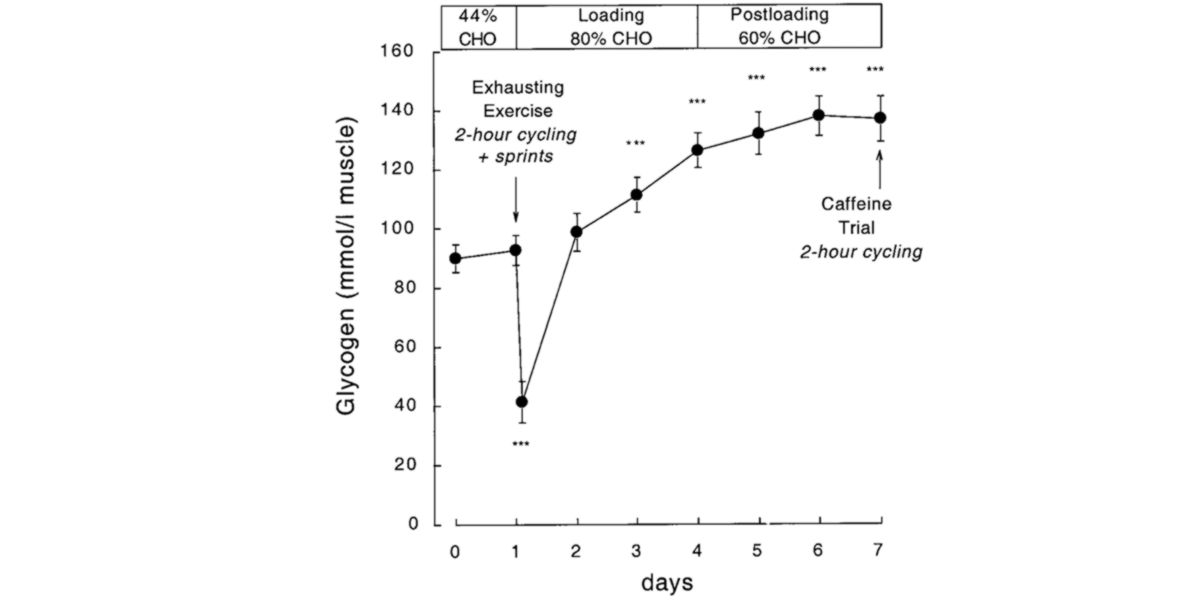
Figure I. Example of classic glycogen depletion/supercompensation protocol (Laurent et al., 2000).
Does it work or not?
The train low, compete high protocol is a very overused concept, and many people get confused.
So let me make it clear now:
For that, we have simpler protocols; train low, compete high goes beyond. Let’s see how:
How train low, compete high works
At the biomolecular level
Most studies linking train low, compete high to improvements in metabolic flexibility are based on biomolecular models proposed after animal studies applying the protocol.
They’re summarized in the following image:

Figure II. Graphic summary of biomolecular mechanisms mediating train low adaptations (Impey et al., 2018).
The mechanisms studied through which this protocol can improve endurance and nutrient utilization are amazing:
Lower glucose availability increases catecholamine signaling (adrenaline), breaking down intramuscular triglycerides and using their free fatty acids for energy; combined with fatty acids released from fat cells, which inhibit mTORc1 and activate AMPK.
These mechanisms activate a series of proteins and transcription factors (PPARδ, PGC-1α, NRF-1/-2, and proteins like p53 and p28) that turn on genes inside muscle cell nuclei promoting mitochondrial biogenesis;
This, along with low glycogen availability activating AMPK due to increased AMP:ATP ratio, generates molecules that signal not only increased mitochondrial density but also mitochondrial activity, resulting in:
More workers and better machinery to burn coal.
This protocol really promises to be a game changer in nutritional planning and nutrient-gene interaction in vitro models; but there’s a catch…
At the functional level
Yes, there’s a marked effect on molecular signaling (73% of studies show positive results), gene expression (75% positive), and catabolic enzyme activity and density (78% positive) in human models.
However, when looking at actual performance changes, only 37% of studies show train low, compete high outperforming standard nutritional periodization.
Also, many studies feed the control group low-carb diets (2-5g/kg), so they’re not being tested on equal footing.
If the comparison group got 8-12g/kg, the percentage of positive studies would be much lower.
Glycogen threshold paradigm
The current model explaining how “in vivo” train low, compete high works is the glycogen threshold paradigm.
This protocol states that glycogen concentrations between 100mmol and 300mmol/kg dry weight allow maintaining acceptable performance while still benefiting from the molecular effects of “train low.”
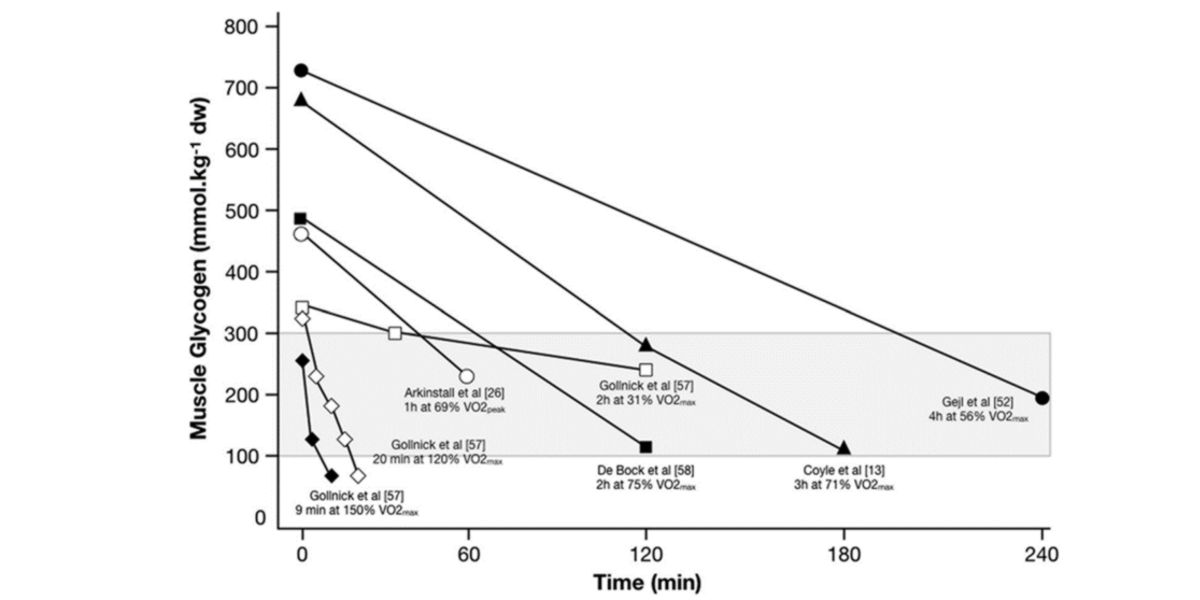
Figure III. Variations in endogenous glycogen concentrations in studies with different exercise protocols. The gray band represents the glycogen threshold (Impey et al., 2018).
Exercise itself can get you there even if you start with high glycogen availability before training.
Do I recommend it?
I’m not saying the train low, compete high protocol is bad… I’m saying we need to put what we know into perspective with what’s presented:
We know glycogen limits the ability to sustain physical effort over time, and it’s also important because it’s, among many other processes:
- A regulator of perceived effort;
- A regulator of the balance between protein synthesis and breakdown;
- Acts as a metabolic barometer controlling resting energy expenditure and regulating muscle contraction…

Do you really want to mess with all that?
We know glycogen concentrations below 75mmol/kg dry tissue impair calcium handling by the sarcoplasmic reticulum, causing maximal muscle contraction to drop.
And how are you going to monitor it?
Are you going to be doing muscle biopsies on your vastus lateralis before and after training sessions?
Going to apply the protocol blindly?
Sure! Like many other logical systems, if done under the supervision and monitoring of a multidisciplinary health team, otherwise, no.
How to carry out the protocol?
If you decide to try this nutritional periodization system, don’t generalize it to all your training sessions, that’s a mistake…
Limit the “low” system to low-intensity sessions, where our RER (RQ) is lower and we don’t need as much oxygen, so we use more fat during training.
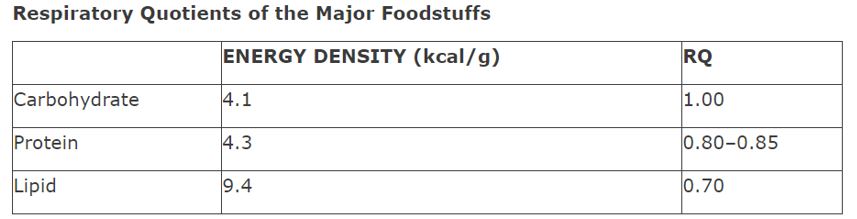
Figure IV. Energy density and respiratory quotient associated with predominant oxidation of different nutrients (Boron and Boulpaep, 2017).
You can apply the protocol through different systems, each should be programmed differently since they have particular characteristics useful at different times in the season.
Main protocols and effects on the body
| Diet-Exercise Strategy | Main Results | Proposed Application |
| Chronic exposure to a low-carb diet | Reduced carbohydrate availability at the muscle level during all training sessions depending on the degree of restriction applied. | Maybe in extremely light training blocks. Not a recommended protocol. |
| General low carbohydrate availability: Effects on the body including immune and central nervous systems. | ||
| Double training sessions (low endogenous carbohydrate availability in the second session by limiting duration and carb intake during recovery after the first session) | Reduced endogenous and exogenous carbohydrate availability for muscle during the second training session. | In training blocks where high effort rates aren’t systematically reached, assuming the second session is always at or below VT1. |
| Acute reduction in carbohydrate availability for immune and central nervous systems depending on restriction duration and second session demands. | ||
| Training after overnight fast | Reduced exogenous carbohydrate availability for muscle in a specific session. | Recovery or maintenance training days. |
| Potential reduction in endogenous carbohydrate availability if glycogen restoration was inadequate the day before. | ||
| Prolonged training with or without overnight fast and/or carb restriction during session | Reduced exogenous carbohydrate sources for muscle during the specific session. | Never, except for specific ultra-distance simulations (marathon, ironman…). |
| Acute reduction in carbohydrate availability for immune and central nervous systems depending on restriction duration and session energy demands. | ||
| Carbohydrate restriction during early recovery hours | May provide enough energy availability during session but restrict it for post-exercise signaling activities. | On days without double sessions and thus no need to replenish glycogen short-term. |
Figure V. Train low application strategies and main bodily manifestations; adapted from Burke, 2010. Source applications own.
Nutritional periodization
One possible nutritional periodization following this protocol was proposed by Impey et al., (2018):

Figure VI. Proposed schedule for applying a train low system in a 4-day training microcycle for a runner training 4 days a week with a conjugated protocol (Impey et al., 2018).
Adapt the protocol individually
This scheme should be adapted to each athlete’s training protocol but helps visualize how to sequence glycogen availability in a 4-session microcycle with varying training loads per session.
- Sporting history;
- Biological characteristics;
- Many individualizing factors of the athlete.
Unknowns and limitations
Currently, there are 4 big unknowns about the train low, compete high protocol that need resolving before we can better understand its real usefulness and applicability for athletes:
Glycogen threshold
- Does a glycogen threshold (range) really exist where adaptations mediated by the protocol happen?
- How is this threshold affected by training? (since we know athletes store different glycogen amounts than sedentary people, so the range should shift).
Use in low or high intensity sessions
- Should “train low” always be relegated to low-intensity sessions, or could it be deliberately applied to high-intensity sessions (even at the expense of reduced absolute workload) to truly optimize metabolic signaling?
Carbohydrate amount
- What’s the minimum carb intake and glycogen concentrations needed to allow “train low” periods without compromising absolute training intensity during specific sessions?
Calories or carbs
- Is the increased training response linked to “train low” carbs or energy (calories)? And either way, how should we periodize and structure training interventions to avoid maladaptations?
As we can see, many questions remain unanswered, so “train low, compete high” is still a “protocol in its infancy.”
Athletes’ stomach and gut also get trained
And let’s not forget that drastically and deliberately cutting carbs can also reduce the ability to digest and absorb them properly; even a well-trained athlete can only replenish 5-6mmol/kg dry matter/hour at best…
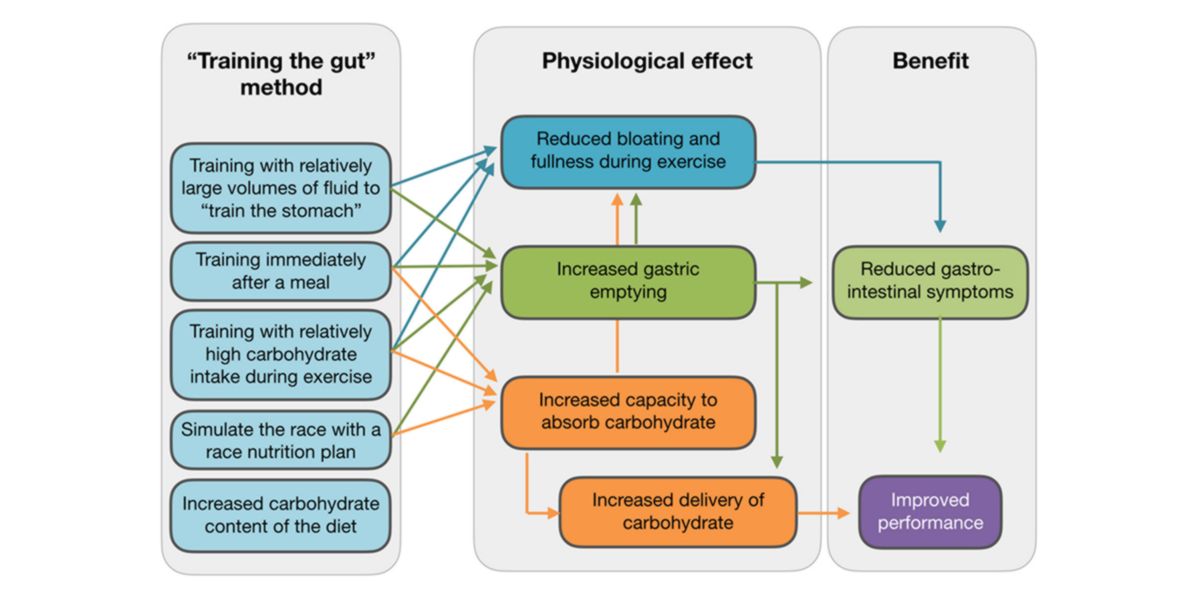
Figure VII. Proposed model of gut training methods, physiological effects, and behavioral benefits (Jeukendrup, 2017).
Conclusions
The train low, compete high protocol is a nutritional periodization system that’s very trendy right now.
At the biomolecular level, it has great potential, but functionally its effects are overshadowed by good training and nutritional planning.
Many who use the train low, compete high system apply strategies that harm more than help due to misunderstanding the protocol’s real background.

We need specific measurement tools to properly apply the protocol.
There are still unknowns about the physiological mechanisms underlying the protocol’s responses.
References
- Boron, W., Boulpaep, E. (Eds.) (2017). Medical physiology: a cellular and molecular approach Philadelphia, PA: Saunders/Elsevier.
- Burke, L. M. (2007). New issues in training and nutrition: Train low, compete high? Current Sports Medicine Reports, 6(3), 137–138.
- Burke, L. M. (2010). Fueling strategies to optimize performance: Training high or training low? Scandinavian Journal of Medicine and Science in Sports, 20(SUPPL. 2), 48–58.
- Hawley, J. A., & Burke, L. M. (2010). Carbohydrate availability and training adaptation: Effects on cell metabolism. Exercise and Sport Sciences Reviews, 38(4), 152–160.
- Impey, S. G., Hearris, M. A., Hammond, K. M., Bartlett, J. D., Louis, J., Close, G. L., & Morton, J. P. (2018). Fuel for the Work Required: A Theoretical Framework for Carbohydrate Periodization and the Glycogen Threshold Hypothesis. Sports Medicine, 48(5), 1031–1048.
- Jeukendrup, A. E. (2017). Periodized Nutrition for Athletes. Sports Medicine, 47(Suppl 1), 51–63.
- Jeukendrup, A. E. (2017). Training the Gut for Athletes. Sports Medicine, 47(Suppl 1), 101–110.
- Laurent, D., Schneider, K. E., Prusaczyk, W. K., Franklin, C., Vogel, S. M., Krssak, M., … Shulman, G. I. (2000). Effects of Caffeine on Muscle Glycogen Utilization and the Neuroendocrine Axis during Exercise 1 . The Journal of Clinical Endocrinology & Metabolism, 85(6), 2170–2175.
- Mata, F., Valenzuela, P. L., Gimenez, J., Tur, C., Ferreria, D., Domínguez, R., … Sanz, J. M. M. (2019). Carbohydrate availability and physical performance: physiological overview and practical recommendations. Nutrients, 11(5).
- Morton, J. P., Croft, L., Bartlett, J. D., MacLaren, D. P. M., Reilly, T., Evans, L., … Drust, B. (2009). Reduced carbohydrate availability does not modulate training-induced heat shock protein adaptations but does upregulate oxidative enzyme activity in human skeletal muscle. Journal of Applied Physiology, 106(5), 1513–1521.
- Murray, B., & Rosenbloom, C. (2018). Fundamentals of glycogen metabolism for coaches and athletes. Nutrition Reviews, 76(4), 243–259.
Related Posts
- We tell you everything about Hydration in Sports here
- What’s the Importance of BCAAs in Endurance Sports? Click the following post to find out
- The importance of supercompensation in your training program






Thank You for Sharing this informative article! It is very useful to everyone Stay healthy and keep safe!