Fitness, Nutrition, Health and Sports Blog In the HSNstore Blog you will find tips about Fitness, sport in general, nutrition, and health – HSNstore.com

In this last part of the Natural Running series, we give you tips on how to buy the most suitable Minimalist Footwear for running naturally.
One of the most asked questions in the world of “Running”, as well as by those who want to make the transition to more minimalist footwear, is how to find the right pair. Which running shoes should I buy?
Take care of your Feet
As we detail in the previous article about Barefoot and Natural Running, the feet host countless nerve endings that send information about the outside to the central nervous system so that the body can position itself and respond to said information.
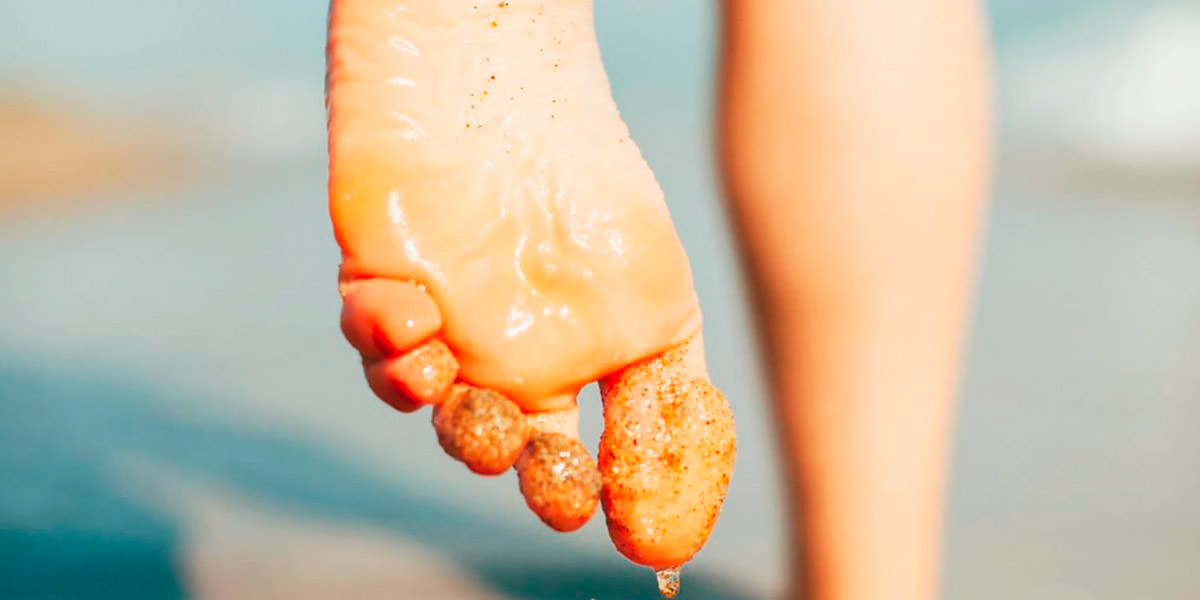
For example, characteristics of the terrain.
Reduce sensory information
If we reduce the amount of sensory information our feet send to our brain by wearing shoes with overly thick, cushioned and/or heeled soles, which absorb impact, the brain has less information to work with, thus reducing the quality of the movement pattern produced.
This is one of the main causes of risk of injury, not only in the feet, but in other areas of the body too, such as the spine due to poor posture and/or support, use of heels etc.
As such, it’s logical to see that the footwear we use, not only for running but in our daily life too, should minimise subtracting that proprioceptive sense as much as possible and allow the foot and rest of the muscles to act according to their natural function.
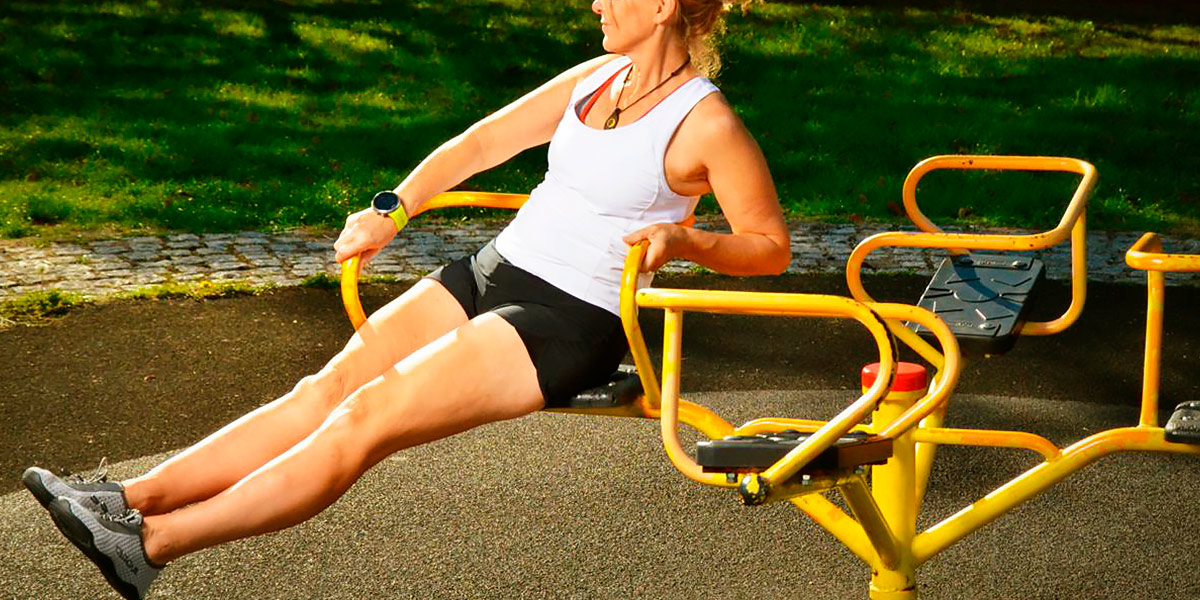
That’s to say, they shouldn’t alter them.
It is true that the barefoot is a masterpiece, but it has a flaw in that it needs protection from the environment.
If we compare the human foot with other animals, they’ve normally developed either pads or hooves as a means of protection from the environment.
The human foot has proprioceptors, thin skin and sweat glands.
Characteristics of a Good Footwear
A good choice of footwear will be one that meets 4 basic requirements or conditions:
Proprioceptive sense
The footwear should allow the foot to receive sufficient sensory information.
We’ve seen the importance of the need for the body and brain to receive accurate information to be able to interact and react to the external environment and move in a natural and functional way.
As a result, the footwear we choose should allow the sole of your foot to receive real and sufficient information to move correctly and naturally on the ground on you’re running or walking on.
Protective function
Footwear should protect your foot from the environment.
The footwear we choose should protect us from the ground, and the sole must be resistant to extreme temperatures.
Feet should not be limited in any way by footwear
This means that the whole foot must be free of tension and pressure, a last that doesn’t alter the position of the toes (avoiding malformations such as claw toes and bunions, which in the long term lead to injuries and poor support).

It should favour the natural shape of the foot.
The weight of the footwear shouldn’t affect the natural position of the foot
A running shoe that’s heavy or unevenly distributed will affect the natural centre of gravity of your foot and therefore the way you run.
Ideal distribution of weight in the footwear
This is reached when it can be balanced on the toe.
When the toe is placed midway between the heel and the toes or a little more towards the heel.
What happens when you lose your sense of proprioception?
It’s important to know that pronation is a natural movement of impact absorption both in running and walking, so subtracting functionality through footwear can lead to injuries and pathologies.
- Their proprioceptive sense ceases to work;
- The feet stop working for the rest of the body properly;
- Muscle and tendon structures weaken and lose their main functionality, ceasing to work efficiently and naturally;
What happens when we run in this scenario?
If we think about it now, when running, with poorly functioning feet and a loss of reactivity, as well as a loss of strength and motor control, the running movement pattern will be altered.
In addition, structures such as the Achilles tendon, soleus and calf muscles will also lose their elasticity and tend to shorten.
What do I think about cushioned trainers?
Despite the current boom in the running shoe market, which in recent years has seen the introduction of highly cushioned shoes and new materials, I firmly believe the following:
Your Ferrari isn’t going to make you a better driver if you run all the signs.
All of the above is useless if the body doesn’t know how to move efficiently, isn’t strong and prepared, or has a poor running pattern.
What should your footwear be like?
- Functional and flexible, with little material between the ground and feet (cushioning);
- This help with reactivity and flexibility.
The plantar fascia and musculature have to regain their flexibility, as, after all, their job is to act as a spring and absorb impacts.
We’ve already seen in previous articles that the heel has no cushioning structures, it’s not a spring, which is why when human beings run barefoot, the first contact with the ground isn’t made with the heel.
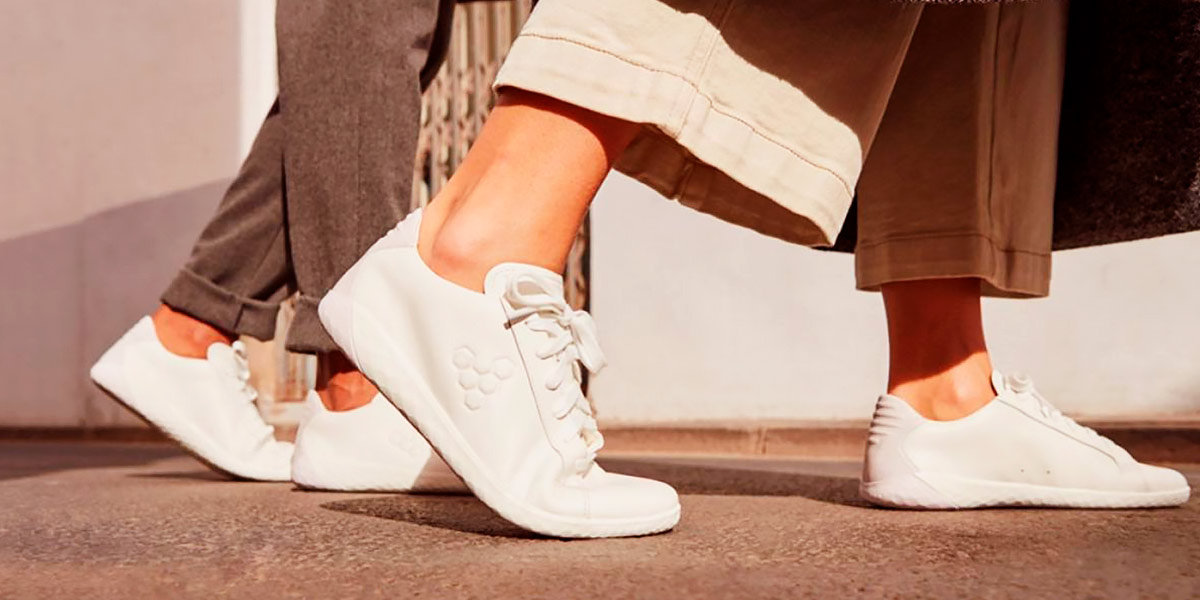
Footwear for everyday use.
What about footwear with too much cushioning?
A priori, two things happen:
- The heel is elevated;
- There’s too much material between the foot and the ground, it doesn’t receive enough information, and it doesn’t perform its natural function and becomes slack.
The immediate consequence is a shortening of the Achilles tendon, but the rest of the muscles will be affected too (triceps suralis: soleus and calf muscles), as will the ankle joint, which will be affected and limited for tendon stretching.
Flat footwear
Several scientific studies have been carried out to study this aspect, and the most obvious conclusion is that: flatter footwear allows the Achilles tendon to stretch during stance.
This translates into more energy to be accumulated in the tendons: stretch-shorting cycle + elastic energy.
The reason for this statement is as follows:
When running, the Achilles tendon is elongated, and it’s at this point that energy is stored, which will be quickly used as long as you have optimal cadence and the energy doesn’t dissipate.
The foot and its structures act like a spring, making use of this elastic energy and making movement more efficient.
Great runners have not only an adaptation of the tendon but also a great adaptation of its insertion point (calcaneal tuberosity).
So, with all this in mind…
Which trainers are recommended to start running?
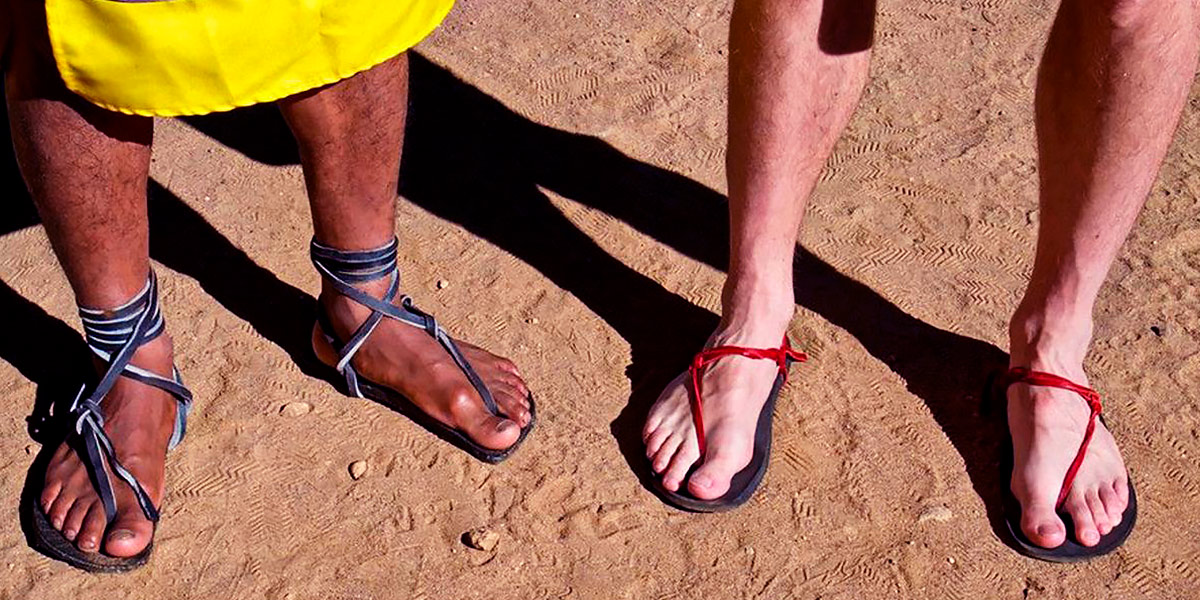
If you’re a beginner, the ideal situation, as you can learn the pattern in an unspoilt and natural way, without any previously acquired bad habits, is to use functional running shoes with a minimum drop (millimetres between the heel and the front part of the foot) and little cushioning.
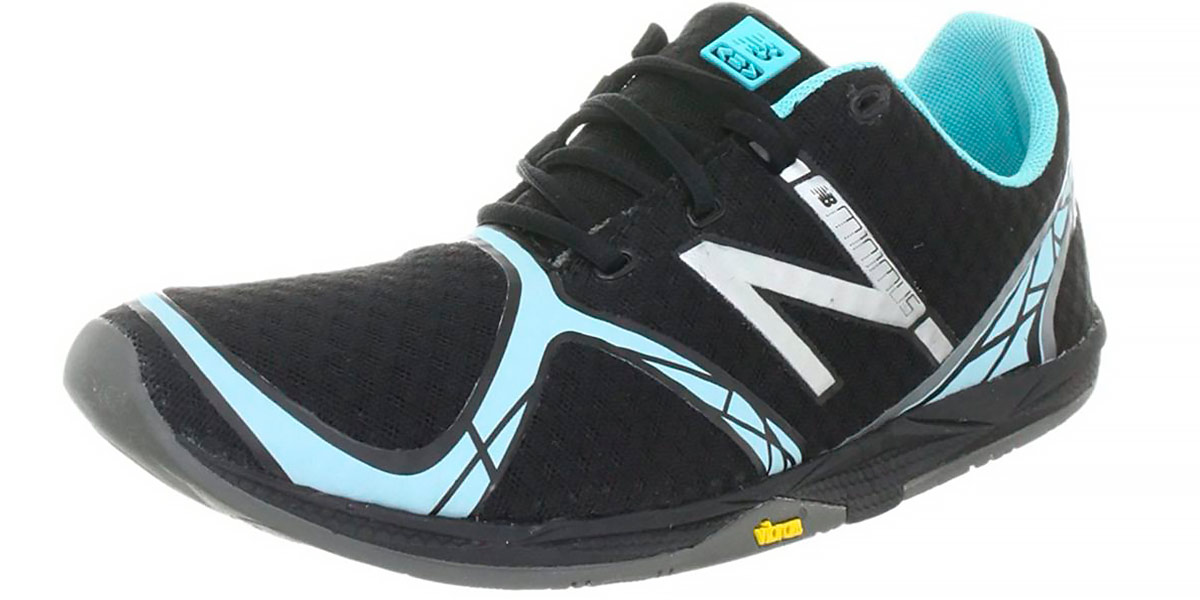
Minimalist footwear drop 0 trainers.
If you’re a beginner
It’s the perfect time to get things right.
Work progressively and under the guidance of a professional who specialises in running.
If you’re an amateur runner
And if you have no injury concerns or pre-existing muscle discomfort (plantar fasciitis, iliotibial band pain, gluteal and knee discomfort, etc.), you don’t need to modify your footwear.
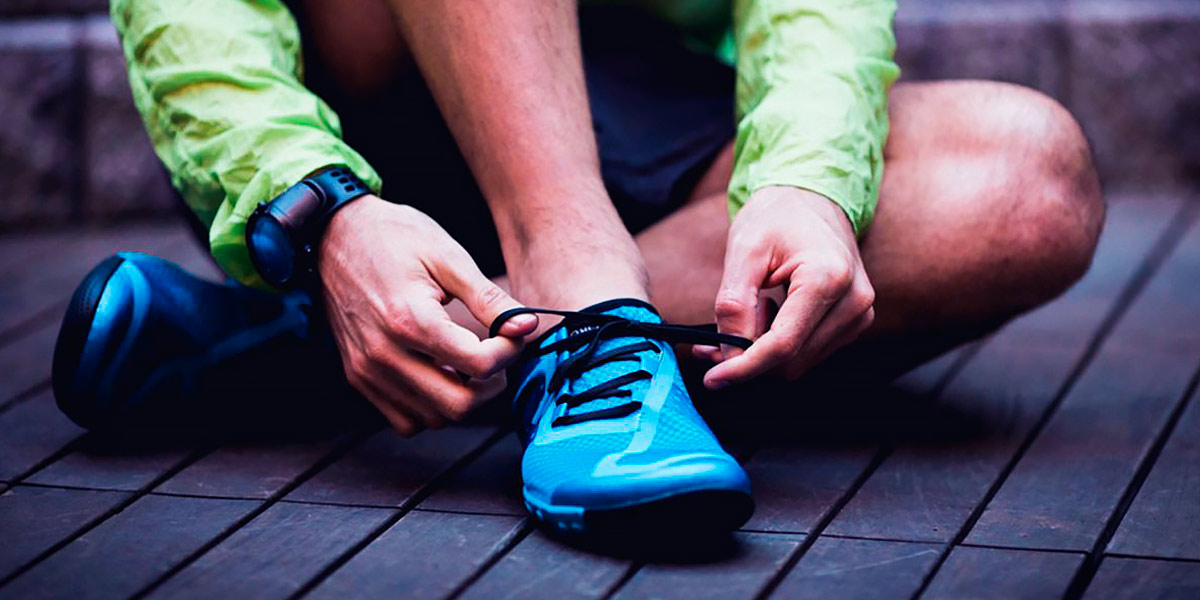
In addition to introducing barefoot and specific foot and ankle strength work.
Conclusions
Before buying a new pair of running shoes, consider whether the shoes are lightweight, flexible and provide freedom for your feet.
Don’t forget that the work to be a more efficient runner starts with:
- Progressive training;
- Specific mobility and strength training of the feet, ankles and calves; as well as
- Postural hygiene.
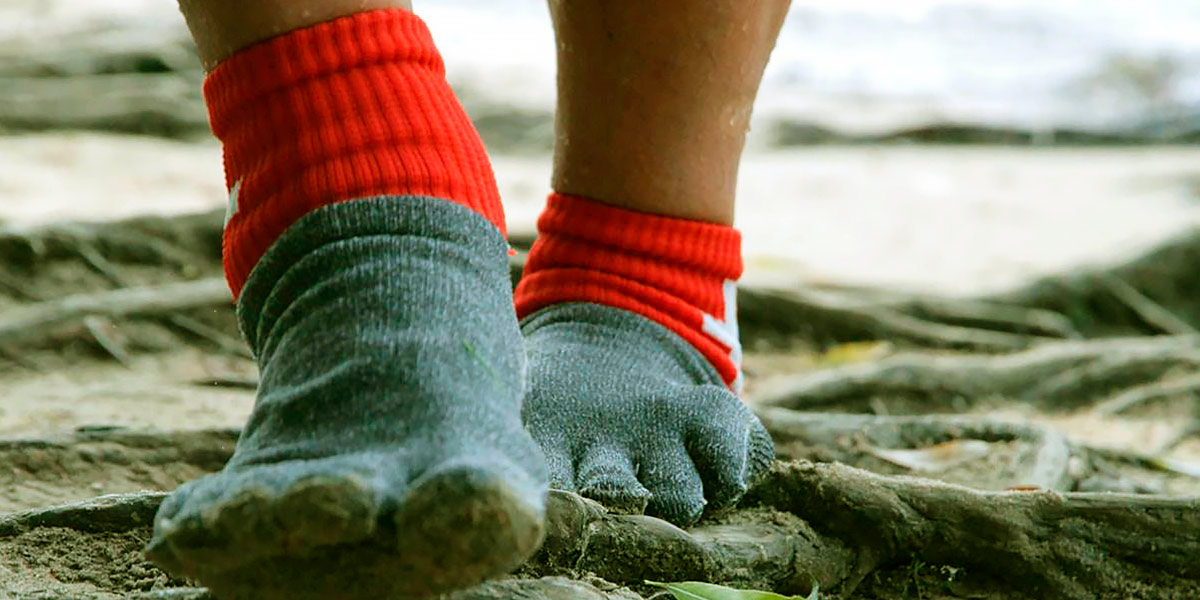
Transition
In the transition to more minimalist footwear, follow a progressive plan.
Start by walking barefoot at home, using minimalist footwear to walk or train in the gym, and later start introducing minimalist footwear into some parts of your run (warm-ups, warm-downs, sets on the track).
Bibliographic Sources
- Bramble, Dm y Lierberman, DE (2004). Endurace Runnig and the Evolution of the genus Homo.
- Daniels J. (2005) Daniels’ running formula. Human kinetics.
- Hryvniak D., Dicharry J., Wilder R. Barefoot running survey: Evidence from the field (2014). Journal of Sport and Health Science 131-135.
- Lieberman et al (2011). Foot strike patters and collision forces in habitually barefoot versus shod runners. Nature 463: 531-536.
- Lieberman et al. “Calcaneus lenght determines running economy:Impications for endurance running performance in moern humans and Neandertals”, (2011).
- Lieberman, Daniel E. ” La Historia del cuerpo humano. Evolución, salud y enfermedad”, 2013.
- Scholz MN, Bobbert MF, Van Soest AJ, Clark JR, Van Heerden J. “Running biomechanics: shorter heles, better economy”, (2008).
- Vincent, Heather K., Vincent, Kevin R. “Selecting Running Shoes” ( 2014), Brochure Content ACSM.
Related Entries
- Everything you need to know about Hydration Before, During and After Training in this link.
- More Tips for Buying Running Shoes .