Fitness, Nutrition, Health and Sports Blog In the HSNstore Blog you will find tips about Fitness, sport in general, nutrition, and health – HSNstore.com

As many of you know, not long ago, I made the jump from the world of “body composition” to CrossFit performance. I knew it was a whole new world for me, and that I was behind other coaches, so I decided not to waste any more time and focus on what really matters:
See what’s failing for most athletes
To do this, I conducted a survey with almost 900 people practicing CrossFit, where I gathered interesting data like how long they trained, what supplements they took, or even which moment they prioritized for nutrient intake (pre-, during, or post-workout). However, one of the stats that impressed me the most was that almost 62% of athletes didn’t recover well or felt fatigued at the start of training.
This totally clashed with other parts of the questionnaire, since I noticed that 3 out of 4 athletes believed the ideal time to supplement was post-workout.
How is it possible that 75% of CrossFit athletes prioritize recovery but only 28% actually manage it?
Although several factors came to mind, like wrong supplementation, low aerobic base, or overtraining, I decided to focus mainly on two:
- Caloric intake
- Macronutrient distribution
Calories
Most athletes tend to have a negative caloric balance, since the calories they consume are less than the calories they burn throughout the day. In my opinion, this is even more pronounced in the female sector, where caloric intake is often drastically reduced to lose body fat or even out of fear of overeating and gaining weight (1).
Nowadays, we know from various studies that hypocaloric diets usually impair performance in strength sports. When we cut calories, leptin levels drop, which signals our central nervous system to increase calorie expenditure when there’s enough energy available (via POMC / LRb-STAT3). Along with this leptin drop, other hormones like insulin, testosterone, or T3 (thyroid hormone) also decrease…
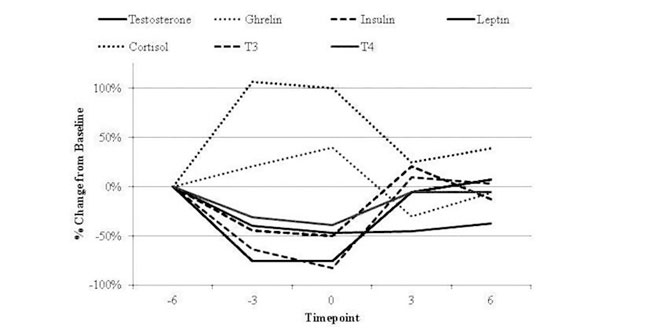
Hormonal variation in a hypocaloric diet. Anorexigenic hormones (which promote fat loss) decrease
As a result of this hormonal shift:
- we’ll burn fewer calories both at rest and during training,
- muscle contraction will be worse,
- protein synthesis will be impaired, and
- we’ll carry more fatigue into workouts
At this point, many will think of that friend who improved their lifts and times even while on a hypocaloric diet. Yes, it’s possible to get the holy grail when talking about people just starting strength training or whose base wasn’t ideal, since the mechanical stress of training and the following metabolic stress will produce improvements. However, when it comes to national or international competitions, it’s impossible to think about a low-calorie diet if you want to place well.
Macronutrients
The other key to improving recovery is macronutrient distribution, which I’ve talked about many times in this blog, gaining even more importance if you train more than once a day.
The question many CrossFit athletes ask is… whether it’s necessary to consume carbs right after intense training or if, on the contrary, a high-fat diet is enough to recover…
Personally, I think following a high-fat diet occasionally during the preseason can bring some benefits like:
- greater fat oxidation,
- increased mitochondrial biogenesis, and therefore,
- better glycogen sparing.
However, if you’re in a part of the season with high training volume, introducing carbs in the diet is essential.
As I’ve mentioned before, as exercise intensity increases, we reduce fat use as an energy source to give more importance to glycogen, the form in which carbs are stored. Estimates tell us these glycogen stores have a concentration between 80–150 mmol/kg (Sherman 1981), reaching 170 mmol/kg (12) after a carb intake of 70% total calories.
Training intensity applied
When we talk about endurance athletes or low-intensity training, a TKD (Target Ketogenic Diet) doesn’t affect performance, since below 75% VO2max the body can use both fatty acids and glycogen, burning about 20 mmol/kg of glycogen (5,6).
However, at high intensity, our body depends almost exclusively on glycogen stores (plus phosphocreatine stores). Thus, those more intense workouts can reduce glycogen stores by 50-70% (9,10).
Obviously, experience plays a big role here, since more advanced athletes will need higher intensity than others to reach those levels of depletion.
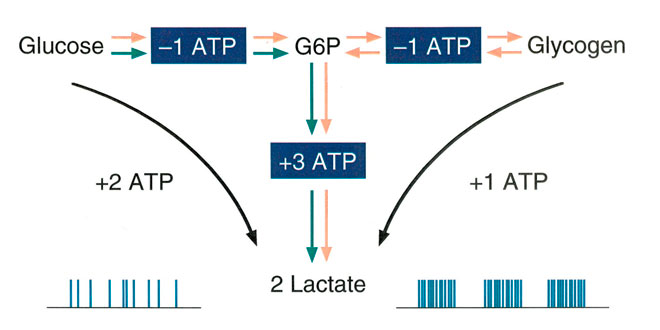
During high-intensity training, our body produces lactate from glycogen (Graph adapted from Shulman et al)
Recovering from training
After a very demanding workout, our body can resynthesize glycogen without needing to consume carbs
The most accepted hypothesis among experts is that this glycogen resynthesis happens through lactate produced during training, or in other words, through the reverse process shown in the graph above. The question is: Is this glycogen resynthesis enough to skip carbs?
What you see below is how our body uses glycogen during high-intensity training (14).
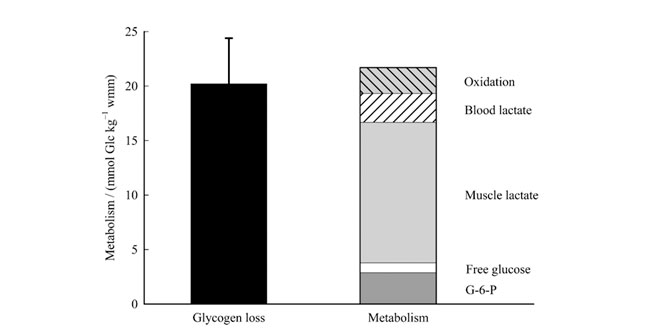
As we see, most glycogen used during training is to produce energy via the lactate pathway, confirming everything I mentioned above. However, once training ends, let’s see what happens to that lactate:
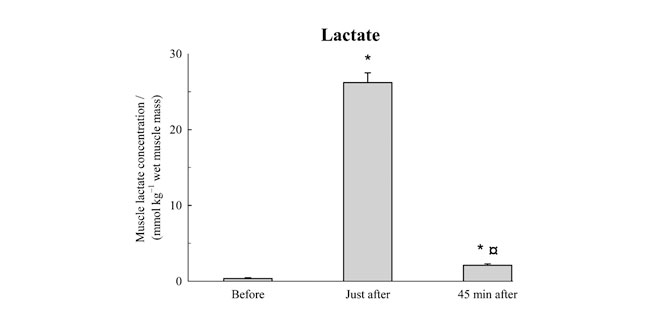
If we look, 45 minutes after finishing training, lactate levels have almost returned to baseline, which tells us our body needs relatively little time to clear the “waste” from training.
Now, has that lactate disappeared to produce glycogen?…
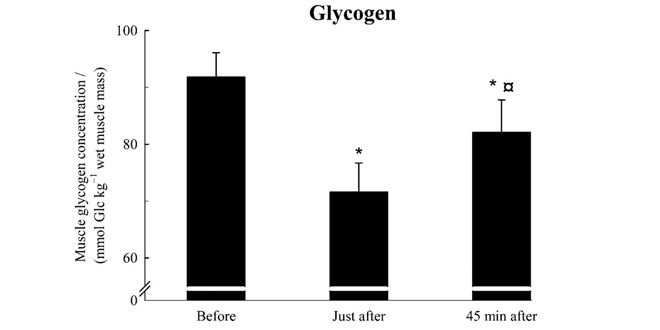
…indeed, some glycogen has been resynthesized, but not to pre-training levels. This is why many CrossFit athletes can’t recover properly.
As some studies show, glycogen synthesis after exercise is biphasic, with a fast phase and a slow phase:
- In the fast phase, during the first 30-60 minutes, there’s rapid muscle glycogen synthesis that doesn’t require insulin. Although it can last about 24 h to reach glycogen levels close to pre-exercise, the first 3-5 hours are crucial. The amount of glycogen synthesized in this phase is higher due to high glycogen synthase levels (enzyme responsible for glycogen synthesis), increased muscle cell permeability to glucose since exercise induces GLUT4 transporter translocation to the cell surface, and greater insulin sensitivity.
- In the slow phase, glycogen synthesis can be 50% lower after several hours, especially when carb intake is below 1.2 g/kg body weight.
That’s why the first 2 hours post-workout are vital if you want to maximize glycogen resynthesis lost in the first training, since after this time glycogen resynthesis drops by 45% (Ivy et al(*)).
So if you’re going to train twice the same day, it’s recommended to consume carbs right after the first workout, within 30-45 min.
The scientific basis is that glucose transporters in muscle (GLUT4) increase during and right after training. Not only does GLUT4 expression increase, but there’s also an increase in GLUT4 translocation (relocation) during glycogen depletion.
This way, muscle cells have more insulin/glucose receptors and transporters, so the more carbs you take post-workout, the more will be stored as muscle glycogen.
Conclusions
In short, we can boil the guide down to these points:
- CrossFit athletes aiming to improve performance should NOT follow a hypocaloric diet.
- Most athletes see their performance drop on ketogenic diets, although those doing TKD (ketogenic diet with peri-workout carbs) will suffer less.
- High carb intake is not a problem for CrossFit athletes regarding body fat, since they’re unlikely to have full glycogen stores or insulin resistance.
- People training once a day DON’T necessarily need post-workout carbs (though it’s recommended). If training twice or even thrice a day, post-workout carb intake is mandatory.
- Supplements that increase lactate clearance could have a beneficial effect on performance (like citrulline malate).
I hope this article helps you improve your planning, and don’t forget, proper recovery is key to achieving it.
Cheers!
Sources
- Eating problems and calorie intake levels in Swiss adolescent athletes. Benson JE1, Allemann Y, Theintz GE, Howald H.
- Natural Bodybuilding Competition Preparation and Recovery: A 12-Month Case Study. Lindy M. Rossow, David H. Fukuda, Christopher A. Fahs, Jeremy P. Loenneke, and Jeffrey R. Stout
- Mechanisms of leptin action and leptin resistance Myers MG1, Cowley MA, Münzberg H
- Leptin signaling, adiposity, and energy balance. Jéquier E.
- Muscle glycogen during prolonged severe exercise. Hermansen L, Hultman E, Saltin B
- Glycogen breakdown and lactate accumulation during high-intensity cycling. Medbø JI1.
- Muscle strength and fatigue after selective glycogen depletion in human skeletal muscle fibers. Jacobs I, Kaiser P, Tesch P.
- Muscle glycogen utilization during prolonged strenuous exercise when fed carbohydrate. Coyle EF, Coggan AR, Hemmert MK, Ivy JL.
- Smaller muscle ATP reduction in women than in men by repeated bouts of sprint exercise. Esbjörnsson-Liljedahl M1, Bodin K, Jansson E
- Changes in muscle metabolites in females with 30-s exhaustive exercise. Jacobs I, Bar-Or O, Karlsson J, Dotan R, Tesch P, Kaiser P, Inbar O.
- The Ketogenic Diet: A Complete Guide for the Dieter and Practitioner. Lyle McDonald
- A study of the glycogen metabolism during exercise in man. Bergström J, Hultman E.
- The ‘‘glycogen shunt’’ in exercising muscle: A role for glycogen in muscle energetics and fatigue. R. G. Shulman*† and D. L. Rothman
- Lactate elimination and glycogen resynthesis after intense bicycling. Medbø JI1, Jebens E, Noddeland H, Hanem S, Toska K.
Related Posts
- Best supplements for CrossFit
- CrossFit, Nutrition Tips