Fitness, Nutrition, Health and Sports Blog In the HSNstore Blog you will find tips about Fitness, sport in general, nutrition, and health – HSNstore.com

Should you train when you have a cold or the opposite, and rest?
Weakened immune system
Getting sick during periods of training is quite normal and frequent. Especially since the immune system can be weakened for up to 2 days after the routine, due to the effort being put in.
Therefore, if you train intensively all year round, you may be prone to catching a cold more easily than a sedentary person, who will have other types of pathologies.
Cold or Flu?
To understand the different theories about the body’s response to the combination of exercise and a viral illness, it is important to understand their causes and the consequences they have on the body.
On the one hand, it is important to understand that both colds and flu are benign infections.
- Rhinovirus is the most common for colds, while the
- Influenza is usually the culprit for the flu.

However, the symptoms of both are similar but of different intensity.
Cold symptoms
In the case of a cold, it is similar to the early stages of influenza. Its signs are extremely mild and short-lived, although it undoubtedly has a negative impact on the infected person.
This is due to an average rise in body temperature, headache, eye and throat pain, and a runny nose.
Flu symptoms
In contrast, when it is the flu, the symptoms are more uncomfortable and are accompanied by muscular discomfort, respiratory and gastric problems, high fever and general unwellness.
Training when you have a cold
Exercising and being active throughout the day offers a variety of benefits, including improving the circulatory system and strengthening the immune system.
The latter, depending on the type of activities carried out, can help the immune system to cope with certain agents.
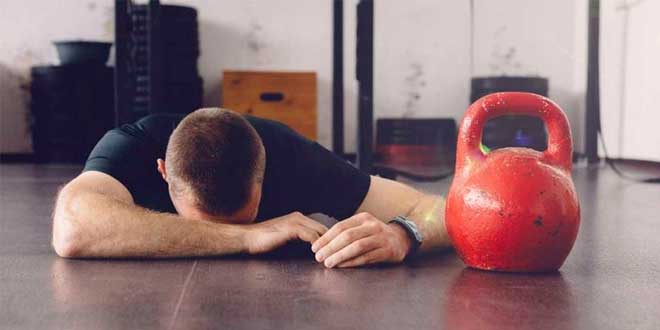
However, there are doubts about the benefits of exercising when the body is not in optimal condition, and some scientists believe that it can be counterproductive.
Symptoms above the neck
The consideration that exercise was only possible if the symptoms were located above the neck was made by the researcher David Nieman, who coined it the “Neck Rule”.
He claimed in his paper “Military Strategies for Sustaining Nutrition and Immune Functions in the Field” that exercise would not have a negative effect if the symptoms were not severe, such as simple sneezing or a runny nose.
Exercise to relieve congestion
The same conclusion was reached by Edward Laskowski, a scientist at the Mayo Clinic.
Edward said that when you have less bothersome symptoms such as nasal congestion, exercise can be perfect for coping and easing breathing.
He also states that if the illness is below the neck, from fever to gastric difficulties, one should rest completely until the situation is resolved.

Generally, muscle and organ performance will not be the same.
Do not make any effort
According to the study “Sport, Exercise, and the Common Cold”, when a person is going through a viral process, the body needs as much energy as possible to get rid of the external agents that infected it.
Thus, burdening the body with extra activities may result in slowing down the recovery process from the viral illness. Besides, some of the body’s ability to respond to exercise is also lost. Usually at cardiac and respiratory level.
In addition, if a fever is present, every degree increase from the normal 37°C the body requires 13% more oxygen to cope with the rise in temperature.

It definitely affects the body’s response.
Do’s and don’ts
Because of the many questions about training with a cold or flu, ABC News’ Richard Besser, a medical doctor, chose to make a list of those activities that can/should and should/should not be done if you choose to train while ill:
It is recommended to
Do light to moderate exercise.
Such as walking and gentle activities; higher performance exercises lead to rapid exhaustion.
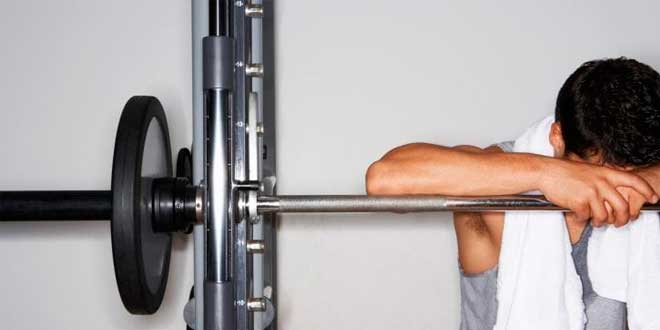
If we are sick, we will not be able to give our all.
It is not recommended to
Run for long periods of time
It has been shown that the immune system is weakened for up to 24 hours after long periods of training.
So, if it is done while sick, it will make the situation worse.
Do weight training or machine exercise if you are not used to it.
It is considered that if your training routines are focused on the use of this type of equipment and you are not very used to it, it is advisable to put them on pause for a few days. Because:
- Your muscles and body will not react in the right way, making you more vulnerable to injury.
- If you are taking medication to cope with the viral illness, anti-flu drugs, painkillers, antihistamines and decongestants are among those that can adversely affect the body’s performance.
Bike
This particular activity has been observed to make congestion even worse, while drying out the nasal mucosa and increasing muscle fatigue.
Bibliographic sources
- ¿Se puede enfermar por entrenar demasiado? – https://www.mundotraining.com/articulos/2013/04/18/se-puede-enfermar-por-entrenar-demasiado/
- Deporte y resfriado: el truco para saber si es buena idea hacer ejercicio con catarro o gripe – https://es.gizmodo.com/deporte-y-resfriado-el-truco-para-saber-si-es-buena-id-1822794601
- Catarro – https://www.webconsultas.com/catarro/catarro-2258
- ¿Se puede entrenar resfriado o con gripe? -https://www.musculaciontotal.com/errores-de-entrenamiento/entrenar-resfriado-con-gripe/
- Ejercicio físico y sistema inmunológico- http://www.buenaforma.org/2014/04/24/ejercicio-fisico-y-sistema-inmunologico/
- “Manual NSCA, Fundamentos del Entrenamiento personal”. Editorial Paidotribo.
- “Actividad física y ejercicio en salud y enfermedad”. Sandra Mahecha Matsudo. Editorial: Mediterraneo.
- “Bases biológicas del ejercicio y del entrenamiento” Josef Nöcker. Editorial: Kapelusz
Related Entries
- What is Echinacea?
- Why shouldn't you take anti-inflammatory drugs after training?
- Shiitake Mushroom - Strengthens your Body's Immune System