Fitness, Nutrition, Health and Sports Blog In the HSNstore Blog you will find tips about Fitness, sport in general, nutrition, and health – HSNstore.com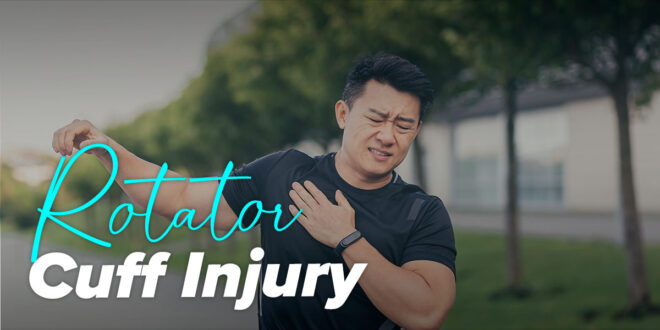

The rotator cuff is a group of muscles and tendons that surrounds the shoulder joint.
Its function is to keep the head of the humerus bone inside the atrial cavity, giving stability to the shoulder to facilitate range of motion.
Shoulder and arm movements are performed using the muscles of the rotating cuff:
- Subscapular: internally rotates the humerus.
- Supraspinatus: involved in arm abduction.
- Infraspinatus: externally rotates the arm.
- Teres minor: participates in the external rotation of the arm.

Both the muscles and the tendons of the rotator cuff facilitate the variety of movements that take place from the shoulder joint.
Rotator cuff injuries
Rotator cuff injuries consist of tendon or muscle inflammation and other damage with various levels of complexity, depending on the severity of the condition.
Here are the most common.
Tendonitis
This is the inflammation of the tendons of the rotator cuff, usually by being pressed against a shoulder joint structure. It’s also known as shoulder impingement.
Bursitis
The subacromial bursa becomes inflamed, giving rise to this pathology.
Calcifications
Accumulation of calcium in body tissue, causing the hardening of the structure, which can lose elasticity. They’re caused by increased tension and continued inflammation in a localised area of the tendon.
Common areas where calcifications are found are in the supraspinatus or subscapularis tendon.
Tears
This occurs when the muscles and/or tendons that make up the rotator cuff are partially or completely torn.
- A partial tear is when it doesn’t completely cut connection to the bone;
- For complete tears, the rupture takes place throughout the tendon.
In the latter case, the tendon roots detach from the bone.
Who might suffer rotator cuff injuries?
Although anyone might suffer a rotator cuff injury, people in the following groups are more likely:
- Those over 50 years of age, as advanced age increases the risk of injury due to wear and tear of the tendons.
- Athletes who practice disciplines with repetitive arm movements. These include handball players, swimmers, pitchers, etc.
- Workers in areas that require lifting weight or performing respective arm movements, often above the head.
- Patients with musculoskeletal diseases, such as rheumatic arthritis. It can cause the rotator cuff muscles to weaken, increasing the risk of injury.

Diagnosis of injuries will be made by a specialist doctor or physiotherapist.
How do rotator cuff injuries occur?
There are several situations that can lead to such injuries, including the following:
- Lifting or pulling objects that are too heavy or with poor technique for an extended period.
- Poor posture, especially if sleeping on the same arm every night.
- Performing work activities that require repetitive movements above eye level, such as with construction, carpentry, etc.
- Playing sports with repetitive or poorly executed movements above the head (weight lifting, swimming, tennis…)
What are the symptoms of rotator cuff damage?
There tend to be two symptoms that indicate the occurrence of an injury: the onset of severe pain in the shoulder and limitats in range of motion.
Shoulder pain occurs in different forms according to the injury:
- Dull, aching pain that may extend to the elbow.
- Nightpain that alters sleep, caused by lying on the affected shoulder.
- Pain when lifting your arm, affecting activities in high planes such as when drying your hair, touching your back, lifting weights, etc.

Depending on the injury, the pain may appear gradually (common in case of tendonitis), or happen as sudden painful aches (likely a tear).
Treatment and recovery
We propose the following exercise:

Exercise: External rotation of the shoulder in a lateral position.
Treatment may be non-surgical or surgical and will depend on the type of injury, considering factors including: age, degree of pain, limitation of arm movement, among others.
Most non-surgical treatments include the following:
- Resting the shoulder, avoiding activities that cause pain.
- Placing an ice pack or cold compress on the injured shoulder.
- Taking painkillers to relieve pain and lower inflammation, such as ibuprofen.
- Physical therapy exercises to strengthen the shoulder and improve mobility.
- Injecting corticosteroids into the inflammation, if other treatments don’t relieve the pain.
In some cases of tendonitis and bursitis, ultrasound therapy, among others, may be required.

Tearing the rotator cuff may also involve heat applied to the painful area or electrical stimulation of muscles and nerves.
Surgery is an option if the injury doesn’t improve within 6 to 12 months after attempting other measures, or if too wide a tear occurs that requires surgery to repair. It’s performed under general anaesthesia, following any of the following procedures:
- Open surgery: The surgeon makes a cut in the skin above the shoulder and repairs the injury through the cut.
- Arthroscopy: A flexible, tubular-looking telescopic camera, known as an arthroscope, is inserted into the shoulder and used to repair the injury.
The treating physician will suggest the procedure to follow based on the assessment made, taking into account the extent of the injury and if it’s a tear, how big it is and how severe it is.
Related Entries
- If your shoulders are sore, it may be due to one of the following causes.
- We recommend these exercises to strengthen the shoulders.