Fitness, Nutrition, Health and Sports Blog In the HSNstore Blog you will find tips about Fitness, sport in general, nutrition, and health – HSNstore.com

When setting out to start a training routine, it’s important to understand some basic concepts, such as exercise repetitions, sets and rest times…
These constitute the cornerstones structuring a training plan.
Index
What are sets and repetitions?
By repetitions, we mean the number of times in a row the same movement is executed.
On the other hand, a set consists of the group of a certain number of repetitions.
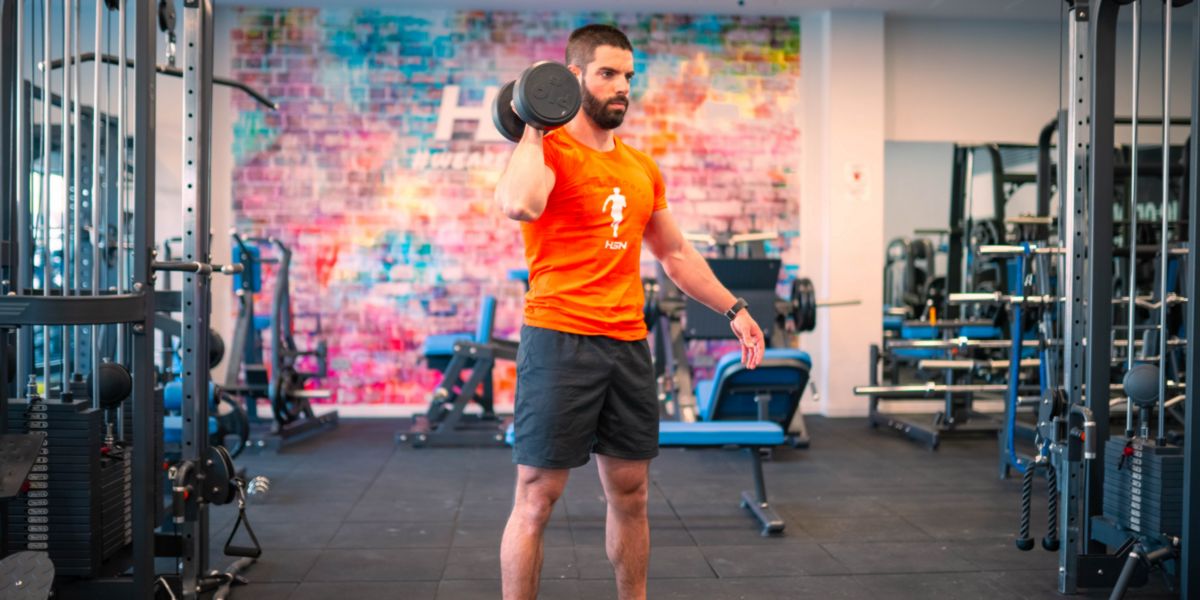
These are the blocks of repetitions that you carry out, separated by a rest period.
Types of sets
There are several types of sets and it’s a good idea to get a trainer to tell you which is the most appropriate to your level. You can’t just pick them at will. A specialist will know what you need to achieve your goal.
Among the best known set types are those described below, although there are many more:
- Pyramid: This is a sets in which we increase the weight and reduce the number of repetitions. It can also be done in reverse, increasing the number of repetitions and lowering the weight.
- Supersets: This involves the execution of two different exercises, normally focused on the work of antagonistic muscles, although it’s not mandatory, without rest between them.
- Giants: Several exercises are combined without rest for one muscle group. A moderate weight should be chosen for the exercises, except for the first one, where it’s appropriate to choose our normal weight for the repetitions that we want to do, and in the following exercises to use less weight than normal.
- Fixed descending sets: We start with the maximum weight that you want to do for the repetitions, and after the first set gradually lower the weight, so that we’re always doing the same amount of repetitions.
- Variable descending sets: Similar to a supersets or giant sets, in which you move from one set of the same exercise to the next with little rest. This should be done on large muscle groups so as not to overload them.
- Forced: You’ll need the help of a partner. This is about performing as many repetitions as possible, until you reach failure, and then another person helps you perform some more.These usually done at the end of training, although it doesn’t always have to be like that.
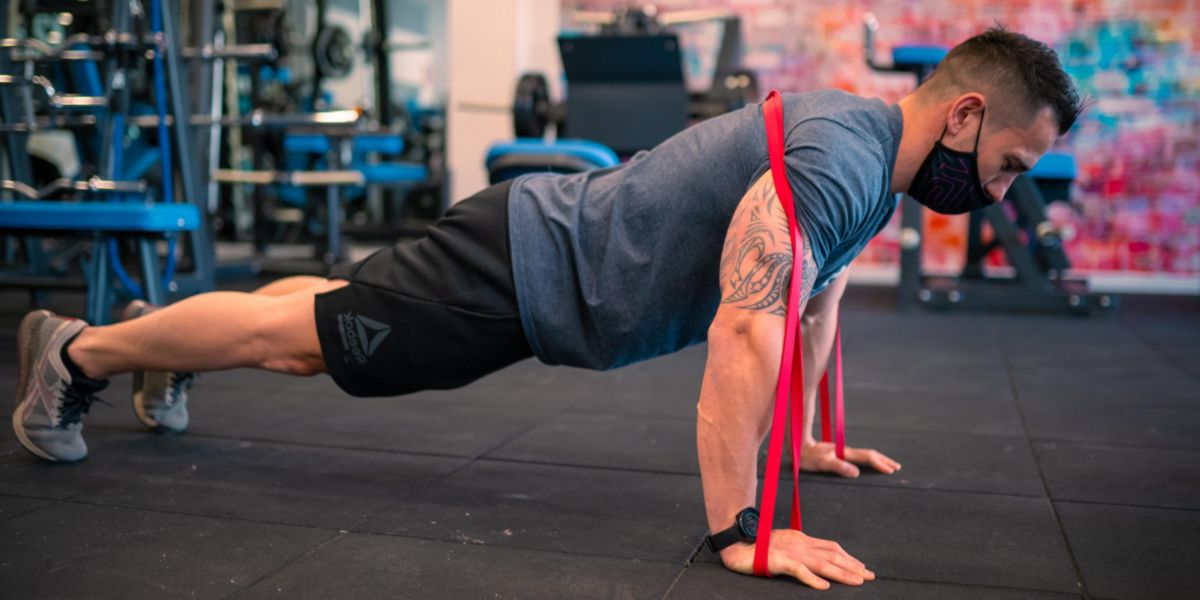
The sets can be alternated as your workouts progress.
How many repetitions should beginners do for each exercise?
The number of repetitions in each set will vary depending on:
- Your experience;
- Body structure; and
- the specific objectives you have for your training.
The recommended for beginners is to do between 2-3 sets of about 10-15 repetitions so as not to overload the muscles. Most start with a cutting routine for fat loss and muscle maintenance.
The more advanced ones who focus on hypertrophy can do routines of 10 sets with 10 repetitions each, but it all depends on the number of exercises that are set.
They should also perform other less aggressive routines.
For example: 3-4 sets of 8-10 repetitions with loads of 0.7-0.8 RM (maximum weight to be lifted in each exercise).
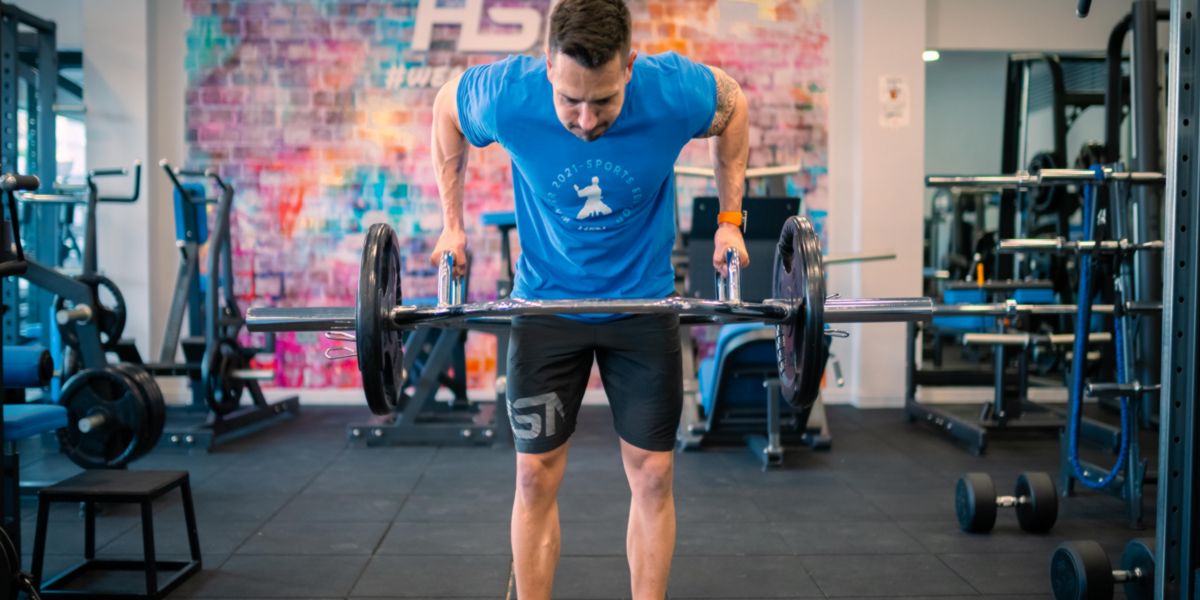
The rest period can vary between 30 and 60 seconds.
Just 2-3 repetitions of each sets is enough to work on muscle strength. This is more like something you usually see in the weights room.
Resistance training is usually done in 3-4 sets with 10-20 repetitions and light weights between 0.5-0.7 (RM). The breaks between sets could be 30 seconds.
The importance of rest between sets
Regardless of your goal, it’s incredibly important to respect the rest times stipulated between sets if you want to progress in the workouts.
When resting between sets we let the muscle to recover from the work of the previous set, and will be able to go again with a full intensity in the next set.
Proper scheduling of rest periods allows us to renew our ATP and Phosphocreatine energy sources.
In addition, if your rest interval is excessively short, you’ll accumulate high amounts of lactate in the muscles you’re working, causing pain, fatigue and a decrease in the muscle power required to continue training.

It’s important to understand that a well rested musculature will be in a better condition to help us achieve effective results.
Tips based on your goal
Here are some tips to follow according to the goal you want to achieve with your repetition exercise routine.
Muscle definition
To maintain/increase muscle mass and burn fat as much as possible – remember that muscle and fat reduction are two clearly differentiated objectives – it’s recommended you use a moderate weight and perform 3-4 sets of 10-15 repetitions, with rest between 30 seconds and 1 minute.
Hypertrophy
To stimulate the increase of muscle mass, the recommended load is about 70-85% (RM) for beginners or intermediate level, and can be increased up to 100% for advanced level.
Suggestions include:
- For beginners and intermediates, between 2-3 sets of 8-12 repetitions, with between 2 and 3 minutes of rest.
- For the advanced, from 3-6 sets of 1-12 repetitions, between 45’’-1 and 2 minutes of rest.
Muscle resistance
For people with professional activities that involve physical activity or for those recovering from pathologies.
The maximum load is below 70% (RM) and 2 to 4 sets of 10-25 repetitions are suggested, with rest between 30 seconds and 1 minute.

When taking short rest times, you should decrease the intensity of the following repetitions.
Strength training
This improves functional capacity and motor coordination.
The load would be between 60% and 100% (RM). 60% for beginners and intermediate level, 100% for advanced level.
Between 1-3 sets of 8-12 repetitions are suggested for beginners and intermediates, and between 2-6 sets of 1-8 repetitions for advanced.
The rest time should be between 3 and 5 minutes, because when using a greater load the body will need more recovery time.
Bibliography
- “Manual de metodología del entrenamiento deportivo” Dietrich Martin, Klaus Carl y Klaus Lehnertz 2016.
- “Entrenamiento personal. Bases, fundamentos y aplicaciones” Alfonso Jimenez Gutierrez 2007.
- “Periodización del entrenamiento deportivo” Tudor O. Bompa. 2004.
- “Musculación. Entrenamiento avanzado” Tudor O. Bomba y Lorenzo J. Cornacchia 2010.
- Personal contributions, studies and experiences.
Related Entries
- After reading this article, there’s one more question that springs to mind: Does the range of repetitions matter for hypertrophy? Find out in this post.
- Do you know what Backup Repetitions are? We tell you here.
- What are Subjective Training Scales? Check out the following link.