Fitness, Nutrition, Health and Sports Blog In the HSNstore Blog you will find tips about Fitness, sport in general, nutrition, and health – HSNstore.com

The Targeted Ketogenic Diet (TKD) is an excellent solution for athletes following this type of diet.
We’ve spoken a great deal on the blog about the ketogenic diet – the «keto diet» as you can you here, for example.
It’s a nutritional approach with clear, certain benefits, and can help with certain clinical conditions too (bring overweight, obesity, metabolic syndrome, etc.).
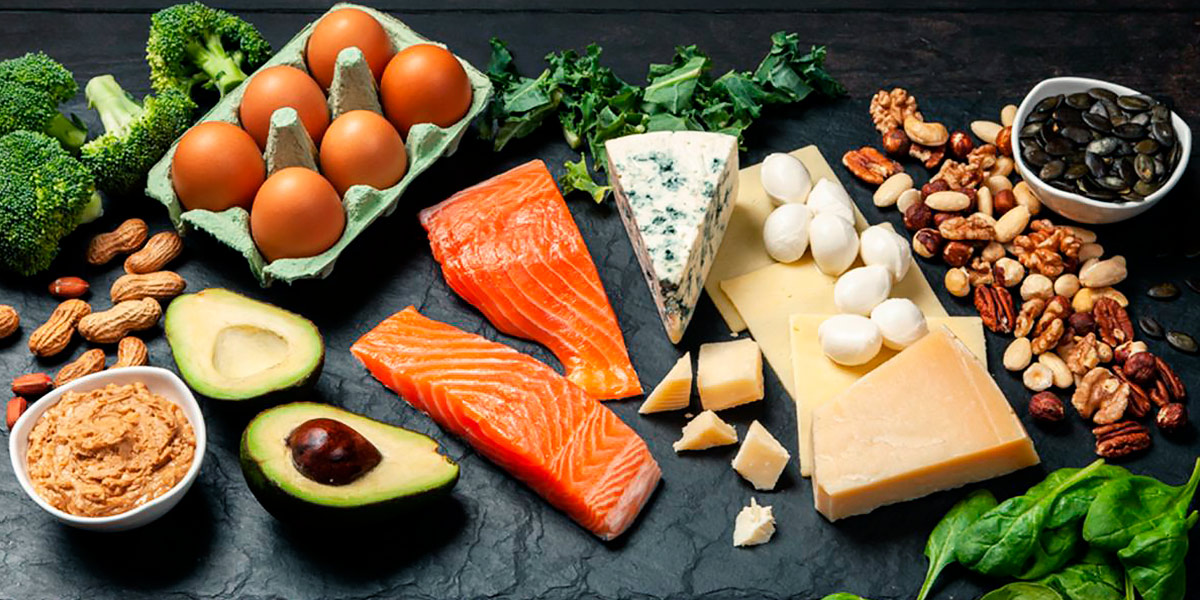
«Keto» foods.
As we noted in the last article about gaining muscle mass on keto, many of you have given keto a try.
Not because you want to get rid of those extra love handles, but simply because it makes you feel better, it’s helped clear up a number of symptoms, or you are convinced that it’s good for your physical and cognitive performance.
Why?
In short:
- If you’re ketoadapting, your performance doesn’t have to be impaired.
- But it’s difficult to reach a point of ketoadaptation that allows point 1.
- Many people aren’t prepared to wait for weeks (sometimes months) before become fully ketoadapted
- Many athletes have a clear glycolytic profile and are glucose dependent (CrossFit, Volleyball, speed tests, team sports, etc.).
So, is there an alternative?… It seems so.
What is the Targeted Ketogenic Diet?
Often shortened to TKD, it’s a variant on the conventional ketogenic diet.

It consists of combining a moderate intake of carbohydrates when peri-training.
That’s to say, and athlete should consumer carbohydrates before and after exercise; and, depending on the sport practiced, intra-training too.
What are the benefits of the Targeted Ketogenic Diet?
Better high-intensity performance
Better availability of glycogen and glucose for intensity peaks.
And therefore, better performance when training/test intensity rises.
You can enjoy the benefits of carbohydrates in sports
- Better post-training recovery
- Greater anabolic signalling
- Lower risk of injury and overtraining
- Better hormonal environment
What happens with the carbohydrates on the TKD?
Absorption of carbohydrates
The carbohydrates consumed before training will go almost exclusively to the muscle.
Particularly when you start training and the insulin glucose carriers increase independently in the muscle tissue.

The same happens with carbohydrates consumed during training
Insulin sensitivity
After training, your sensitivity to insulin will be at its peak.
The muscles will be hungry for glucose and less of a magnet for the carbohydrates.
Ketosis «exit»
But let’s not kid ourselves, this will momentarily get us out of ketosis.
How to follow a Targeted Ketogenic Diet (TKD)
Pre-training
Prioritise carbohydrates
Here, take 30-50g of net carbohydrates from a source that allows rapid absorption, such a glucose or dextrose.
During training
I would forget consuming carbohydrates unless the activity lasts over 90 minutes and always and when need to increase intensity above 80% of VO2 max.
Post-training
You could have a snack of 20-30 grams of net carbohydrates
Although this intake worries me less because glycogen resynthesis is more effective than we think, even in the absence of exogenous carbons, as it uses metabolites such as lactate or glycerol to resynthesise glucose.

Our physiology is smarter than we are.
Considerations
Remember that exercise itself is highly ketogenic, which is why your body will be in ketosis after training and only a few grams of carbohydrates will be momentarily kept.
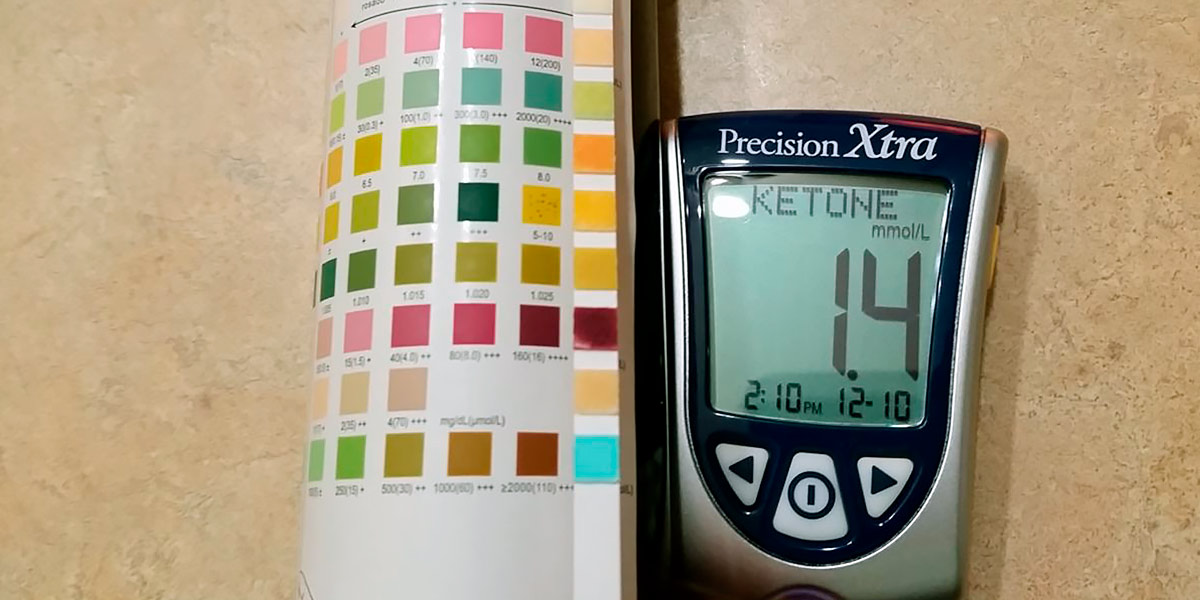
You can test with a ketonemia meter, or with the classic test strips.
Note that if your goal is fat loss (but you want to give a plus to your performance), you have to take into account the extra calories provided by carbohydrates – they’re an addition that you did not take before.
When to do the Targeted Ketogenic Diet?
The following scenarios would be situations where you might consider starting a TKD:
- If you’re a strength or high-intensity athlete (the obvious example would be the crossfitter) but trying to follow a ketogenic diet.
- If you want to benefit from intermittent exposure to ketone bodies but you’re flexible and don’t mind exiting ketosis from time to time
- If you’ve noted a drop in performance on starting a ketogenic diet.
Conclusions
I hope this article’s been useful. See you in the next one. A big hug, and keep on empowering yourselves!
Related Entries
- What supplements can be taken on a Ketogenic Diet? We let you know here.
- Is it true that muscle mass is lost in ketosis? Find this answer at this link.