Fitness, Nutrition, Health and Sports Blog In the HSNstore Blog you will find tips about Fitness, sport in general, nutrition, and health – HSNstore.com

Push-pull routines are a very effective method when it comes to gaining muscle (hypertrophy) and strength.
What is a Push-Pull Routine?
The Push-Pull routines are a workout strategy that consists of dividing the sessions in two types of movement:
- One day, we will push away the weight from our body
- Another day, we will pull that weight towards our body.
If we focus on the basic exercises of each muscle group, we will notice that pulling will mainly involve the back and biceps. On the contrary, pushing will involve the chest, shoulders, triceps and legs.
Due to this difference regarding the amount of muscles involved, I suggest leaving a day for the legs
- 1st Day: Pushing exercises.
- 2nd Day: Pulling exercises.
- 3rd Day: Lower body.
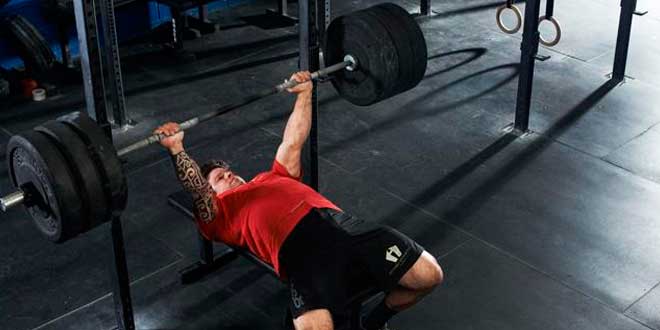
Bench Press is one of the basic exercises that we will use for pushing exercises
Why follow the Push-Pull Routine?
The reason why this workout system works so well is due to the fact that it emphasizes compound exercises instead of isolated ones. Moreover, it is quite efficient in terms of rest periods since it avoids overlapping muscle groups, unlike traditional routines.
In addition, it is also a versatile training system that can be useful both for bulking or cutting phase. Therefore, this routine will adapt to your objectives, either for esthetic purposes or for strength gains if you are a powerlifter.
Who can benefit from a Push-Pull Routine?
We suggest having at least one year of experience training. Above all, it is important to know the execution and technique of each one of the exercises perfectly. Nevertheless, when it comes to planning the week, we may add some extra rest day for those users who have less experience.
Advantages of the Push-Pull Routine
The push-pull system avoids stressing the muscles too much
When we follow a routine divided in muscle groups, we may do chest one day, another day shoulders, and then triceps. Consequently, the triceps would have been stimulated for three days in a raw, which could excessively stress the muscle and limit its growth.
However, the push-pull routine use these three muscles in the push session. Therefore, they will not receive more stimuli until the next push workout.
It allows to train with more frequency and burn more fat
The push-pull routines mainly consist of compound exercises with a big metabolic impact. A squat, deadlift or bench press demand more effort than, for instance, a cable triceps extension. Therefore, the calorie expenditure of a workout session made up of heavy multi-joint exercises will require more energy than your usual workout with just one muscle group.
Moreover, as we mentioned in the previous point, we will have enough time to recover.
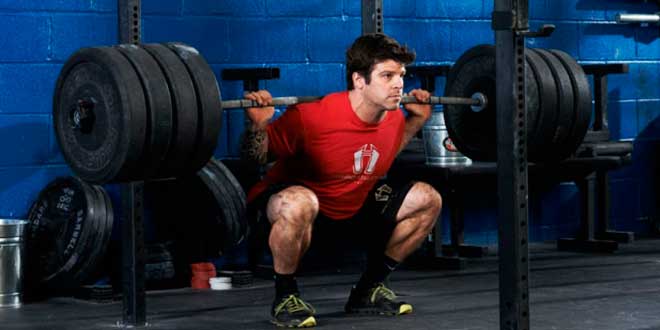
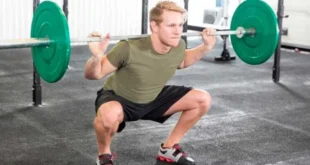
Squats are an excellent exercise to gain muscle on the lower body
Routine frequency
As we mentioned in the advantages of this type of routines, this system allows a high workout frequency. My personal advice would be twice a week:
Therefore:
- Monday and Thursday would be pushing.
- Tuesday and Friday would be pulling.
- Wednesday and Saturday would be legs.
Use Sunday to rest and recover completely. If you feel that the intensity is too high, you can include another rest day. In this case, the structure would change every week.
1st Week
| Push | Monday and Friday |
| Pull | Tuesday and Saturday |
| Legs | Wednesday |
2nd Week
| Push | Tuesday and Saturday |
| Pull | Wednesday |
| Legs | Monday and Friday |
3rd Week
| Push | Wednesday |
| Pull | Monday and Friday |
| Legs | Tuesday and Saturday |
What type of exercises will we include in the Push-Pull Routine?
We will deal with heavy exercises that involve several muscles at the same time. Therefore, we will emphasize multi-joint exercises instead of isolated ones and free weight instead of machines or cable.
Even so, we will use some isolated exercise at the end of the workouts to stimulate those muscles that have not received enough stimulation to achieve an optimal growth.
Push Day
Bench press and military press cannot be missing from this day. What we will do that day will be to apply the push movement from all possible angles. Therefore, we will do parallel dips, bench press, incline press and finally, military press.
Pull Day
If we follow the same principle for push day, the exercises will have to cover all the possible angles when we pull the weight to our body. Therefore, we will do prone grip pull ups and shoulder shrugs, face pull, single-hand row on a bench and T bar row.
Leg Day
Evidently, the main exercise for leg day will be squats with free bar. Another fundamental exercise to work our lower body are lunges. The third important exercise for the lower body is deadlift. This exercise involves both the lower body as well as the lower back. Moreover, we will not overuse that area because we do not use on the pull day.
These exercises are the base of the three days that make up the routine. In addition, we will include a triceps exercise for push day, an biceps exercise for pull day and a calf exercise for leg day.
Routine Scheme
- (B) means that the exercise is done with a bar
- (M) means that the exercise is done with dumbbells
- (BZ) means that the exercise is done with Z bar
Push Day
| Exercise | Sets | Repetitions |
| Parallel Dips | 3 | 12 or until failure |
| Bench Press (B) | 4 | 8-10 |
| Incline Bench Press (M) | 4 | 8-10 |
| Military Press (M) | 4 | 8-10 |
| Lying Triceps Extension (BZ) | 4 | 10-12 |
Pull Day
| Exercise | Sets | Repetitions |
| Pull ups | 3 | 10 or until failure |
| Should Shrugs (M) | 4 | 15 |
| T bar row | 4 | 8-10 |
| Bench Row (M) | 4 | 8 per side |
| Face Pull | 3 | 12 |
| Bar Curl | 4 | 8-12 |
Leg Day
| Exercise | Sets | Repetitions |
| Squats (B) | 4 | 8-10 |
| Deadlift (B) | 4 | 8-10 |
| Lunges (B)/(M) | 4 | 8 per side |
| Seated Heel Raise | 4 | 15 |
Related Entries
- Hypertrophy Routine: Chest-Leg
- Definition Routine
- HSN Protocol: Gain Muscle Mass without barely any fat
- The best exercises for the Trapezius
- BPT Woman, Routine for Women