Fitness, Nutrition, Health and Sports Blog In the HSNstore Blog you will find tips about Fitness, sport in general, nutrition, and health – HSNstore.com

Caffeine needs no introduction. It’s probably the most consumed stimulant substance in the world. In sports, we think of it as those must-have capsules, but what does a good cup of coffee make you think of? As an infusion, it’s priceless too.
If you’re one of the millions of Spaniards who wake up every morning with a delicious cup of coffee, you know exactly what we mean. Besides loving it, you drink it because your morning coffee helps you face the day with more energy, and less sleepiness!
No wonder caffeine has known stimulating effects that make you feel alert and full of energy, even happier, even if you haven’t slept as much as you wanted.
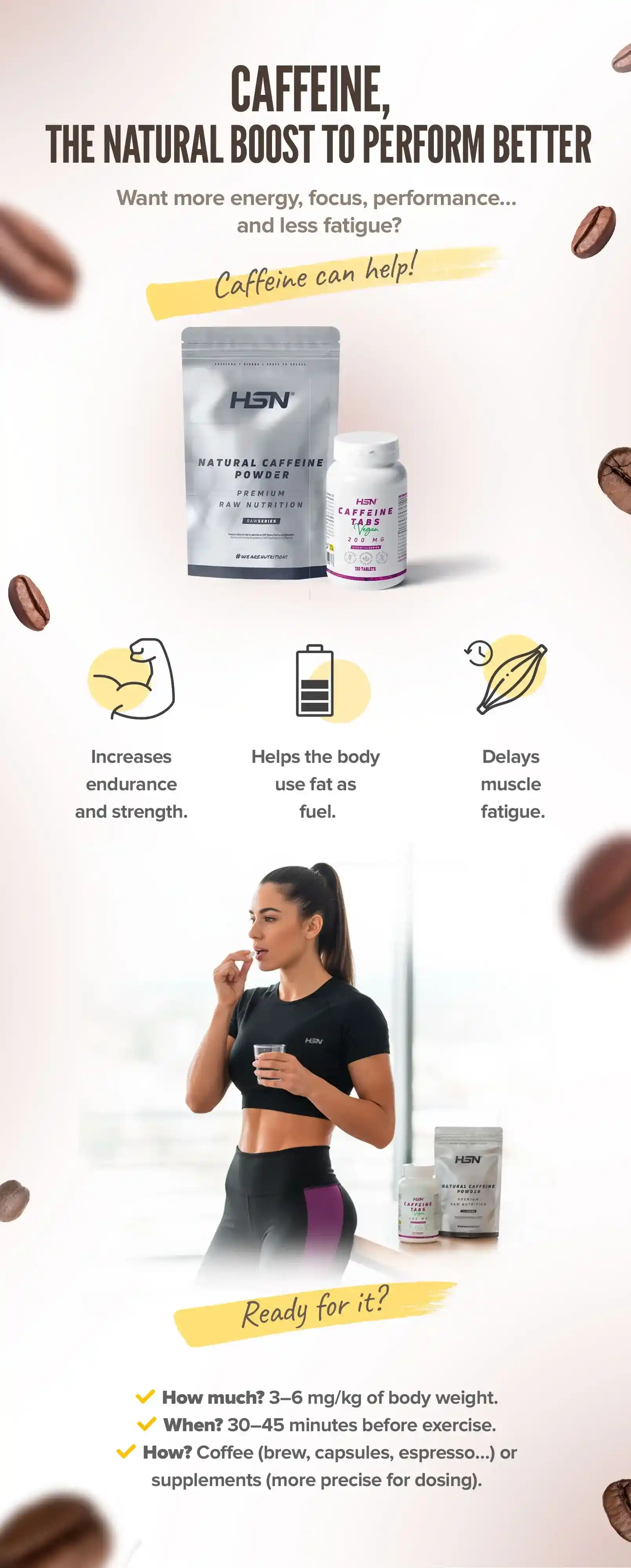
What is caffeine?
Caffeine, scientifically known as 1,3,7-trimethylxanthine, is an alkaloid belonging to the xanthine family. Known worldwide for its stimulating properties on the central nervous system, it can be obtained from various sources. The most popular are coffee beans and tea leaves, but it can also be synthetically produced.
Have you ever heard it called a drug? We get that this term might put you off, but in caffeine’s case, it’s important to clarify that it’s a psychoactive drug with mild side effects on health if consumed properly. That said, as such, it can cause a certain level of addiction.
Basically, it’s a drink that doesn’t provide nutritional value, although it’s proven to help in certain contexts, like sports or cognitive tasks.
You might notice that caffeine affects your mood and causes some physical side effects, though mostly positive, especially in sports.
Where can you find this powerful stimulant?
You can find caffeine in the beans, fruits, and leaves of over 60 plants. For this reason, sometimes this substance doesn’t appear on the label of certain foods, drinks, and supplements as caffeine itself, but under names like guarana berries, chocolate or cocoa, mate, camellia sinensis (whose leaves are used to make tea), or kola nut.
Types of caffeine
You can also find these characteristics depending on the caffeine source, mainly from:
- Supplements
- Coffee
- Tea
- Chocolate
Anhydrous caffeine, a must-have
If there’s one type of caffeine that deserves a special mention, it’s anhydrous caffeine, which is what you’ll find in most supplements and products. It’s characterized by fast absorption and a short duration of action.
Specifically, it’s the type of caffeine recommended before high-intensity physical activity or when you want to boost your performance.
Its effects kick in very quickly. Fun fact: the term “anhydrous” means “without water” or “dehydrated”. From this perspective, it’s used as a caffeine supplement in capsule or powder form.
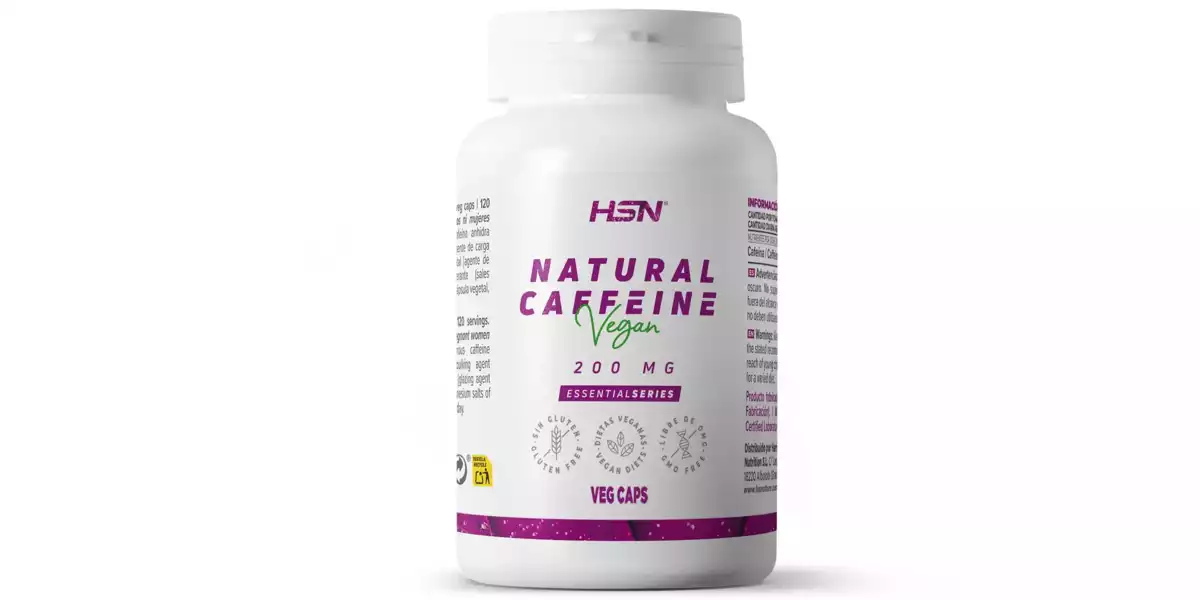
Natural Caffeine 200mg from EssentialSeries
Properties beyond keeping you awake
Caffeine is a stimulant of the central nervous system (CNS). But don’t be fooled! Its properties go further, standing out for being able to increase heart and respiratory rates. It also has psychotropic properties (alter behavior) and a diuretic effect (fluid excretion).
Today, caffeine supplements have become very popular. Still, the most traditional way to consume coffee remains through infusions of roasted and ground coffee beans—just the smell alone can bring a smile. For most, coffee smells like good vibes.
How does it work?
The molecular structure of caffeine is similar to adenosine, a chemical in human cells that acts as a nervous system depressant in the brain.
Your liver will metabolize it, producing theophylline, theobromine, and paraxanthine, metabolites filtered by the kidneys and excreted in urine.
Blocks adenosine receptors
Do you drink coffee and suddenly your sleepiness disappears? That’s because adenosine promotes sleep and suppresses nervous excitement. Caffeine blocks adenosine receptors without reducing cellular activity, which actually increases.
How long do its effects last? After about an hour, adenosine peaks in the blood and its effects last several hours.
Another neuronal effect worth noting from caffeine’s adenosine receptor blocking is that it increases dopamine production in the brain.
Watch out for its diuretic effect
Keep in mind that caffeine’s strong diuretic effect makes your body dehydrate more easily.
This is especially important if you’re in harsh environmental conditions or if the exercise you do right after taking caffeine causes heavy physical exertion and intense sweating. If so, we recommend not underestimating the importance of staying properly hydrated, especially with water + electrolytes.
Discover how the world’s top sports supplement affects your body
Want to know how your body reacts after taking caffeine? Well, note that a series of physiological and chemical changes happen due to its interaction with the nervous system. Caffeine has vasoconstrictor and stimulant effects.
Once adenosine receptors are blocked, dopamine neurotransmitters can increase their levels.
This leads to a feeling of well-being, even euphoria, during the early peak of caffeine concentration in the blood. Add a bit of extra motivation, and you’ve got the perfect cocktail to reach your goals!
Or do you think it’s just a coincidence that caffeine is considered the world’s top sports supplement?
Some of the most notable relate to caffeine’s antagonism of adenosine receptors, which affects brain functions like sleep, cognition, learning, and memory. Also, caffeine may influence certain dysfunctions or diseases like epilepsy, migraine, depression, Parkinson’s, or Alzheimer’s.
You’ll feel its effects, and so will they!
Half-life once ingested—prepare to be surprised!
It kicks in within 15-45 minutes and lasts 4 to 6 hours! These are the numbers caffeine shows from ingestion to full metabolism.
This time depends on subjective factors, meaning your sensitivity to caffeine, which we explain next.
What is sensitivity to this alkaloid?
Sensitivity explains why caffeine doesn’t affect everyone the same. It depends on how efficiently each person processes and metabolizes it. This trait is closely linked to genetics, determining to what extent caffeine affects you at a given dose.
Ever heard someone say caffeine doesn’t affect them? Maybe that’s you, and it’s related to the CYP1A2 gene.
Another factor limiting sensitivity is the type of adenosine receptors in a person’s brain. Those with fewer receptors are non-responders or less sensitive to caffeine, since the molecule can’t bind to those receptors.
What about tolerance?
Tolerance to caffeine means the same dose won’t have as strong an effect as before. So, if you want the same effects, you need to increase the dose.
Unlike sensitivity, tolerance develops over time, while sensitivity is a genetic predisposition.
If you’ve never consumed caffeine or have stopped for a while, you’ll have zero tolerance. Why? Because caffeine will act like a foreign substance to your body.
In that case, you’ll experience:
- Positive emotions
- Euphoria
- Increased energy
- Motivation
But as the saying goes, not everything is rosy, and soon things change. You’ll notice you need a higher dose to get the same satisfaction you felt at first.

Therefore, it’s essential to cycle your caffeine use, especially from a sports perspective.
Are breaks necessary?
Yes. If you’re a regular caffeine user, no matter the source, it’s good to take a “reset” or “caffeine break” from time to time.
Why?
- First, to reset your initial tolerance, so you can experience the same benefits again. This process can take from 2 weeks to 2 months depending on the person
- Second, to prevent occasional caffeine users from developing strong tolerance, so they can keep experiencing effects similar to the beginning. This helps maximize caffeine’s benefits
Everyone should adjust their weekly caffeine intake frequency, ideally between 2-4 times.
And how does the body eliminate it?
Simple: caffeine metabolites are filtered by the kidneys and excreted in urine. Caffeine’s effect on the body is diuretic, causing more water to be released through urination.
Once your body partially clears it, it’s normal to feel a bit of a “crash”. This is due to altered dopamine levels.
Its benefits give off a strong roasted aroma
As soon as your body metabolizes caffeine, a cascade of effects begins due to its interaction with the nervous system. What does that mean? They’re beneficial for boosting your physical and mental performance.
From extending wakefulness to increasing sports performance, motivating you, and providing therapeutic properties, caffeine can be your great ally every day.
Can it cause a positive doping test?
If you’re a competitive athlete, you’ll want to know if caffeine is a banned substance. Currently, it’s only recognized as a pharmacological ergogenic aid and is therefore allowed.
Specifically, since January 2004, the World Anti-Doping Agency (WADA) removed caffeine from the banned substances list, where it was included for a time.
Cycling caffeine, a good idea?
We’ve already explained it. Your body gets used to caffeine and builds tolerance. That’s why it’s advisable to cycle caffeine to keep feeling that motivating “boost.”
When considering caffeine use in sports, you have several options:
- One is to take it whenever you feel more tired than usual or after a tough workday
- Another is to use this stimulant during your most demanding training sessions, like the week you have a 1RM test planned
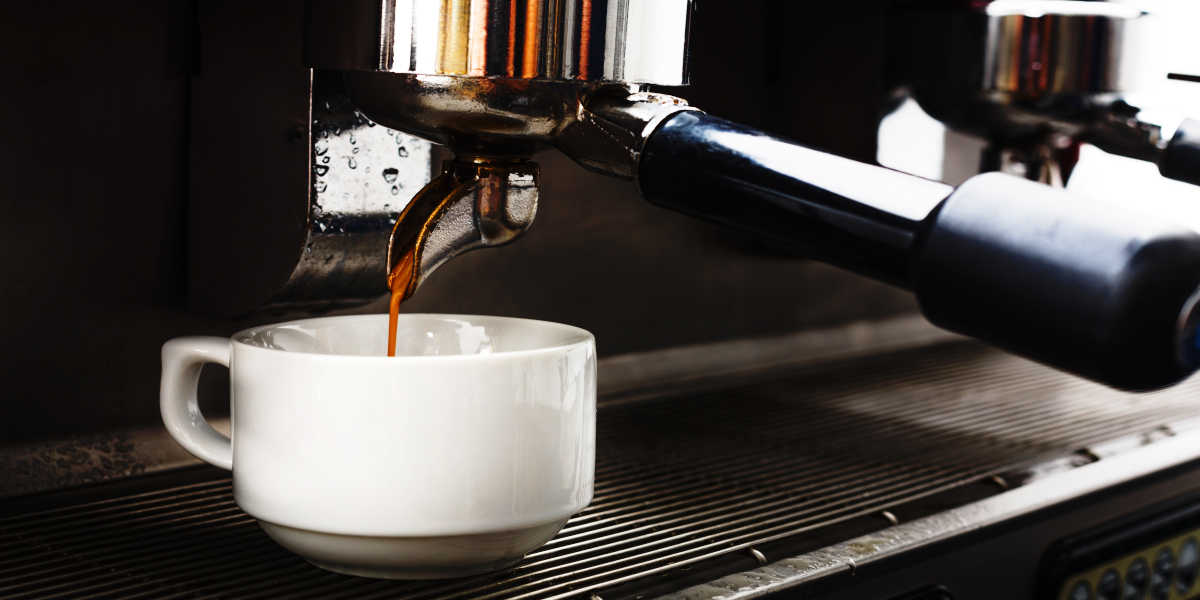
Does your espresso work against muscle soreness?
Caffeine can be a great tool to tackle the pain of dreaded muscle soreness. It’s true that the potential of this stimulant to reduce pain during and after exercise isn’t well documented. So, there’s limited info on its effects on delayed onset muscle soreness (DOMS), but a recent study shows it does help.
The study analyzed caffeine’s effect on muscle pain, showing that taking it before upper body strength training improves performance. An added benefit of sustained caffeine intake in the days after exercise is faster recovery and reduced muscle soreness!
How much do I need?
Unlike other substances or supplements, this question is quite subjective with caffeine, since everyone reacts differently. Are you the type who feels a “kick” from a small cup of coffee, or do you need a big cup “to really feel it”?
If you’re not used to coffee, a dose of 50-100 mg of caffeine (about one cup) might have a strong effect. If you want more stimulation, you can increase up to 200 mg.
Find the perfect balance with your sleep hours
Worried caffeine will keep you up? It’s undeniable that, like any stimulant, caffeine can cause problematic sleep patterns if consumed without moderation.
Earlier, we mentioned caffeine affects your energy by blocking adenosine receptors (the substance that makes you sleepy).
More than that, it not only blocks sleep-promoting chemicals but increases adrenaline and dopamine production, so it stimulates.
Regarding rest, the National Sleep Foundation recommends adults sleep between seven and nine hours per night.
Our advice: consume caffeine moderately and avoid taking it 6 to 8 hours before bedtime, or even longer if you’re more sensitive.
Is its consumption safe?
One question to ask before starting caffeine is whether it’s safe. It is, as long as you don’t exceed recommended doses.
To find your ideal caffeine dose, you need to match your own traits with your tolerance to stimulants. Some people feel effects with small doses, others need double or triple to notice “something.” Again, sensitivity leads the way.
Does it have side effects?
Caffeine has some side effects, but they’re mild.
Here are the main ones!
- Sleep disturbances
- Rapid heartbeat
- High blood pressure
- Nervousness
- Headache
- Dehydration
- Dizziness
- Dependence
Pregnant? Then don’t exceed 300 mg of caffeine/day, as higher intakes can lead to low birth weight or, in some cases, miscarriages.
Who shouldn’t take it?
Although it seems suitable for all adults, experts set limits on caffeine intake. It’s not recommended for people with anxiety disorders, heart problems, high blood pressure, or glaucoma, among others.
Where can I buy caffeine supplements?
Your 3-in-1 espresso has no rival! Less pain, better performance, and quick recovery are its main perks. A strong bet on caffeine, the molecule that moves today’s world. Are you in?
References
- Salinero JJ, Lara B, Del Coso J. Effects of acute ingestion of caffeine on team sports performance: a systematic review and meta-analysis. Res Sports Med. 2018 Dec 5:1-19. doi: 10.1080/15438627.2018.1552146.
- Shabir A, Hooton A, Tallis J, F Higgins M. The Influence of Caffeine Expectancies on Sport, Exercise, and Cognitive Performance. Nutrients. 2018 Oct 17;10(10). pii: E1528. doi: 10.3390/nu10101528.