Fitness, Nutrition, Health and Sports Blog In the HSNstore Blog you will find tips about Fitness, sport in general, nutrition, and health – HSNstore.com

A sport massage is a therapy for those who do physical exercise regularly that involves the manipulation of the soft tissue
What is the first thing that you do when you hit yourself in any part of your body? You probably cover and rub your hand on the area, right? Yes, we all do. The truth is that this is a very primitive gesture. It is a reflex of our parasympathetic nervous system to reduce or relieve the pain caused by said hit.
What is a Sport Massage?
A sport massage has been designed to help fix problems and imbalances of the soft tissue. Above all, these are caused by a repetitive and exhausting physical activity with or without trauma. The soft tissue includes the skin, muscles, tendons, ligaments and fascia.
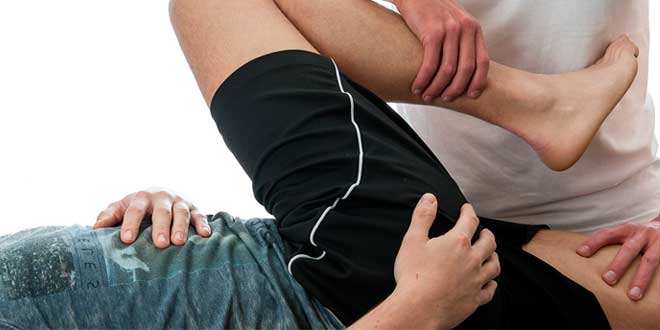
Doing a sport massage before and after the workout can improve the performance, recovery and prevent injuries
What is a Sport Massage useful for?
Unlike a conventional therapeutic massage, a sport massage focuses exclusively on the physiological aspects that can occur during the physical activity: Therefore, you do not necessarily have to compete in order to benefit from this type of massage.
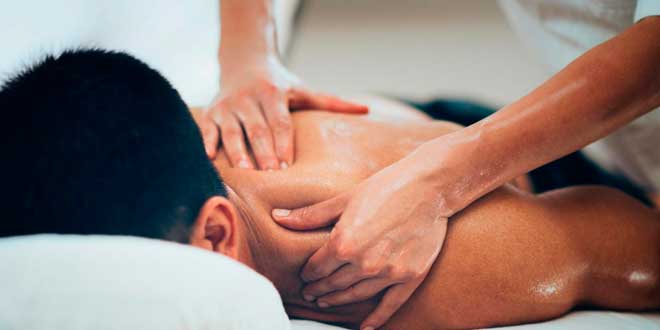
Objectives of a Sport Massage
The details of the technique for a sport massage are different for each sport discipline. However, all of them will focus on areas of the body that are overused with repetitive and often aggressive movements.
The sport massage therapy has been designed both for professional athletes and amateurs.
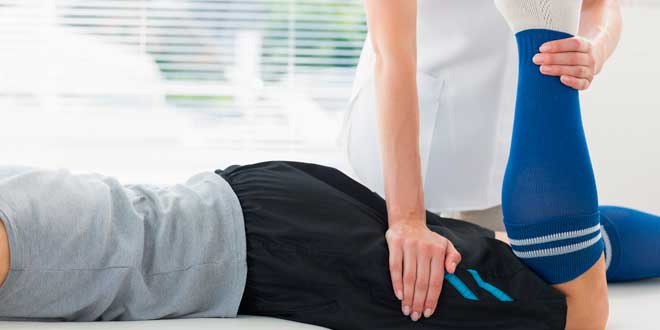
Benefits of the Sport Massage
If you perform intense workouts constantly, this therapy will come in handy. In fact, it will improve the recovery which will result in a better performance. Moreover, it will prevent possible injuries that can happen during the workout and which tend to take a while to heal.
Sport Massage Advice
Anyone who does physical exercise regularly should get a sport massage once a week or every two weeks. In fact, this can be a great addition to their current planning, since it will improve their health and sport longevity.
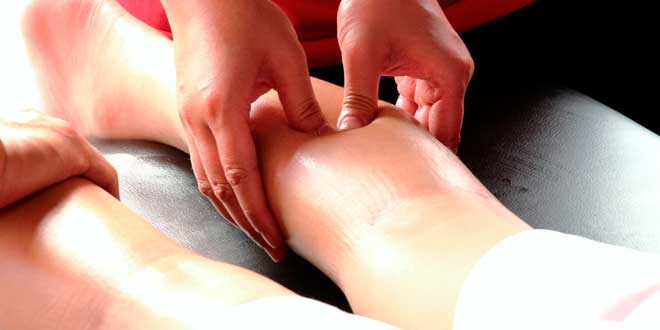
The best choice is to contact professional massage therapist. Then, we will be able to find a planning that adapts to our time availability, level of activity and budget.
Sport Massage to treat post-workout soreness
Without any doubt, the healthiest and most effective way of treating these painful symptoms is by manipulating the tissue itself.
Benefits
The massage will provide the following benefits:
- Improving the blood flow. Therefore, it is good for the elimination of accumulated lactic acid and a good muscle recovery by transporting more nutrients to the area.
- Reducing the excess of fascial tension. Consequently, it improves the muscle function in order to avoid worsening possible imbalances or producing new ones.
- Moreover, it reduces the physiological stress caused by pain itself or due to a bad structure biomechanics. This is due to the fact that the massage itself releases sedative substances that are beneficial for the central nervous system.
I am against this type of medicines and unfortunately we used them a lot against pain that would disappear by just releasing the tissue.
Stages of the Sport Massage
Regardless if we compete or not, you can apply a sport massage on three stages or phases:
Pre-competition or Pre-workout Massage
This phase usually includes 24 hours and up to 15-30 minutes before the physical activity. Our purpose will be to get the muscles ready for the effort.
Main objectives:
- Stimulating the muscles by triggering a series of pre-activation neuromuscular signals.
- Improving the blood flow and temperature, so that the fibers are ready for a proper contraction. The better the blood circulation and temperature in the muscle, the better will be its ability to perform its tasks efficiently.
- Providing more elasticity to the muscle, increasing its range.
- Eliminating possible myofascial adhesions that hinder the movement, limiting its capacity and efficacy.
Post-competition or Post-workout massage
We will apply this phase after the activity. After 45 minutes – 1 hour, when the neuromuscular function is ‘deactivated’ so that it will be more effective.
- Taking the hypertonic muscle back to its natural state, that is, without the tension produced by the workout.
- Decreasing the muscle fatigue, increasing the blood supply which helps to eliminate waste substances like accumulated lactic acid.
- Reducing possible contractions that can happen due to muscle spams produced by an excess of muscle work. Or it can also be due an excess of lactate after the tissue biochemistry changes.
- Recovering the nervous system on the muscle spindle and the specific myotatic reflex in the muscle.
- Reducing the physiological and mental stress produced during the workout.
Maintenance Massage
The maintenance phase is independent from the two previous phases. Usually, it is done once a week, although I believe it should be done at least twice if the exercise is very intense. Moreover, you can complete this phase with little daily sessions of auto-massage at home. Therefore, you will be able to release specific areas such as the foot’s sole or strengthening areas that are more susceptible to tension. (Personally, I suggest 20 minutes daily before going to sleep).
- First of all, it helps to preserve the muscle tone. In other words, it makes the muscle fibers contract and rotate when others during the contractile function.
- At the same time, it prevents possible fascial adhesions in the muscle, keeping its proper functioning.
- Finally, it contributes to keeping a good posture in general.
Exercise and Pain?
Feeling pain when we do any kind of physical activity is so common, that it has become some kind of “rule” –
…”if you do exercise you have to feel pain, there is no other way…” – However, in biological terms, this does not make any sense at all…
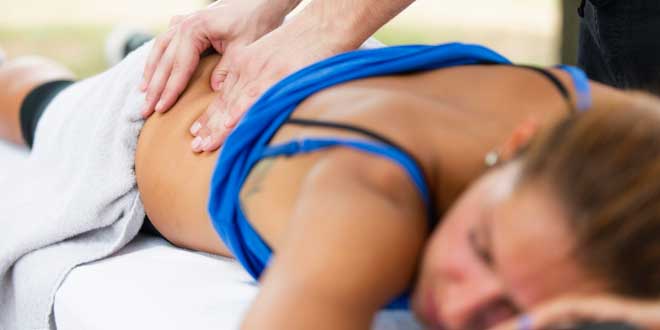
In general, sport injuries in the muscle-skeletal system tend to be caused by overexertion, muscle imbalances and even due to a bad execution under said imbalances..
”… You went running yesterday but you changed the route. You run more slopes for longer and your calves hurt so much today that you can barely walk. To top it all, your feet’s sole hurts too, like a few months ago when you were diagnosed plantar fasciitis…”
Well, part of the soreness can be due to a muscle overexertion. Probably, the fascial tissue that surrounds the structures (muscles, bones…) of that area underwent too much tension. Consequently, this put pressure on said structures, changing their position, limiting the movement and causing pain.
In general, what we tend to do in this cases is basically nothing. After a few days, we will take an anti-inflammatory if the pain is still strong...
Importance of the Sport Massage
Sometimes, massaging ourselves can be quite complicated.
Among other reasons:
- Due to a lack of time (this tends to be an excuse).
- Because we lack knowledge about anatomy as well as the correct massaging technique (this is understandable).
- Simply, you do not want to worry about it and you want a professional to take care of it (also understandable). Without any doubt, this will be the best choice.
Therefore, if you do intense physical exercise regularly, you will have to get a massage in order to preserve your body
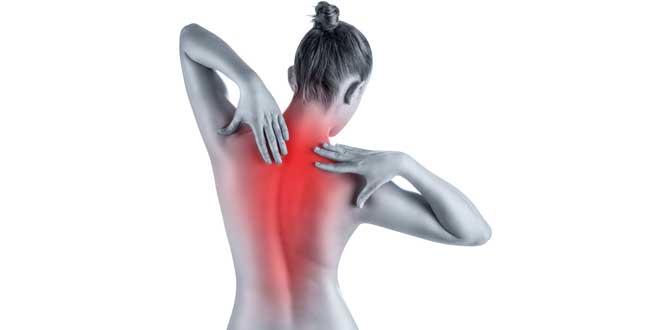
Even if you massage yourself, it will never be as good as the one done by a professional. They have the knowledge and abilities necessary to fix all the problems we may have as effectively and safely as possible.
The Self-Healing Law of the Body: the body has all the necessary mechanisms to heal itself, we just need to help to reestablish its normal function.
Dr. Taylor Still
Sources
- Carro, F. P.: Tratado de masaje, terapéutico, deportivo y de belleza. Lugo (España): Distribuidora del Norte.
- Rumplif Bettina. El Masaje. Editorial Paidotribo, 3era edición.2001
- Andreewicz Biriukov Anatolik. Masaje Deportivo. Editorial Paidotribo, 3era edición. 2001.
Related Entries
- What is the Foam Roller?
- Compex, advantages and disadvantages of the electrostimulation
- Massages: Lower the chances on suffering an injury
- Deep friction massage by Cyriax
- Benefits of a post-workout massage
- Lymphatic drainage, what is it and what are its benefits
- Benefits of Mobilizing