 Fitness, Nutrition, Health and Sports Blog In the HSNstore Blog you will find tips about Fitness, sport in general, nutrition, and health – HSNstore.com



In this article, I’ll talk about the myths surrounding Peak Week and you’ll see how easy it is to get to an enviable stage
Anyone who steps on stage knows how important competition week is, where many go from looking in a “great” shape to looking flat, with worse vascularity and a feeling of having soft muscles.
Peak Week
Peak week is the term Americans use to describe this week, which basically means “week of maximum intensity.”
During it, many follow protocols where they cut carbs, eliminate water (or even drink distilled water), do sodium and potassium loading/depletion, use diuretics, etc.
We have to understand we’re talking about competition week, meaning what you haven’t achieved until then you won’t achieve in 5-7 days
Maybe it sounds harsh, but there’s no magic process that makes your skin stick to your muscle, makes you look fuller, or makes your veins look like a road map in such a short time. On the contrary, any change during that week usually goes downhill, because when we talk about body fat percentages below 10%, the line is very thin.
The Role of Sodium in Peak Week
Sodium is usually one of the factors most controlled during Peak Week.
This is because of the belief that since it retains water, cutting it from the diet will give a drier look in the days before the pre-competition carb load (which we’ll talk about later).
Aldosterone
This chart by L.Norton for Bodybuilding.com shows it perfectly:
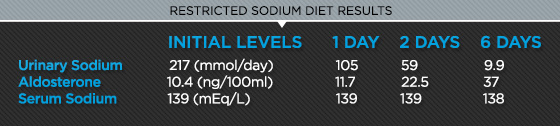
This chart reflects Rogacz’s (1990) study, where sodium intake was cut for 6 days
As we can see, as days go by, sodium in urine decreases from 217 mmol/day to 9.9 mmol/day, reflecting a 20 times lower sodium excretion.
This happens thanks to higher aldosterone levels (rising from 10.5 to 37 ng/100mL). Aldosterone is a hormone synthesized in the adrenal gland whose function is to keep sodium levels stable.
Antidiuretic Hormone
Also, indirectly, it raises ADH (antidiuretic hormone) levels, causing increased water reabsorption and less fluid excretion.
What happens when we stop consuming sodium?
Simple: as sodium decreases, blood volume (volemia) drops as a consequence.
This drop is detected by receptors that trigger aldosterone release, reabsorbing sodium and increasing blood volume again to keep it stable.
This process is exactly the target of some antihypertensives
Sodium Depletion in Peak Week
However, sodium depletion has more downsides than benefits during PEAK WEEK.
Glucose transport in the intestine depends on sodium, unlike fructose, which is absorbed by a sodium-independent mechanism.
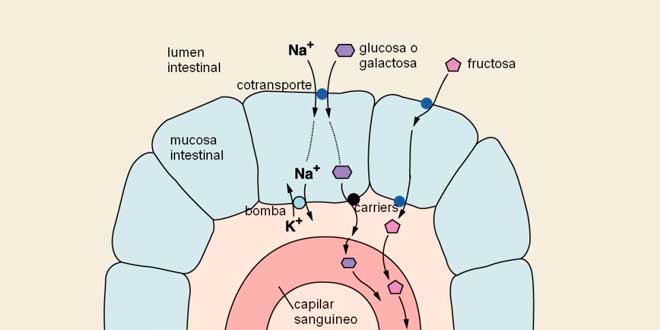
This is one reason why people who cut sodium intake and then do a high carb load see their muscles lacking vascularity and not “full” as they should be.
Why Not Cut Sodium in Peak Week?
Sodium is one of the main factors involved in nerve impulse propagation:
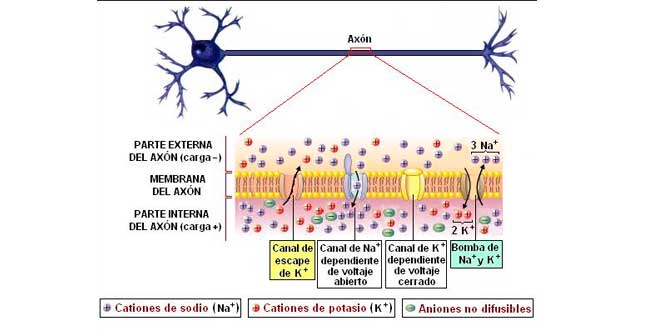
Remember that nerve transmission plays a big role in training, so if we cut sodium, we can have problems transmitting impulses (getting tired sooner) and cramps due to hyponatremia (low sodium levels).
So, if cutting sodium causes muscle problems, doesn’t produce more “dryness” because of hormonal activity, and reduces nutrient uptake by altering membrane permeability, what benefits does it have?…
None, cutting sodium doesn’t improve our pre-competition condition
Carb Loading and Depletion
Carb loading and depletion is probably one of the most repeated protocols in pre-competition prep.
Many pros do a depletion one week before the contest and then load.
The goal is to give muscles a fuller look thanks to more muscle glycogen
As a result, more hydration and cell volume. The amount of glycogen stored in muscles varies with muscle mass, but we say it can be up to 400g on average, unlike the liver, where a normal-sized liver stores between 88 and 160 g.
Protocols
There are two types of protocols:
- The first is cutting carbs the week before and keeping them low until 48h before the event to do a load, and
- the second is progressively adding carbs during the week until competition day, where you finish adding the max amount of carbs.
Both protocols are good in my opinion, but I might prefer keeping the carb amount we were eating until peak week and then doing 2 high-carb days.
Many might think that eating large amounts of carbs 48h before the event could lead to fat storage…
Definitely not
Lipogenic marker expression (genes and enzymes related to storing carbs as fat) usually peaks after 4 days of a high-carb diet, but the difference isn’t significant.
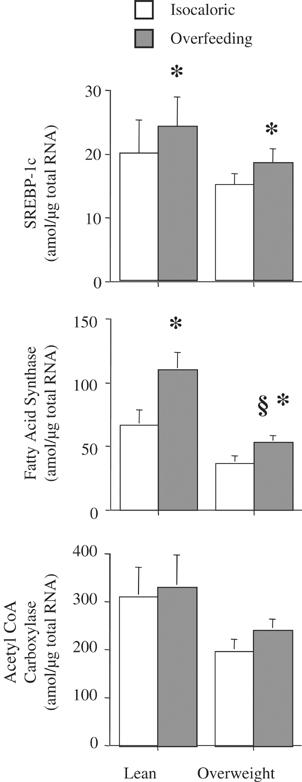
Light bars = normal intake / Dark bars = high-carb diet for 4 days (healthy and overweight individuals)
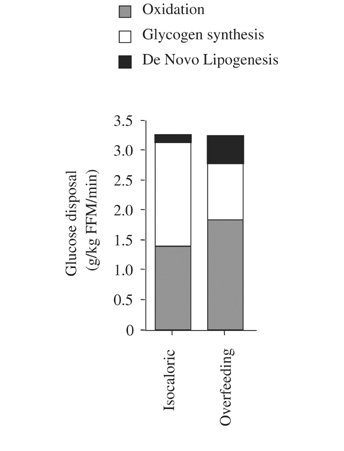
Looking at this last graph, after 4 days glycogen storage is lower and oxidation (glucose use by cells) is higher, as is fat storage.
Loading Agents
Another key part is that carbs are what I call “loading agents,” meaning substances that pull a significant amount of water into the cell, which is FUNDAMENTAL for Peak Week.
If we cut sodium and water, glucose entry into the cell loses part of its effect as a loading agent.

That’s why it’s ideal to eat foods high in sodium and carbs along with 5-8L of water 48h before. The best food for this?
“Light Chips”
Exactly, light packaged chips, since their carb and sodium content is quite high, plus they have almost no fat.
Low Carb Preps
This is probably one of the things I see most in preps nowadays.
Personal trainers who cut to 20-30 g carbs/day and then, in the last 48h, do a carb load thinking it will give bigger muscles.
It’s true that high carb intake gives a much bigger muscle look, since glucose (stored as glycogen) is a “loading” substance. It pulls a significant amount of water into the cell.
That’s why whenever you do a refeed or a load like this
However, there’s no need to “empty” glycogen stores to do this load, thanks to training being a strong stimulator of glycogen resynthesis, increasing GLUT4 levels (glucose transporter into cells)1 and glycogen synthase levels (enzyme that stores glucose as glycogen)2,3,4
Entering Ketosis
When we cut to 20-30 g carbs as mentioned, we enter a state of ketosis. In this state, ketone bodies become the main fuel at the cellular level.
For a pro training at high loads, this can be counterproductive
First, training with low muscle glycogen stores leads to higher protein breakdown5. Don’t confuse training fasted (where you have muscle glycogen) with training in ketosis (low muscle glycogen).
In the second case, as shown in the study, the amount of pyruvate oxidized was much lower in people with low glycogen. This means more fat and protein oxidation.
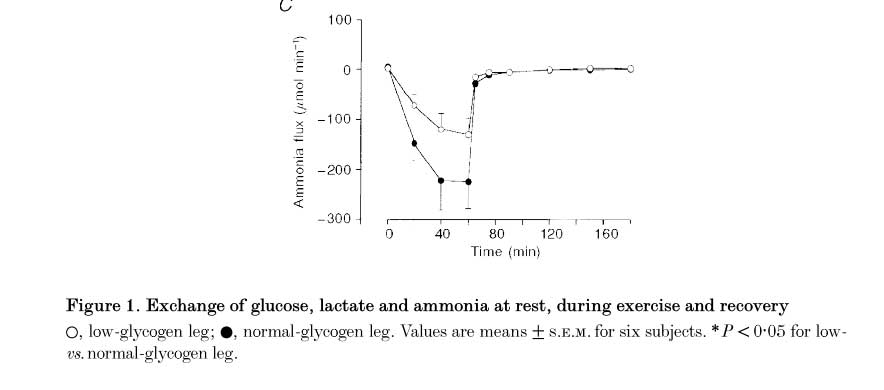
Also, the amount of amino acids released by muscle (tyrosine and phenylalanine) only happened in those who trained with low stores
If you don’t remember, in other articles I talked about how low-carb diets increase cortisol levels
Cell Volume
Getting high cell volume is the main goal in peak week. This gives fuller muscles and therefore a better look for judges or photo shoots.
Talking about cell volume means talking about intracellular water
So, regardless of diet, I’m a fan of training until the last moment
Increasing Intracellular Water
As some studies show, training is a powerful stimulator to increase intracellular water6.
Combined with a high carb load and a high water volume (between 6 and 8L), we can get a better physiological environment, since when the cell is highly hydrated, there’s less protein loss and more fat use7.
Using Creatine
As many know, creatine is one of the substances that helps retain water in the body. However, many pros don’t use it during peak week because they believe it stores subcutaneous water.
And therefore, gives a less “dry” look
The reality is totally different: creatine is another “loading” substance, so water retention is intracellular, with 95% stored inside muscles, causing a 750 g increase in body mass after consumption8.
Unlike Layne Norton, respected by all and whom I deeply admire, I do believe creatine can be introduced during peak week even if it wasn’t taken before.
Example of a Peak Week Prep

Since I know many want to see an example of Peak Week with diets and protocols, here’s the one I did for Abel Requena (@Abel_Goma).
It’s probably one of the preps I designed with the most passion and dedication. Abel is one of the most perfectionist people I know.
Starting Data
Abel’s Peak Week started with a pretty high protein intake, moderate-high carbs (around 250-260 g), and low fats.
Due to his weight and height (plus high training temps), I never went below 190 g carbs/day; in fact, the day he ate the least carbs was 210 g.

Carb Distribution
Since Abel has issues with pre-workout meals, we preferred to put most carbs post-workout.
With that, a big part right after training to favor earlier glycogen replenishment (amylopectin was replaced by cyclodextrins), and another later with solid food (rice plus a shake).
Training Until the Last Moment
While many coaches/nutritionists put training on the back burner, for me it’s essential during peak week. In fact, with good training, the physical look improves amazingly:

More pump, more vascularity, much sharper muscle look since blood flow to muscle is higher, etc.
Sodium Amount
Sodium was kept steady throughout the week except for the last 38h. From then on, carbs, sodium, and water were increased, keeping creatine as per protocol.
Diet
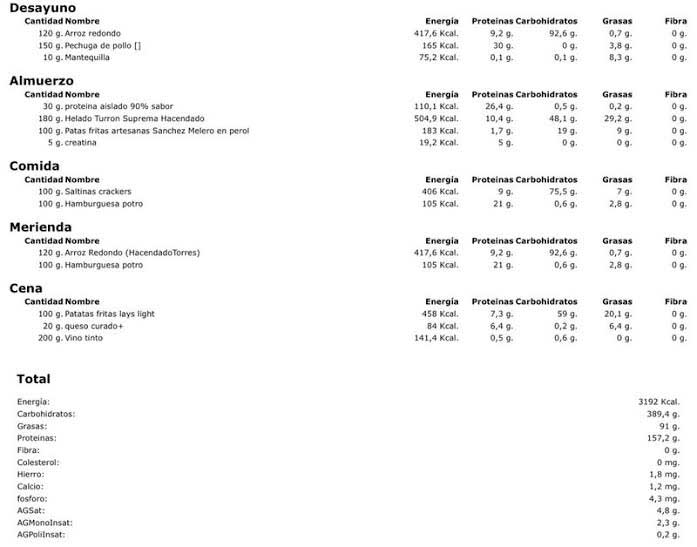
The diet looked like this:
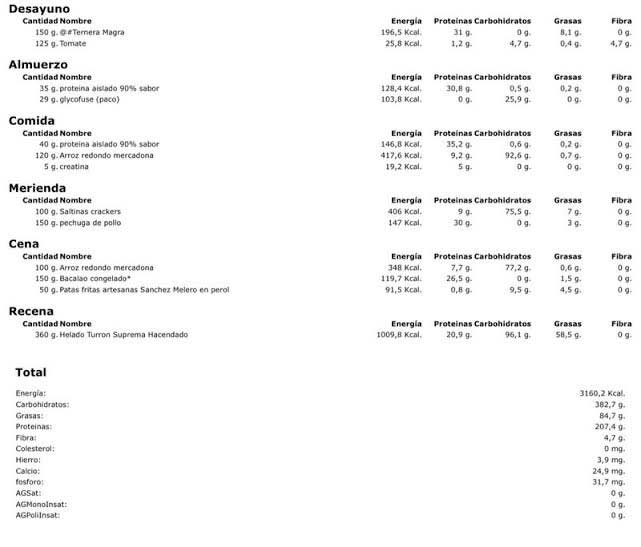
Calories increased by almost 900 kcal, mostly from carbs
As you can see, as we get closer to photo day, we spread out carbs. We go from 2 high-carb meals to 5 meals, all post-training, favoring recovery.
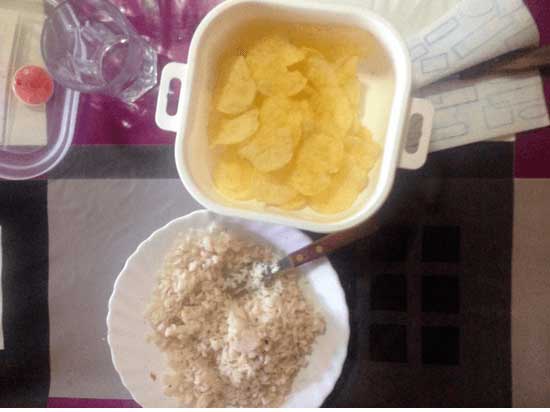
It might seem strange to newbies to eat 360 g of ice cream before bed after eating 100 g rice and 50 g fries…
But there’s no problem eating that many carbs at night, because as I say in most articles:
The amount of carbs stored as fat is very low
Final Day
For the last day, there were no tricks up the sleeve or magic secrets like some think
What we aimed for was to slightly increase what we were doing the day before, small intakes every 2-3 hours with a steady supply of creatine, sodium, water, and carbs.
Water Amount
Water intake reached nearly 8 liters in small amounts throughout the day.
For those reading this, if you haven’t taken potassium-sparing diuretics like spironolactone (aldactone) or stronger ones like furosemide (seguril), and you’re constantly going to the bathroom, that’s a good sign, meaning your body is well hydrated.
About an hour or so before, the remaining water was taken, along with high-sodium fries, cheese (for its high fat content), and two glasses of wine
Result




Conclusions
With this pre-competition protocol, I don’t want to discredit other coaches’ methods or make anyone think this is the only way to approach that week.
Fortunately, we’re still in early days regarding preps, so we see there are many ways to approach PEAK WEEK. That’s why my goal is to show you there are other ways without cutting water, sodium, or even carbs.
Sources
- Changes in the GLUT4 Expression by Acute Exercise, Exercise Training and Detraining in Experimental Models. Alexandre M Lehnen1,2, Kátia De Angelis3, Melissa Medeiros Markoski1 and Beatriz D´Agord Schaan1,2*.
- Exercise training increases glycogen synthase activity and GLUT4 expression but not insulin signaling in overweight nondiabetic and type 2 diabetic subjects. Christ-Roberts CY1, Pratipanawatr T, Pratipanawatr W, Berria R, Belfort R, Kashyap S, Mandarino LJ.
- Determinants of post-exercise glycogen synthesis during short-term recovery. Jentjens R1, Jeukendrup A.
- Regulation of glycogen synthase in skeletal muscle during exercise. Nielsen JN1, Richter EA.
- Effect of muscle glycogen on glucose, lactate and amino acid metabolism during exercise and recovery in human subjects Eva Blomstrand and Bengt Saltin.
- Resistance training promotes increase in intracellular hydration in men and women. Ribeiro AS1, Avelar A, Schoenfeld BJ, Ritti Dias RM, Altimari LR, Cyrino ES.
- Effects of changes in hydration on protein, glucose and lipid metabolism in man: impact on health. Keller U1, Szinnai G, Bilz S, Berneis K.
- Creatine Supplementation Increases Total Body Water Without Altering Fluid Distribution
Related Posts
- Dropping Below 10% Body Fat
- HSN Protocol: Destroying Fat