Fitness, Nutrition, Health and Sports Blog In the HSNstore Blog you will find tips about Fitness, sport in general, nutrition, and health – HSNstore.com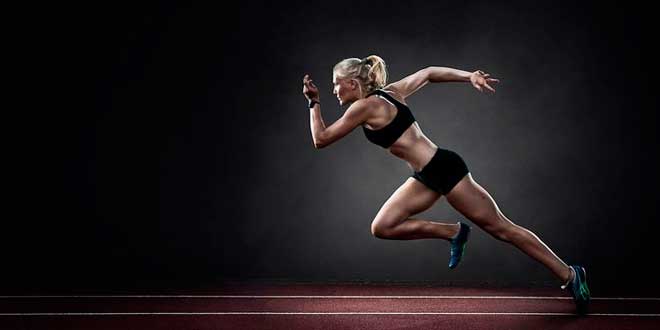

Caffeine is a legal supplement commonly taken by athletes because it provides ergogenic effects that help boost performance and can be used before training sessions or competitions, especially when high-intensity exercise is planned afterwards
Caffeine also seems to be just as effective when taken in combination with other carbohydrates and electrolytes or other intake forms like gels.
Physiological Effects of Caffeine That Boost Performance
Absorption
Caffeine is rapidly absorbed through the gastrointestinal tract and moves across cell membranes.
Caffeine is metabolized by the liver
Caffeine (more info) can act on both the central and peripheral nervous systems, affecting substrate metabolism and neuromuscular function
Intracellular Calcium Mobilization
Caffeine intake leads to increased intracellular calcium mobilization, promoting muscle contraction.
Adenosine Receptor Antagonism
Caffeine is proposed to enhance physical performance as it acts as an adenosine receptor antagonist in the central nervous system.
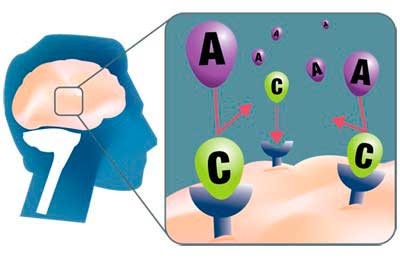
Through this mechanism, caffeine can modulate central fatigue and influence perceived effort, perceived pain, and alertness levels.
Reduced Glycogen Dependence and Fatty Acid Mobilization
Besides its impact on the central nervous system, caffeine can affect substrate utilization during exercise.
Endorphin Secretion
More endurance performance perks? The increase in endorphin secretion.

Endorphin concentrations increase during exercise, and their analgesic properties may lead to reduced pain perception
Lowered Subjective Perception of Effort
One noticeable effect of caffeine intake is the reduction in RPE (rate of perceived exertion) scores, meaning fatigue and effort feel less intense when caffeine is taken.
It might also happen that it doesn’t affect you at all:
Anhydrous Caffeine: The Better Choice
Several caffeine supplement delivery methods have been studied, concluding that taking caffeine in capsules and in anhydrous form is more effective than a cup of coffee.
Anhydrous caffeine means it contains no water; it’s dehydrated caffeine

Unlike caffeine found in coffee or tea, anhydrous caffeine can be found in sports supplements as capsules or powder, among others
How to Use Caffeine?
Evidence suggests that consuming caffeine daily may reduce the performance boost when taken before training or competition (more info).
Therefore, athletes are recommended to avoid caffeine for 7 days before competition (click here to learn more)

Caffeine can be taken in various forms: capsules, gels, or caffeinated drinks
Recommended Dose
Doses of 3 to 6 mg/kg of body weight taken 30 to 90 minutes before exercise have been shown to increase performance by up to 6% in events lasting from a few minutes to several hours.
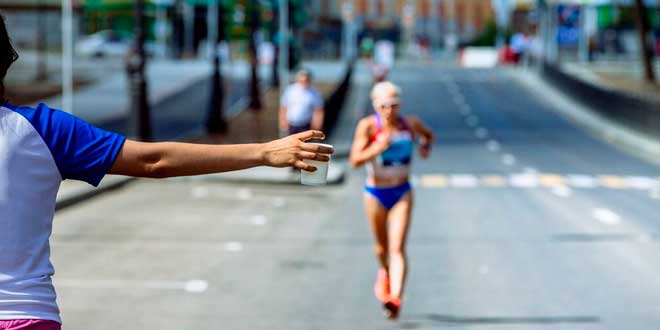
It can also be consumed during competition if it’s long-lasting
Side Effects
Unless taken in excessive doses, caffeine has no clear side effects. But if a too high dose is consumed, it can sometimes cause gastrointestinal intolerance and insomnia.
Conclusions
- Caffeine is more effective when consumed in an anhydrous state (capsules or powder).
- Most research uses a protocol where caffeine is taken 60 minutes before exercise to ensure optimal absorption.
- Caffeine is effective at low to moderate doses (3-6 mg/kg body weight); there’s no added benefit at higher doses (>9 mg/kg).
- Caffeine can also improve alertness for athletes during exhaustive exercise requiring sustained attention and focus.
- Caffeine is an effective aid for maximal endurance activities of long duration.
- Caffeine can reduce glycogen dependence in long-duration events.
Want to read more on the topic?
- Caffeine-Fat Burning, here
- Caffeine Capsules, click here
- You can also check out the possible contraindications of another supplement like creatine.
Sources
- Peeling, P, Martyn J., B., Paul S.R. Goods, Sim, M., Burke, L. M. (2018). Evidence-Based Supplements for the Enhancement of Athletic Performance. International Journal of Sport Nutrition and Exercise Metabolism.
- Southward, K., Rutherfurd-Markwick, K., J., Ali, A. (2018). The Effect of Acute Caffeine Ingestion on Endurance Performance: A Systematic Review and Meta-Analysis. Sports Med.
- Glaister, M., Gissane, C. (2017). Caffeine and Physiological Responses to Submaximal Exercise: A Meta-Analysis. International Journal of Sports Physiology and Performance.
- M. Doherty, P. M. Smith. (2005). Effects of caffeine ingestion on rating of perceived exertion during and after exercise: a meta-analysis. Scand J Med Sci Sports.
- Ganio, S. M., Klau, J. F., Casa, D. J., Armostrong, L. E., Maresh, C. M. (2009). Effect of caffeine on sport-especific endurance performance: a systematic review. Journal of Strength and Conditioning Research.
- Goldstein, E. R., Ziegenfuss, Z., Kalman, D., Kreider, R., Campbell, B., Wilborn, C., Taylor, L., Willoughby, D., Stout, J., Graves, B. S., Wildman, R., Ivy, J. L., Spano, M., Smith, A. E., Jose Antonio (2010). International society of sports nutrition position stand: caffeine and performance. J Int Soc Sports Nut.