 Fitness, Nutrition, Health and Sports Blog In the HSNstore Blog you will find tips about Fitness, sport in general, nutrition, and health – HSNstore.com

The debate about the impact of social lifestyle habits on sports performance is ongoing. Many athletes wonder to what extent a weekend outing or a few beers after training can compromise weeks of hard work in the gym.
To understand this, it is necessary to analyze how our body responds at the molecular, metabolic, and hormonal levels to the consumption of these beverages.
Is Drinking Alcohol Bad?
To answer whether drinking alcohol is bad from a fitness perspective, we must first understand how the body processes it. Alcohol (ethanol) provides 7 kilocalories per gram, an energy value that falls between carbohydrates (4 kcal/g) and fats (9 kcal/g). However, these are considered empty calories because they lack nutritional density (they provide no vitamins, minerals, or amino acids).
When alcohol enters the system, the body immediately identifies it as a toxin. Since it cannot be stored (as glucose can be stored as glycogen or fatty acids as adipose tissue), the liver halts its other metabolic functions to prioritize alcohol elimination.
This triggers two critical issues for athletes:
- Inhibition of lipolysis: Fat burning is drastically reduced because the body uses acetate (derived from alcohol) as its primary fuel source.
- Suppression of gluconeogenesis: The production of glucose from other substrates becomes more difficult, which can lead to low blood sugar levels and reduced energy availability for subsequent training sessions.
How Does Alcohol Affect Muscle Growth and Hypertrophy?
For a muscle to grow after resistance training, the net nitrogen balance must be positive, meaning that the creation of new proteins exceeds muscle protein breakdown. Alcohol completely disrupts this balance through three physiological pathways:
Inhibition of the mTOR Pathway and Protein Synthesis
The mTOR (Mammalian Target of Rapamycin) metabolic pathway is the master switch that activates muscle growth in response to training and amino acid intake. Various clinical studies have shown that alcohol consumption suppresses the activation of this pathway, reducing muscle protein synthesis by 24% to 37%, even when accompanied by adequate post-workout protein intake.
Altered Hormonal Environment: Testosterone vs. Cortisol
Alcohol acts directly on the hypothalamic-pituitary-gonadal axis:
- Reduced testosterone: It lowers levels of this essential anabolic hormone responsible for strength and muscle development.
- Increased cortisol: It elevates levels of the stress hormone, which is highly catabolic (breaks down muscle tissue) and promotes fat storage around the abdominal area.
Interference with Glycogen and Cellular Hydration
Alcohol is a powerful diuretic. It inhibits antidiuretic hormone (vasopressin), forcing the kidneys to excrete significantly more water than is consumed. A dehydrated muscle loses volume, contractile capacity, and efficiency in resynthesizing muscle glycogen, the primary fuel source for lifting heavy loads.
Beer and Sports: Myth or Reality as a Recovery Drink?
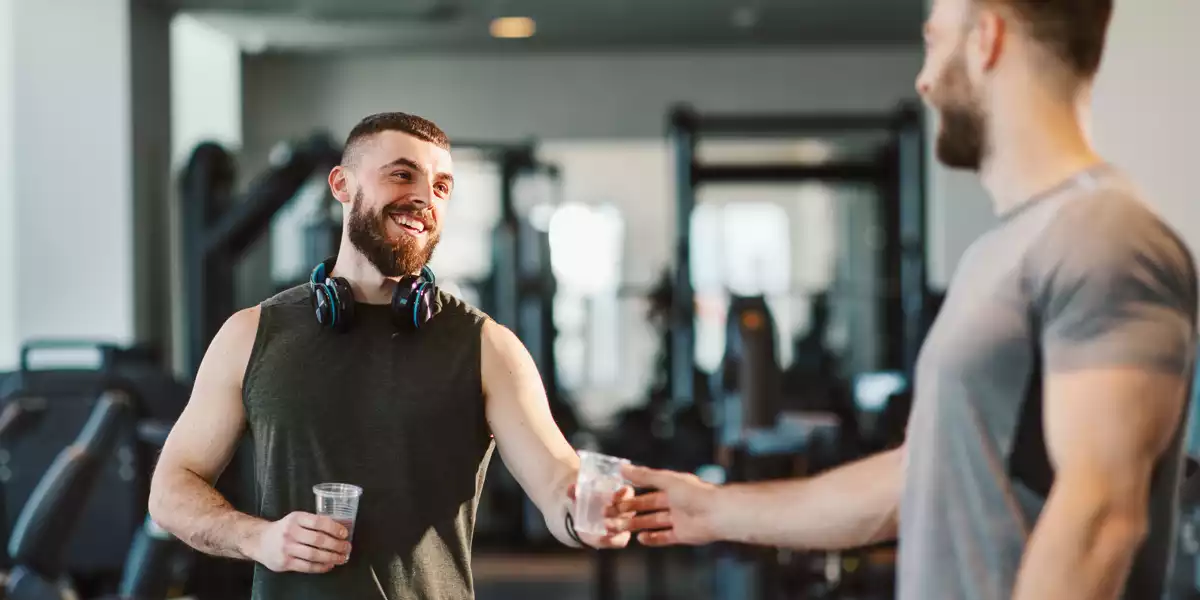
It is very common in running, football, or CrossFit environments to hear that beer is an excellent “isotonic” option for rehydrating after physical exercise due to its water, barley, and hop content. However, scientific evidence forces us to separate myth from reality.
The Problem with Traditional Alcoholic Beer
Although beer provides polyphenols (antioxidants), B vitamins, and minerals such as silicon and potassium, the presence of alcohol (even at levels of 4% to 5%) eliminates any hydration benefit. The diuretic effect of ethanol causes you to excrete more fluid than the beer itself provides, delaying recovery.
The Smarter Alternative: Alcohol-Free Beer (0.0%)
When we analyze the composition of alcohol-free beer (0.0%), the situation changes completely. By removing ethanol, we are left with a beverage rich in rapidly absorbed carbohydrates and natural antioxidants, which can help restore energy stores and reduce oxidative stress without negatively affecting the hormonal environment.
Below is a comparison of the post-workout metabolic impact:
| Metabolic Parameter | Alcoholic Beer (4–5%) | 0.0% Beer (Alcohol-Free) |
|---|---|---|
| Hydration Balance | Negative (Causes dehydration due to its diuretic effect) | Positive (Helps replenish fluids) |
| Protein Synthesis (mTOR) | Interrupted or reduced | Intact (Does not interfere with recovery) |
| Antioxidant Supply | Yes, but offset by ethanol-induced oxidative stress | Yes (Clean source of polyphenols) |
| Impact on REM Sleep | Negative (Disrupts restorative sleep) | Neutral (Does not affect the nervous system) |
What to Look for When Choosing Recovery Supplements
When the goal is to protect muscle mass and ensure optimal cellular hydration (especially if you want to counteract periods of physical stress or occasional dehydration), not all products are created equal. Here is what you should look for when analyzing nutrition labels:
In a Protein Supplement
- Leucine content: Ensure the amino acid profile provides at least 2.5–3 grams of leucine per serving. This amino acid is the biological trigger required to activate the mTOR pathway.
- Purity and filtration: Look for options containing more than 80% actual protein (whether whey concentrate or isolate), avoiding products with added sugars or low-quality amino acid fillers (amino spiking).
In an Electrolyte or Mineral Formula
- Sodium-to-potassium ratio: Effective hydration requires sodium to retain intracellular water. Look for formulas that provide at least 200–300 mg of sodium per serving.
- Magnesium forms: Organic or chelated forms such as magnesium citrate or magnesium bisglycinate are preferable, as they support muscle relaxation and recovery.
Damage-Control Strategies
If you decide to drink alcohol occasionally due to a social commitment, applying these chrononutrition-based principles may help protect part of your progress:
- Separate training and drinking: Try to maximize the number of hours between your workout and alcohol consumption. Never train immediately before a night of heavy drinking.
- Prioritize hydration beforehand: Drink plenty of water before, during, and after the event. A useful rule is to alternate every alcoholic beverage with a glass of mineral water.
- Eat a high-protein, low-fat meal: Since the body will prioritize alcohol metabolism and temporarily suppress fat oxidation, reduce dietary fat intake during that meal and prioritize lean protein sources to maintain stable amino acid levels in the bloodstream.
Frequently Asked Questions (FAQ)
How many beers can I drink if I go to the gym?
If your goal is to maximize muscle gain or fat loss, the ideal amount is zero. However, from a social balance perspective, having 1–2 beers per week on isolated occasions is unlikely to completely derail your progress, provided that your nutrition and training remain consistent throughout the rest of the week. If possible, opt for alcohol-free versions.
Does beer affect muscle growth?
Yes, traditional beer can negatively affect muscle growth because of alcohol’s impact on protein synthesis and its ability to reduce circulating testosterone levels. It also decreases the quality of deep sleep phases, preventing the body from properly releasing growth hormone during the night.
What happens if I go to the gym and then drink beer?
If you consume alcoholic beer immediately after training, you interfere with the muscle repair process that your workout has just initiated. Your liver will prioritize breaking down alcohol, your body will become dehydrated more quickly due to the prior physical effort, and you may experience increased muscle soreness (DOMS) and reduced strength in subsequent training sessions.
Bibliographic References
- ergolog.com | Drinking alcohol after training inhibits muscle growth
- NCBI | Restoration of fluid balance after exercise-induced dehydration: effects of alcohol consumption | University Medical School, Foresterhill, Aberdeen AB25 2ZD, United Kingdom. | October 1997
- NCBI | The Combined Effect of Alcohol and Physical Exercise on Serum Testosterone, Luteinizing Hormone, and Cortisol in Males | E. Heikkonen et al. Alcohol Clin Exp Res 20 (4), 711–716. June 1996
- Chaya, C.; Pacoud, J.; Ng, M.; Fenton, A.; Hort, J. (2015). Measuring the Emotional Response to Beer and the Relative Impact of Sensory and Packaging Cues. Journal of the American Society of Brewing Chemists, 73(1):49–60.
- Desbrow, B., Cecchin, D., Jones, A., Grant, G., Irwin, C., & Leveritt, M. (2015). Manipulations to the Alcohol and Sodium Content of Beer for Post Exercise Rehydration. International Journal of Sport Nutrition and Exercise Metabolism, 25(3):262–270.
- Jiménez-Pavón, D., Cervantes-Borunda, M. S., Díaz, L. E., Marcos, A., & Castillo, M. J. (2015). Effects of a Moderate Intake of Beer on Markers of Hydration After Exercise in the Heat: A Crossover Study. Journal of the International Society of Sports Nutrition, 12:26.
- Sawka, M. N., Burke, L. M., Eichner, E. R., Maughan, R. J., Montain, S. J., & Stachenfeld, N. S. (2007). American College of Sports Medicine Position Stand: Exercise and Fluid Replacement. Medicine and Science in Sports and Exercise, 39(2), 377–390.
Related Links:
- Post-Workout Supplementation Protocol
- How Much Water Do Endurance Runners Need?
- Smoking and Its Impact on Sports Performance
- Electrolytes and Mineral Salts in Sports