 Fitness, Nutrition, Health and Sports Blog In the HSNstore Blog you will find tips about Fitness, sport in general, nutrition, and health – HSNstore.com
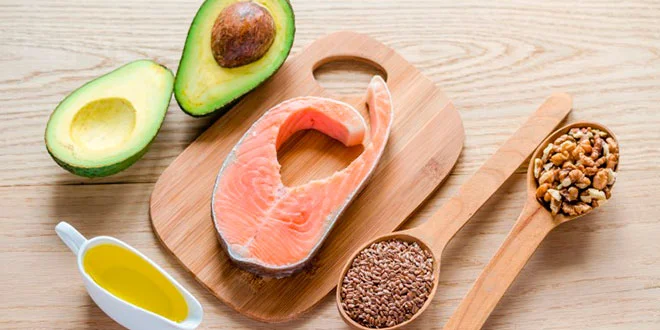

Sure thing, one of the questions that confuses people the most when trying to lose those “love handles” is whether to cut carbs or fats…
It’s true that cutting carbs leads to significant weight loss due to glycogen and water loss. Along with that, we see better insulin sensitivity and less inflammation (a big deal for people with obesity).
However, a few weeks ago a study came out showing that cutting fats gave better results than cutting carbs, something that had only been seen in long-term studies and never due to metabolic effects, but rather diet adherence. Obviously, this claim caused quite a stir on social media, making people question if cutting carbs is really useful for fat loss. So, I decided to write an article about it, so you can understand that in nutrition there’s no absolute truth.
Understanding the study
The first thing we notice when looking at the study’s methodology is a small sample size (n=19), made up of 10 men and 9 women with a similar body fat percentage (39.3%). The subjects were split into two groups depending on which diet they’d follow first (high or low carb), although both had the same “base” diet for the first 5 days with a distribution of 50% Carbs, 35% Fat, and 15% Protein.
The setup looked like this:
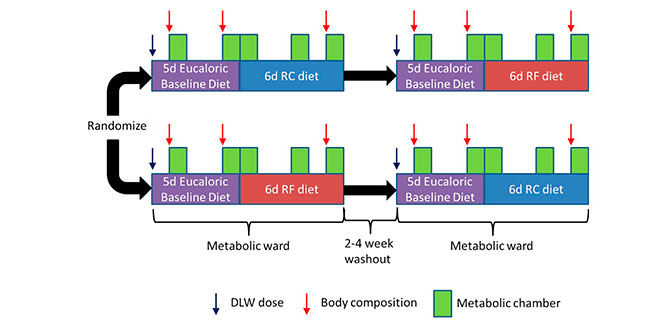
As you can see, both groups followed a base diet, then either a high-carb diet (6d RF diet) or a high-fat diet (6d RC diet). After that, they swapped diets with a washout period of 2-4 weeks to avoid possible adaptations. Both diets had the same calorie intake, with a 30% deficit compared to the initial common diet (Eucaloric Baseline Diet).
The diet compositions were as follows:
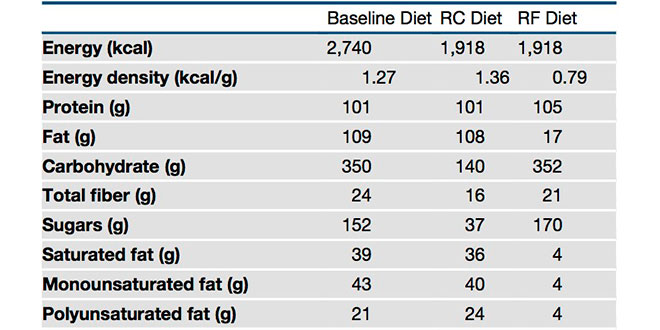
One thing I really liked about the methodology is that both the high-fat diet (RC Diet) and the high-carb diet (RF Diet) had the same calorie and protein intake. This is super important because in many studies low-carb diets have more protein, which leads to better results.
Regarding calories, they used “ad libitum” protocols, meaning “eat until you’re not hungry.” In those cases, low-carb diets tend to be more filling, so people eat fewer calories and lose more weight than on low-fat diets. Since these two factors were controlled, the results are more reliable.
Results
One of the parameters used to measure the impact of both diets was the respiratory quotient (RQ), where a value of 1.0 means we mainly use carbs for energy and 0.7 means we use fats. Here’s what they found:
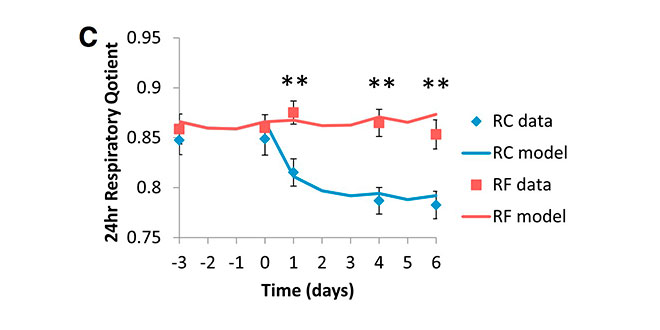
The group on the high-carb diet didn’t change their energy substrate, while the high-fat diet group lowered their RQ, showing greater use of fatty acids for energy. However, I want to clarify that this is totally normal:
When glucose intake drops, our body kicks in mechanisms to save the glucose we have, like increased insulin sensitivity in the short term, gluconeogenesis, or more FAT/CD36 (fatty acid transporters)
So, we can say our body uses more fat for energy when we cut carbs, but those fatty acids come from our diet, not our body fat stores (avocado, olive oil, nuts, etc.).
This idea is shared by the study’s authors, who argue that under the same calorie/protein conditions, cutting carbs or fats has almost the same impact on body fat. In fact, they observed that fats from food during a high-carb diet only provide 8% of the energy, leaving 92% for oxidizing glucose and body fat.
Conclusions
Even though this study has pretty solid methodology, there are some drawbacks, like:
- Small subject group, needing at least 30 people.
- Short intervention time, needing several weeks to see noticeable changes.
- Small fluctuations with DXA, where sensitivity is at least 400 g and water balance fluctuations affect results.
- Use of simulation models, increasing the chance of error when comparing results.
Personally, I would have liked the high-fat diet group to have less than 70 g of carbs, instead of the 140 g they consumed.
In short, we see that a high-carb diet is also effective for fat loss. However, the real-life scenario is very different from this study, where food intake (and therefore macronutrients) was controlled.
The problem is associating carbs with fast food, high sugar, and super tasty stuff, ignoring foods like tubers, fruits, veggies, and greens…
That’s why find the diet you can stick to the most, forget about burning carbs or fats, and focus on eating well. That’s the only way to get long-term results.
Cheers!
Sources
- 1.Calorie for Calorie, Dietary Fat Restriction Results in More Body Fat Loss than Carbohydrate Restriction in People with Obesity