 Fitness, Nutrition, Health and Sports Blog In the HSNstore Blog you will find tips about Fitness, sport in general, nutrition, and health – HSNstore.com

Crunching and popping in knees, ankles, neck, wrists, and hips are experienced by a large percentage of the population, and not knowing the cause can lead to worry that it might be a sign of arthritis, osteoarthritis, degeneration, or injury.
The first thing to understand is that these noises can come from different situations, some accompanied by pain, others not.
“Harmless” pops: cavitation
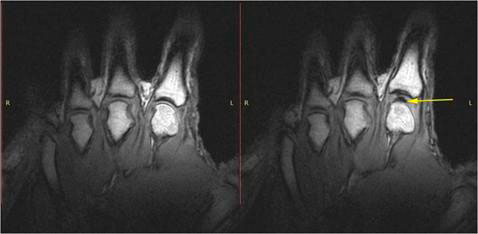
It’s estimated that these happen when there’s a change in pressure and volume inside the joint’s synovial sac due to a sudden change in position, at the limit of its physiological movement range but without exceeding the anatomical limit.
Some examples are the sounds made when cracking knuckles or voluntarily turning the neck. It’s also typical in manipulative practices like physiotherapy or osteopathy.
When joint tension increases, gases dissolved in the synovial fluid (the joint’s natural lubricant) form tiny bubbles that burst, making a popping sound. This can happen again shortly after (about 20 minutes under normal conditions for the synovial fluid to re-liquefy).
As anyone who does this regularly might feel, cavitation triggers a series of brief reflex relaxation reactions in the structures and muscles near or in the joint (a good example is spinal joint manipulations). So, it could be seen as a low-impact, relieving phenomenon that can be repeated whenever needed.
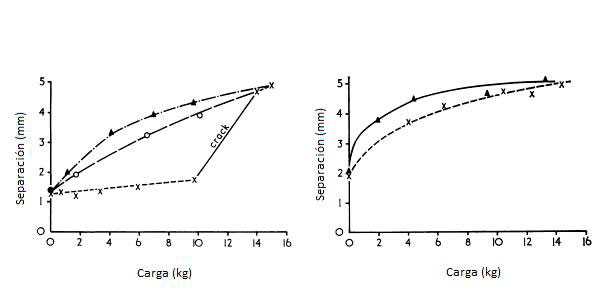
Although there isn’t much evidence about whether it’s good to keep causing these pops, one of the most relevant studies was done by Unsworth et al. (1971), reviewed by Poméro and Bonneau (2002), concluding that repeatedly doing this causes microlesions in the articular cartilage.
In fact, they support joint relaxation through slow traction (without causing such a loud pop). This causes a decoaptation of the joint surfaces where, if there’s an intra-articular air burst, it’s less intense than the one caused at high speeds.
Crunching from capsulo-ligamentous and/or cartilaginous issues
Capsulo-ligamentous joint injuries and/or retractions (not to be confused with scapular retraction) can cause an audible noise and some discomfort for a while, possibly with inflammation around the joint.
If the cause is worn cartilage, the crepitus comes from bone-on-bone friction, like in osteoarthritis, and the noise is more common in the knee and neck and can also progress. Joint integrity largely depends on how forces are distributed, so proper alignment is essential for good function. Misalignments (due to trauma, injury, or muscle weakness supporting the joint) predispose to this kind of disease.

In this case, since the degree of cartilage degeneration doesn’t correlate 100% with the amount of pain felt (it depends on how pain pathways are trained in the brain), the best advice is physical activity.
During degeneration, cartilage has poor blood supply, and exercise has been shown to improve oxygen delivery to soft tissues. Of course, it’s wise to prioritize low-impact activities over high-impact ones; that doesn’t mean the latter are always off-limits, as it depends on the individual.
External tendon snapping
The most well-known example is “coxa saltans” (snapping hip), where the iliotibial band tendon snaps over the femur’s trochanter. In cases like this, tendons rub against the joint edge, causing a jump in movement and an audible noise.
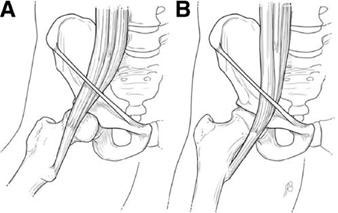
This usually happens when the tendon is quite inflamed from repetitive movements, so pain is generally felt before the noise. Before pushing too hard, it’s recommended to reduce inflammation with cold application and rest, even if active, cutting back on activities that overload the affected tendon.
Internal snapping
Internal snapping caused by internal structures (menisci, synovial thickenings) doesn’t have to be painful and happens more often in lax individuals or those with discoid menisci (meniscus shaped like a disc, not necessarily from sports).

The snapping sound happens at a moment of overstretching or pinching, then suddenly releases. It can also be caused by “joint mice” (free bodies made of cartilage) that block the joint temporarily until they release.
Conclusions
- There’s no evidence that cracking joints is bad. While it can even be beneficial in specific situations, if you’re prone to making those noises, it’s best not to overdo it since existing data shows repeated stress causes joint weakening.
- Don’t confuse cavitation (decoaptation) cracking with the snapping sound, which can be a sign of possible (or early) injury.
- Pain is an important signal to better understand the problem’s severity related to joint sounds. If there’s no pain before, during, or after, it’s a sign there’s likely nothing to worry about.
Sources
- Kawchuk, G. N., Fryer, J., Jaremko, J. L., Zeng, H., Rowe, L., & Thompson, R. (2015). Real-Time Visualization of Joint Cavitation. PLoS One; 10(4): e0119470.
- Poméro, V., & Bonneau, D. (2002). Le phénomène de cavitation. Revue de Médecine Vertébrale et des articulations périphériques, 8, 24-27.
- Unsworth, A., Dowson, D., & Wright, V. (1971). ‘Cracking joints’. A bioengineering study of cavitation in the metacarpophalangeal joint. Annals of the rheumatic diseases, 30(4), 348.
- Voegeli, A. V. (Ed.). (2001). Lecciones básicas de biomecánica del aparato locomotor. Springer Science & Business Media.