Fitness, Nutrition, Health and Sports Blog In the HSNstore Blog you will find tips about Fitness, sport in general, nutrition, and health – HSNstore.com

Menopause is a stage in a woman’s life that brings along a bunch of annoying symptoms (hormonal changes, hot flashes, weakness, insomnia and sleep problems, weight changes…), but in some cases, it’s possible to soften its effects and ease them as much as possible thanks to supplementation with Pueraria Mirifica, an excellent source of estrogens.
What is Pueraria Mirifica?
Pueraria Mirifica or Kwao Krua is a plant from the Leguminosae family, subfamily Papilioneae, whose tuber has been used in Thailand for over 100 years due to its many benefits related to energy boost and promoting the health of menopausal women thanks to its effects similar to the estrogen hormone.
There are more than 13 different Pueraria species, but only Pueraria Mirifica has estrogenic activity. Since the active compounds are found in the root and can only be harvested at certain times or seasons to get the estrogenic effect, it’s important to get an herbal supplement that guarantees the content of bioactive ingredients.

Although this herb has been used for generations due to its beneficial effects and properties, it still seems not well known enough in the Western world
Composition of Pueraria Mirifica
Pueraria Mirifica contains a series of chemical compounds with estrogenic biological activities, usually divided into three groups:
- First group includes flavonoids like genistin, genistein, daidzein, daidzin, kwakhurin, hydrated kwakhurin, tuberosin, puerarin, mirificin, and puemiricarpene
- Second group: coumestans such as coumestrol, mirificoumestan, mirificoumestan glycol, and mirificoumestan hydrate;
- Third group: contains chromenes like miroestrol, deoxymiroestrol, and isomiroestrol
Properties of Pueraria Mirifica
Pueraria Mirifica contains a large amount of phytoestrogens, especially Miroestrol and its precursor Deoxymiroestrol, which have about 3,000 times the estrogenic activity of soy isoflavones and are over 100 times more potent than red clover, two of the most popular alternatives for menopause relief.
This phytoestrogen doesn’t just mimic estrogen in the body; it’s a “bio-identical” compound and can be said to be natural for a woman’s body, since its chemical structure is identical to the hormones (estrogens and progesterone) produced by the human body.
Phytoestrogens bind to estrogen receptors, helping to correct hormone deficiency in the body, allowing unwanted symptoms to be relieved without negatively affecting other cells.
Pueraria Mirifica is considered a natural treatment with “SERM” (“Selective Estrogen Receptor Modulator”) properties, able to bind to specific tissues and maintain estrogen levels.
As a result, hormones are naturally modulated, and signs of aging (wrinkles, hair loss, or graying hair) and menopause-related symptoms (hot flashes, depression, loss of libido, etc.) are significantly reduced without any side effects or toxicity risks.

Benefits of Pueraria Mirifica
Menopause Symptoms
Menopause happens when there’s a drop in hormone production related to progesterone and estrogens. It’s a condition all women experience with age, causing a series of changes, mainly the end of menstruation. It can happen prematurely due to genetic factors, autoimmune disorders, or medical interventions.
The most common menopause symptoms are hot flashes and heat waves, sometimes causing sweating. Along with these, other symptoms may occur (not in all women):
- Insomnia
- Mood swings
- Fatigue
- Depression
- Irritability
- Headaches
- Joint problems
- Loss of libido
- Vaginal dryness
- Bladder control issues
Estrogen loss is also linked to other major health problems that add to age-related issues:
- Osteoporosis
- Heart disease
- Intestinal problems
- Alzheimer’s risk
- Loss of skin elasticity
- Muscle mass loss
- Worsening vision (cataracts, macular degeneration)
In all these cases, it’s possible to act and fight these signs of decline mainly caused by the loss of estrogen production. One of the most important supports, now almost considered a full hormone therapy, is Pueraria Mirifica.
Several studies (1, 2, 3, 4) and trials on women, administering doses of this plant to check and compare results, have mostly shown very favorable conclusions, creating a hopeful outlook.
Pueraria Mirifica, containing phytoestrogens, significantly relieved climacteric symptoms in perimenopausal women. While there was a slight decrease in lipoproteins and an increase in hormonal profiles, it also proved to be a great alternative in the treatment of climacteric symptoms in perimenopausal women such as hot flashes and night sweats.
Breast Cancer
Regions where this plant is consumed have a very low breast cancer rate. Several studies with breast cancer cell lines and Pueraria Mirifica activity, conducted in vitro by Emory University School of Medicine in Atlanta, Georgia, USA, and the Department of Obstetrics and Gynecology, Phramongkutklao Medical School, Bangkok, Thailand, have shown that root extract has potent antiestrogenic properties against aggressive cancer cell lines in vitro, especially estrogen receptor-positive (ER+) breast cancer lines (T47-D, MCF-7, and ZR 75-1). Obtained from MD Anderson Cancer Institute (Texas) and the National Cancer Institute (NCI) at the NIH, USA.
It’s still early for a clear verdict, but research lines suggest Pueraria Mirifica may help fight cancer.
Fighting Aging
Women who have regularly taken this plant in northern Thailand have natural black hair well into their 80s. These women still have firm breasts, youthful skin, and are full of vitality.
When taken as a dietary supplement, Pueraria Mirifica’s phytoestrogen components naturally relieve symptoms caused by the aging process and estrogen deficiency.
A human trial on Pueraria Mirifica as a supplement showed beneficial effects on breast firmness and enlargement, breast pain, healthier hair and skin, and increased vaginal secretion.
The anti-aging and rejuvenation claims of this plant seem due to compounds like daidzein, daidzin, genistin, genistein, puerarin, and miroestrol, substances with strong estrogenic properties. With modern extraction technology, the dry root extract is standardized and prepared as powder in capsules or solution.

The extract solution is used in the cosmetic industry, such as in breast toning creams, eye gels, and skin moisturizers.
Hormone Therapy
Due to its properties, Pueraria Mirifica can also be used by transgender men interested in lowering testosterone levels.
Osteoporosis
Postmenopausal women are more likely to use natural remedies to relieve climacteric symptoms and help reduce the risk of chronic diseases like osteoporosis.
Recent reports support the idea that certain bioactive components, specifically plant phytoestrogens, play a role in maintaining or improving bone system health.
Since estrogens are mainly responsible for maintaining bone mass in women by inhibiting bone resorption through interaction with osteoblasts, their reduction during menopause is a risk factor for developing osteoporosis in postmenopausal women.
Therefore, it can be deduced that phytoestrogen therapy may be a therapeutic support in preventing postmenopausal osteoporosis due to its potential estrogenic effect.
Who is recommended to take Pueraria Mirifica?
Pueraria Mirifica is recommended for women over 30 years old, mainly to get the benefits associated with this plant, especially reducing menstrual syndrome symptoms.
But it’s especially for women going through menopause (or already starting to experience premenopause symptoms), whose hormonal activity is less favorable, that they can get the most benefit.
How to take Pueraria Mirifica?
Pueraria Mirifica is available in various formats, like capsules or tablets, creams, sprays, or powder. Whatever the form, it’s recommended to start with the lowest doses and gradually increase over days.
Regarding supplementation protocol, there are basically 2 different ways to take it: continuously or according to the menstrual cycle.
For the first option, according to a study on this herb’s applications, continuous intake for 6 months at 20-100 mg per day, or 100-200 mg per day for 12 months, caused no abnormal or harmful symptoms regarding liver, hematological, or kidney function, producing positive results in menopausal women. This way of taking it is similar to what the Thai population has been doing.
As a hormonal booster and to reduce PMS and symptoms, we’ll start taking it according to the hormonal cycle: either during the first 15 days or the opposite. The reasoning is explained below, and each person should adjust according to what works best.
There are 3 hormones associated with the menstrual cycle: estrogens, testosterone, and progesterone, which follow the same pattern each month. So, we can predict which will be predominant on any day of the 28-day cycle, generally speaking.
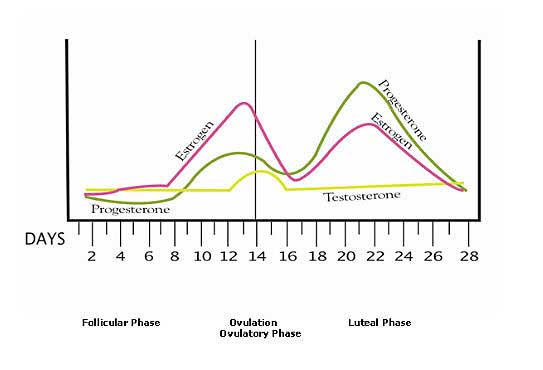
Starting on the first day of the first period (Follicular Phase), estrogen levels rise until peaking at Ovulation Phase. The Follicular Phase is one of the recommended periods to take Pueraria, because given its phytoestrogen composition, it helps add extra estrogens. This avoids introducing it in the next phase where progesterone predominates.
The other option is to start taking Pueraria after the middle of the Luteal Phase. The reasoning is that adding excess estrogens at the peak helps cover this hormonal deficit.
Side Effects of Pueraria Mirifica
Before starting to use this plant, it’s recommended to consult a doctor, especially if you have any condition. Also, it’s not recommended to take other supplements or herbal extracts with phytoestrogen content if you’re already taking Pueraria Mirifica.
Due to its strong estrogenic effect, it carries the same risks as hormone replacement therapy. So, people with a medical history of cancer risk or who have had cancer should avoid using it.
Related Posts
- What is Metabolic Age?
- Ubiquinol to slow down aging symptoms
- Strict diets and Estrogens
- Improve PMS symptoms with Exercise
- Do you know the benefits of Chia Seeds?
- How to improve Fat Loss in Women?
- Eliminate fat from the hardest areas
- All about Hyaluronic Acid
- What is Horsetail good for?