Fitness, Nutrition, Health and Sports Blog In the HSNstore Blog you will find tips about Fitness, sport in general, nutrition, and health – HSNstore.com

More and more people are becoming aware of the fact that they need to take care of themselves. Sometimes, said need springs from a health problem such as having high cholesterol levels. In those circumstances, we tend to take medicines (statins), whose side effects can threaten our health at the same time. In fact, Coenzyme Q10 is probably one of the elements that is mostly affected by this. It is present in all body cells and it plays an essential role in the production of the cell energy as ubiquinol.
What is Coenzyme Q10 and how does it work?
Coenzyme Q10 or CoQ10, is a molecule classified as a “pseudo-vitamin” present in the mitochondria. Actually, this nutrient plays an important and almost vital role in the energy production processes. Particularly, it transfers electrons towards a series of reactions that result in the synthesis of adenosine triphosphate (ATP).Consequently, the electron exchange process triggers an oxidation reaction through which Coenzyme Q10 changes its chemical structure to produce a new molecule, ubiquinol. This energy process is constant throughout our lives and it happens thousands of times every second inside the cells.
Basically, CoQ10 and its reduced form, ubiquinol, allow us to obtain energy for nutrients. In fact, it provides a constant supply to the muscles and specially to the heart.
For example, a CoQ10 deficiency results in a low ATP production with the following symptoms: low energy and constant fatigue. Most of the times, this problem can be solved by increasing the availability of this coenzyme.
Coenzyme Q10 Supplements
There are two types of CoQ10 available in the market of food supplements: Ubiquinone and Ubiquinol. The latter has the highest bioavailability, to the point that a 96% of the total ubiquinone from people is ubiquinol. Therefore, the important of this reduced form is key as a powerful antioxidant.
What is Ubiquinol?
Its name was not randomly picked, since coenzyme Q-10 is present in every single cell of our body. We synthesize and metabolize this enzyme naturally. However, its synthesis rate considerably drops due to several factors, such as aging.

Why take Ubiquinol instead of Q-10?
Ubiquinol is more bioavailable than coenzyme Q-10. Consequently, the body will take advantage of this enzyme as we grow old, when our ability to synthesize coenzyme Q-10 to ubiquinol is worse.
There is a percentage of the population that does not have enough CoQ10 to synthesize ubiquinol. In fact, things get worse as we grow old, which is why taking Q10 supplement may help us with this process.
Benefits of Ubiquinol
To sum up, coenzyme Q10 as ubiquinol can provide the following benefits:
- Producing an anti-aging effect
- Strengthening our cardiovascular health
- Enhancing our immune system
- Supporting our nervous system
Energy production

Ubiquinol can help us improve the quality and amount of time in our life
Antioxidant
Another important task is cell protection. Actually, this fat soluble compound is the most powerful when it comes to antioxidant protection. Constantly, there are reactions inside our body that produce metabolic waste. Said processes also produce free radicals, which are molecules that are missing an electron and which steal electrons from other molecules.
Consequently, this triggers a chain reaction that affects the cells that make up tissues (blood vessels, nerves, organs…) resulting in serious problems. For instance, a bad cell functioning or even the so called cell death or apoptosis.
This oxidative stress in thousands of cells
can heighten the symptoms aging, lower the defenses and affect our mood. Despite all this, oxidative processes are necessary for life. In fact, our body has regulating mechanisms such as ubiquinol to deal with the free radicals.
Heart Health
Ubiquinol is a fantastic support for the proper functioning of the cardiovascular system. Heart problems like heart attacks are one of the main causes of mortality among the population. Above all, this happens due to bad habits such as a bad diet, sedentarism… These are not the best ways to protect our health and in this case preventing is the best thing we can do.
Unlike congenital factors, some of the best ways to prevent consist of reducing the intake of saturated fat and calories or doing physical exercise regularly. In addition, some micronutrients are key when it comes to treating heart diseases. For instance, ubiquinol can strengthen the heart pumping rate .
The ubiquinol levels in those who suffer congestive heart failure is lower than what is considered adequate. Moreover, people who have high cholesterol levels have lower ubiquinol levels too.
Surgery
Coronary bypass and heart transplant are necessary procedures to save a life. But we need to know that the free radicals can attack the heart after these surgeries. Therefore, one of the best ways to protect this organ is using antioxidants. In fact, these elements have provided positive results after a surgery, buffering the damage from the free radicals, improving the heart function and lowering the chances of arrhythmia.
Treatment for Fertility
The most bioavailable form of CoQ10 can improve the sperm production and motility, apart from protecting the DNA. Moreover, it can help to treat infertility that is related to oxidative stress, such as: polycystic ovary syndrome, premature ovary failure, an irregular menstrual cycle and recurrent abortions specially in women over the age of 30.
Benefits of taking Ubiquinol for the elderly
Inevitably, the passing of time affects some of our health markers. Therefore, the metabolism weakens as we grow old, resulting in certain pathologies. One of them is our ability to transform CoQ10 into ubiquinol.
There are other reasons apart from age that can cause a deficiency, for instance:
- Oxidative stress
- Low intake of Coenzyme Q10 through the diet
- Disease or pathology
- Genetic condition
- Deficiency of necessary factors for the biosynthesis of ubiquinol
One or more of the previous factors can trigger a poor conversion of this enzyme. Therefore, the result will be a worse cell energy production, as well as less protection against the free radicals.

Feel young at any stage of your life
Treatment against Parkinson’s Disease
This horrible disease is connected to cognitive deterioration among other things. Nevertheless, recent studies have proven how ubiquinol could be used to treat said disease. In this study, they picked 58 patients affected by this disease and divided them into two groups. The first one had 26 participants in a stage known as “wearing off” when the medicines (Levodopa) are no longer effective and the symptoms increase. 14 patients of said group took a dose of 300mg of ubiquinol for 48 weeks, while the rest took a placebo. Both cases still took their medicines during the study.
The other group was also made up by 26 people but at an early stage of the disease. They did not take any medicine and, like before, 14 of them took 300mg of Ubiquinol for 96 weeks and 12 of them took a placebo.
All the groups were evaluated before and after the study using a Unified Parkinson’s Disease Rating Scale (UPDRS). The first test assesses the cognitive parameters for behaviour and mood; while the second test assesses the movement and physical control in common tasks such as talking, eating, sleeping, walking…; the third part measures the physical behavior; finally, the forth and fifth tests assess the severity of the symptoms in order to find out the stage of the disease.
Results of the study
- The first group that took CoQ10 as ubiquinol with the medicine got a better score in the UPDRS.
- Those who did not take COQ10 and did take medicines had a worse score.
- The participants who took CoQ10 but no medicines had a worse score than the previous group, like those who did not take either of them.
- Both groups that were at the first stages of the disease ended up with worse symptoms. However, the group that took ubiquinol had a much slower decline.
Ubiquinol against sarcopenia
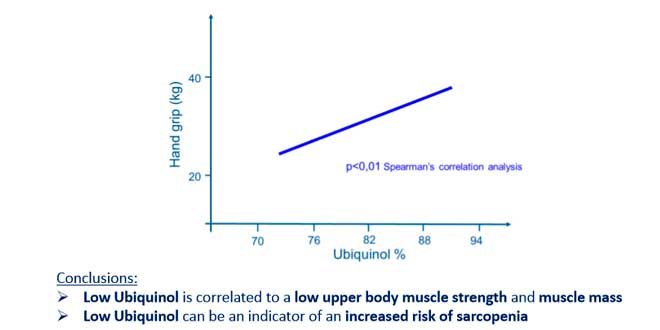
Sarcopenia is a progressive and general degeneration that makes us lose both muscle mass and strength. A recent study assessed how those who have low ubiquinol levels had worse results when performing a type of exercise (grip strength) to measure the muscle strength.
Improving the quality of life
Particularly, the reduced form of CoQ10, ubiquinol, plays an important role in the biosynthesis of ATP by activating the mitochondria. Moreover, it produces an antioxidant effect. Up until the commercialization of a stable ubiquinol molecule (quite recent actually), we have not been able to compare it with the traditional form and assess the improvements. In fact, one of these positive results has been an increase in vigor, vitality and energy in the elderly thanks to ubiquinol supplementation.
The population is aging more and more, which is why it has become more important to improve the quality of life. Above all, we need to improve the physical and mental capacities in order to be self-sufficient.

It is all about being active at any age!
Ubiquinol for the sport performance
One of the problems of doing physical exercise, specially at a high intensity, is that our produces more free radicals, increasing the oxidative stress. Although everyone knows that physical exercise can help us prevent diseases like hypertension, diabetes, metabolic syndrome… to the point that it can increase our lifespan.

Therefore, coenzyme Q10 is one of those elements that can preserve the nutrients and energy of our body, specially for athletes.
As we mentioned, CoQ10 and its reduced form ubiquinol are key for the energy production. So much so, that they are specially important for those organs involved in this process. For example, the heart and the skeletal muscle, since both have a high metabolic function and activity. Although there has been some controversy regarding the effectiveness of CoQ10 in previous studies.
However, new research with a more modern and bioavailable form of ubiquinol have shown more satisfactory results. Taking a correct dose before physical exercise can:
- Reduce the oxidative stress
- Increase the NO in the plasma (Nitric Oxide), improving the endothelial function
- Provide energy support
- Improve the post-workout recovery
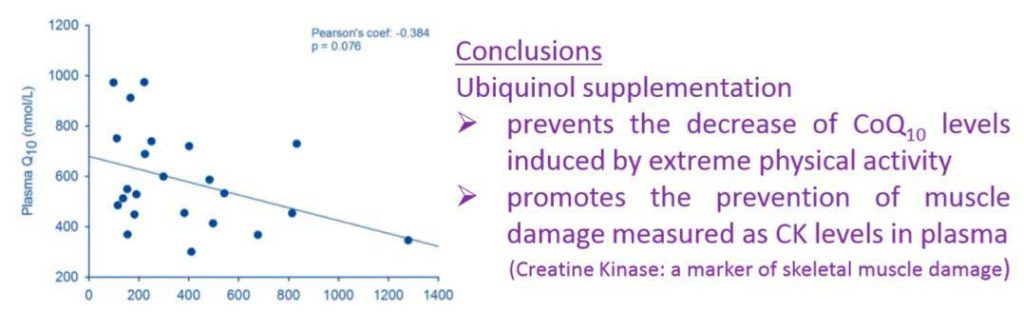
Results after Ubiquinol supplementation in football players
Symptoms of a Q-10 deficiency
Above all, the most common symptoms of a coenzyme Q-10 deficiency are:
- Weakness
- Fatigue
- Convulsions
Coenzyme Q-10 and ubiquinol have the same effects when it comes to a deficiency. Moreover, a deficiency could be due to several factors. For instance:
Effects of statins on Coenzyme Q10
But one of the most usual factors that can trigger a deficiency are statins, which are medicines to treat the cholesterol.
In fact, taking this type of substances can lower the coenzyme Q-10 levels. Above all, this is due to the fact that the body uses the same pathway to lower the triglycerides and to produce Q-10. Consequently, it inhibits the production of mevalonate, which is both in charge of producing said coenzyme and of biosynthesizing cholesterol.
- Beta-blockers to control the blood pressure
- Tricyclic antidepressants
- Tolazamide to lower the blood sugar levels

Who can benefit from Ubiquinol?
It is advisable for those who suffer diseases that affect the coenzyme Q10 levels with a very low ubiquinol synthesis. For example, these are some of the pathologies that can result from a coenzyme Q10 deficiency:
- Congestive heart failure
- High blood pressure
- Periodontal diseases
- Parkinson
- Muscular dystrophy
- Chronic fatigue
Kaneka® Ubiquinol
Kaneka is a company dedicated to produce the reduced and active form of Coenzyme Q10, ubiquinol. They use a yeast fermentation process in order to obtain it. In the end, the result is an identical molecule to the one that is naturally present in our body.
What are the properties of Kaneka Q10®?
- Without impurities
- GMO-free (Genetically Modified Organisms). All in all, it means that the raw material has not been produced in a laboratory with transgenic elements.
- Kosher certificate. Therefore, it meets the standards and current legislation in terms of food products, ensuring their quality and purity.
- High bioavailability
- Completely safe
How to take Ubiquinol?
Then, if we are not taking medication, we could consider taking coenzyme depending on our state or disease. Therefore, the most recommended intake would be from 100 to 200mg, taking 2mg/kg a day.
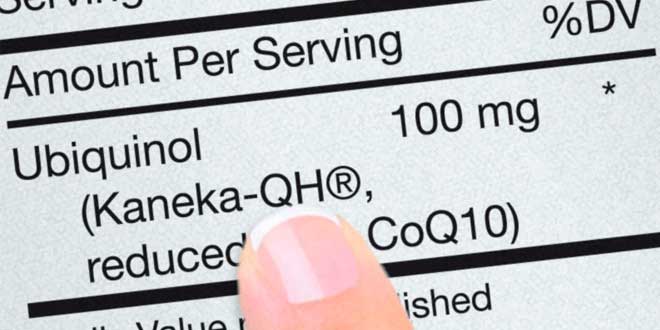
Kaneka® is the only company in the world that supplies the purest form of ubiquinol
Where can I buy Ubiquinol?
Bibliography
Study 1-5
- 1. Kaneka Nutrien
- 2. Chika Kawashima , Yasushi Matsuzawa , Eiichi Akiyama , Ryosuke Sato , Masaaki Konishi , Hiroyuki Suzuki , Yuichiro Kimura , Toshiaki Ebina , Masami Kosuge , Kiyoshi Hibi , Noriaki Iwahashi , Nobuhiko Maejima , and Kazuo Kimura. Abstract 14946: Ubiquinol Improves Endothelial Function in Patients With Heart Failure With Reduced Ejection Fraction: A Single Center, Randomized Double-Blind Placebo-Controlled Cross-Over Study. Originally published29 Mar 2018Circulation. 2018;134:A14946
- 3. Langsjoen PH, Langsjoen AM. Supplemental ubiquinol in patients with advanced congestive heart failure. Biofactors. 2008;32(1-4):119-28.
- 4. Hiroshi Maruoka, Kenji Fujii, Kazuhisa Inoue and Satoshi Kido. Long-term Effect of Ubiquinol on Exercise Capacity and the Oxidative Stress Regulation System in SAMP1 Mice. J Phys Ther Sci. 2014 Mar; 26(3): 367–371. Published online 2014 Mar 25
- 5. García-Corzo L, Luna-Sánchez M, Doerrier C, Ortiz F, Escames G, Acuña-Castroviejo D, López LC. Ubiquinol-10 ameliorates mitochondrial encephalopathy associated with CoQ deficiency. Biochim Biophys Acta. 2014 Jul;1842(7):893-901. doi: 10.1016/j.bbadis.2014.02.008. Epub 2014 Feb 24.
Study 6-10
- 6. Hosoe K1, Kitano M, Kishida H, Kubo H, Fujii K, Kitahara M. Study on safety and bioavailability of ubiquinol (Kaneka QH) after single and 4-week multiple oral administration to healthy volunteers. Regul Toxicol Pharmacol. 2007 Feb;47(1):19-28. Epub 2006 Aug 21.
- 7. Mizuno K, Tanaka M, Nozaki S, Mizuma H, Ataka S, Tahara T, Sugino T, Shirai T, Kajimoto Y, Kuratsune H, Kajimoto O, Watanabe Y. Antifatigue effects of coenzyme Q10 during physical fatigue. Nutrition. 2008 Apr;24(4):293-9. doi: 10.1016/j.nut.2007.12.007. Epub 2008 Feb 13.
- 8. Sarmiento A, Diaz-Castro J, Pulido-Moran M, Moreno-Fernandez J, Kajarabille N, Chirosa I, Guisado IM, Javier Chirosa L, Guisado R, Ochoa JJ. Short-term ubiquinol supplementation reduces oxidative stress associated with strenuous exercise in healthy adults: A randomized trial. Biofactors. 2016 Nov 12;42(6):612-622. doi: 10.1002/biof.1297. Epub 2016 May 19.
- 9. Gao L, Mao Q, Cao J, Wang Y, Zhou X, Fan L. Effects of coenzyme Q10 on vascular endothelial function in humans: a meta-analysis of randomized controlled trials. Atherosclerosis. 2012 Apr;221(2):311-6. doi: 10.1016/j.atherosclerosis.2011.10.027. Epub 2011 Oct 25.
- 10. Amar Singh Thakur, Gian Paolo Littarru, Iwao Funahashi, Umeshwar Singh Painkara, Narendra Shriram Dange and Prabha Chauhan. Effect of Ubiquinol Therapy on Sperm Parameters and Serum Testosterone Levels in Oligoasthenozoospermic Infertile Men. J Clin Diagn Res. 2015 Sep; 9(9): BC01–BC03.
Study 11-15
- 11. Assaf Ben-Meir, Eliezer Burstein, Aluet Borrego-Alvarez, Jasmine Chong, Ellen Wong, Tetyana Yavorska, Taline Naranian, Maggie Chi, Ying Wang, Yaakov Bentov, Jennifer Alexis, James Meriano, Hoon-Ki Sung, David L Gasser, Kelle H Moley, Siegfried Hekimi, Robert F Casper and Andrea Jurisicova. Coenzyme Q10 restores oocyte mitochondrial function and fertility during reproductive aging. Aging Cell. 2015 Oct; 14(5): 887–895.
- 12. Myocardial energetics and ubiquinol in diastolic heart failure. Angelina Bates MSN, APRN, Qiuhua Shen PhD, APRN, RN, John B. Hiebert MD, Amanda Thimmesch BA, Janet D. Pierce PhD, APRN, CCRN, FAAN
- 13. UBIQUINOL SUPPLEMENTATION POSITIVELY CORRELATES WITH REDUCED SKELETAL MUSCLE DAMAGE IN PROFESSIONAL FOOTBALL PLAYERS. I. Navas-Enamorado1,2, A. Sánchez-Cuesta1, P. Bjork2, J. del Rio2, T. Viar3, J. Lekue3, F. Angulo3, P. Navas1, G. López-Lluch1 ::1 Centro Andaluz de Biología del Desarrollo, Universidad Pablo de Olavide-CSIC-JA, and CIBERER, Instituto de Salud Carlos III, Sevilla, Spain2 100% Natural, Madrid, Spain, 3 Athletic Club Bilbao, Bilbao, Spain
- 14. Hargreaves IP et al. The effect of HMG-CoA reductase inhibitors on coenzyme Q10: possible niochemical/clinical implications. Drug Safe 2005;28:659-676.
- 15. Folkers K et al. Lovastatin decreases coenzyme Q10 levels in humans. Proc Natl Acad Sci USA 1990;87:89318934.
Related entries
- Find out the properties and benefits of Pycnogenol
- Alpha lipoic acid: an ally against aging
- The best sources of Antioxidants