Natural beta-carotene: provitamin form of vitamin A
Beta-carotene is a carotenoid naturally found in orange, red, and deep green plant foods. It’s called provitamin A because the body can convert it into vitamin A when needed.
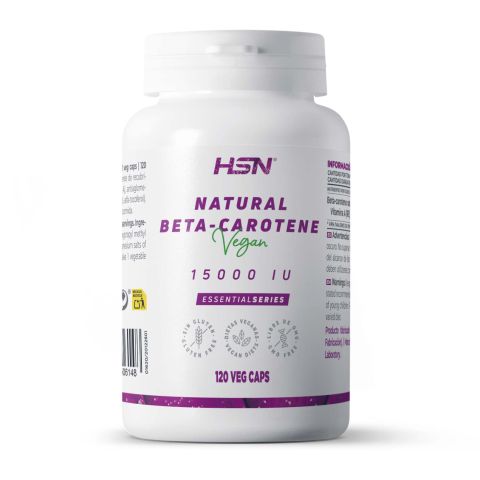
Natural Beta-Carotene (Vitamin A) 15000 IU from EssentialSeries uses natural plant-based beta-carotene, not synthetic, in a convenient vegetable capsule format. Each capsule provides 9 mg of beta-carotene, equivalent to 15000 international units of vitamin A activity and 1500 µg of retinol equivalents.
A smart way to get vitamin A: not chasing megadoses, but choosing a clear formula, with clear content, transparent equivalence, and a suitable presentation for a sensitive carotenoid.
What each capsule provides
The formula is designed to deliver natural beta-carotene directly and easy to understand:
- 9 mg of natural beta-carotene per vegetable capsule.
- 15000 IU of vitamin A equivalent activity.
- 1500 µg of retinol equivalents, the way to express its vitamin A activity.
- Vegetable capsule made from hydroxypropyl methylcellulose.
Also, the beta-carotene comes in a microencapsulated form, a particularly interesting strategy for carotenoids since these compounds are sensitive to factors like light, oxygen, and temperature.
What beta-carotene is good for
The main interest in beta-carotene is its role as a provitamin A source. Vitamin A helps maintain normal skin, normal vision, normal mucous membranes, normal immune system function, normal iron metabolism, and the process of cell differentiation.
It’s also a common ingredient in nutritional skin care routines, especially during times of higher sun exposure. It’s important to be clear that beta-carotene can be part of a nutritional strategy for skin care but doesn’t replace sunscreen nor should it be seen as an “oral sunscreen.”
HSN’s Natural Beta-Carotene isn’t about aggressive megadoses but a clear, well-dosed plant source of provitamin A to complement your diet.
Why choose HSN’s Natural Beta-Carotene
When buying beta-carotene, just looking at IU isn’t enough. It’s important to know how much beta-carotene it provides, where it comes from, how it’s presented, and if the vitamin A equivalence is clearly explained.
Our product is straightforward: 9 mg of natural beta-carotene equals 15000 IU of vitamin A equivalent activity, using the conversion 1 IU = 0.6 µg of beta-carotene. Practically, this means 1500 µg of retinol equivalents.
Plus, its plant origin and vegetable capsule make it a perfect choice for people following vegan diets or those who prefer a plant-based alternative to animal sources of vitamin A.
Transparency, plant origin, and stable format: three reasons why this beta-carotene fits perfectly into a daily nutritional care routine.
A microencapsulated formula to protect stability
Carotenoids are sensitive compounds. Factors like heat, light, and oxygen can affect their stability, so the presentation form is no minor detail.
Microencapsulation is used in carotenoids to help protect the compound from external conditions and improve stability. Here, we’ve chosen a microencapsulated form of natural beta-carotene, a notable advantage over products that just list “beta-carotene” without explaining its presentation.
More than just a number in IU: a good beta-carotene formula should declare the compound, its equivalence, origin, and form. Our Natural Beta-Carotene covers these key points.
How to take it and fit it into your routine
We recommend following the label instructions. This guideline is practical and fits the beta-carotene profile, a fat-soluble carotenoid whose absorption works best with a regular meal.
You can include it in nutritional skin care routines, dietary support for vitamin A, or during periods when you want to boost carotenoid intake within a varied diet.
Usage tip: take it with a meal that includes healthy fats like extra virgin olive oil, avocado, nuts, or oily fish if it fits your diet.
Who it’s for
Natural Beta-Carotene (Vitamin A) 15000 IU is designed for adults looking for a plant source of provitamin A, with a simple composition and clearly declared dose.
It fits especially well for:
- People wanting to complement their diet with plant-based vitamin A.
- Users following vegan or vegetarian diets.
- Nutritional care routines for skin, vision, and mucous membranes.
- People who prefer natural beta-carotene over synthetic forms.
- Those looking for a practical, tasteless, and easy-to-combine formula.
Note: smokers, ex-smokers, and people exposed to asbestos should consult a professional before using beta-carotene supplements, especially at high doses or long-term.
What to combine Natural Beta-Carotene with
If you want to build a more complete routine, you can combine it with other ingredients that naturally fit nutritional care, vision, and skin protocols:
HSN quality: clarity from formula to use
Our Natural Beta-Carotene follows a simple formulation philosophy: declared nutrient, clear equivalence, plant origin, vegetable capsule, and practical usage recommendation.
This approach lets you know exactly what you’re taking and how to fit it into your routine. Because with an ingredient like beta-carotene, more dose doesn’t always mean a better choice: what matters is the combination of dose, origin, stability, and transparency.
Choose natural beta-carotene with the clarity and confidence of HSN: a plant-based form of vitamin A, clear and easy to take every day.
Frequently asked questions about Natural Beta-Carotene
Is it vitamin A or beta-carotene?
It’s natural beta-carotene, a provitamin A. This means the body can convert it into vitamin A as needed.
How much beta-carotene does it provide?
Each vegetable capsule provides 9 mg of natural beta-carotene, equivalent to 15000 IU of vitamin A activity and 1500 µg of retinol equivalents.
Is it suitable for vegans?
Yes. The beta-carotene is plant-based and the capsule is vegetable, made from hydroxypropyl methylcellulose.
When is the best time to take it?
It’s recommended to take it with a meal. Taking it with food makes daily use easier and fits well with the fat-soluble nature of carotenoids.
Does it work as sunscreen?
No. Beta-carotene can be part of a nutritional skin care routine but doesn’t replace topical sunscreen or usual sun protection measures.
Can smokers take it?
Smokers or ex-smokers should consult a professional first, especially if using beta-carotene supplements for long periods.
Scientific bibliography
- Bohn, T., Desmarchelier, C., El, S. N., Keijer, J., van Schothorst, E., Rühl, R., & Borel, P. (2019). β-Carotene in the human body: metabolic bioactivation pathways – from digestion to tissue distribution and excretion. Proceedings of the Nutrition Society, 78(1), 68-87.
- Köpcke, W., & Krutmann, J. (2008). Protection from sunburn with β-Carotene—A meta-analysis. Photochemistry and Photobiology, 84(2), 284-288.
- Stahl, W., & Sies, H. (2012). β-Carotene and other carotenoids in protection from sunlight. The American Journal of Clinical Nutrition, 96(5), 1179S-1184S.
- Brown, M. J., Ferruzzi, M. G., Nguyen, M. L., Cooper, D. A., Eldridge, A. L., Schwartz, S. J., & White, W. S. (2004). Carotenoid bioavailability is higher from salads ingested with full-fat than with fat-reduced salad dressings as measured with electrochemical detection. The American Journal of Clinical Nutrition, 80(2), 396-403.
- Santos, P. D. F., Rubio, F. T. V., da Silva, M. P., Pinho, L. S., & Favaro-Trindade, C. S. (2021). Microencapsulation of carotenoid-rich materials: A review. Food Research International, 147, 110571.
- Omenn, G. S., Goodman, G. E., Thornquist, M. D., et al. (1996). Effects of a combination of beta carotene and vitamin A on lung cancer and cardiovascular disease. The New England Journal of Medicine, 334(18), 1150-1155.