 Fitness, Nutrition, Health and Sports Blog In the HSNstore Blog you will find tips about Fitness, sport in general, nutrition, and health – HSNstore.com
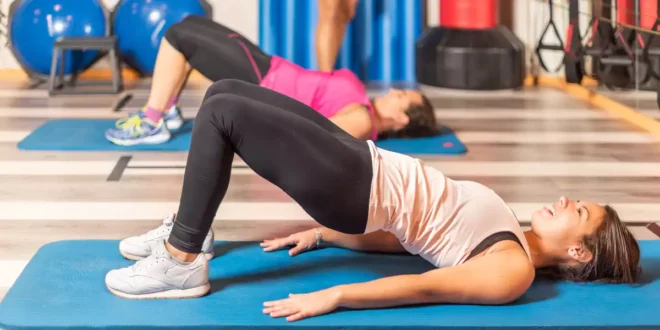

The hip thrust is one of the most effective exercises to work the glutes, and it has become super popular in workouts because of its huge impact on developing this area, especially for women. However, many people make mistakes when doing it.
In this guide, you’ll learn how to do the hip thrust correctly, the most effective variations, and the benefits it offers for strengthening the glutes.
Index
How to do the Hip Thrust correctly step by step
The hip thrust is a technical exercise that requires precision to avoid injuries and get the most out of it. Follow these steps to do it right:
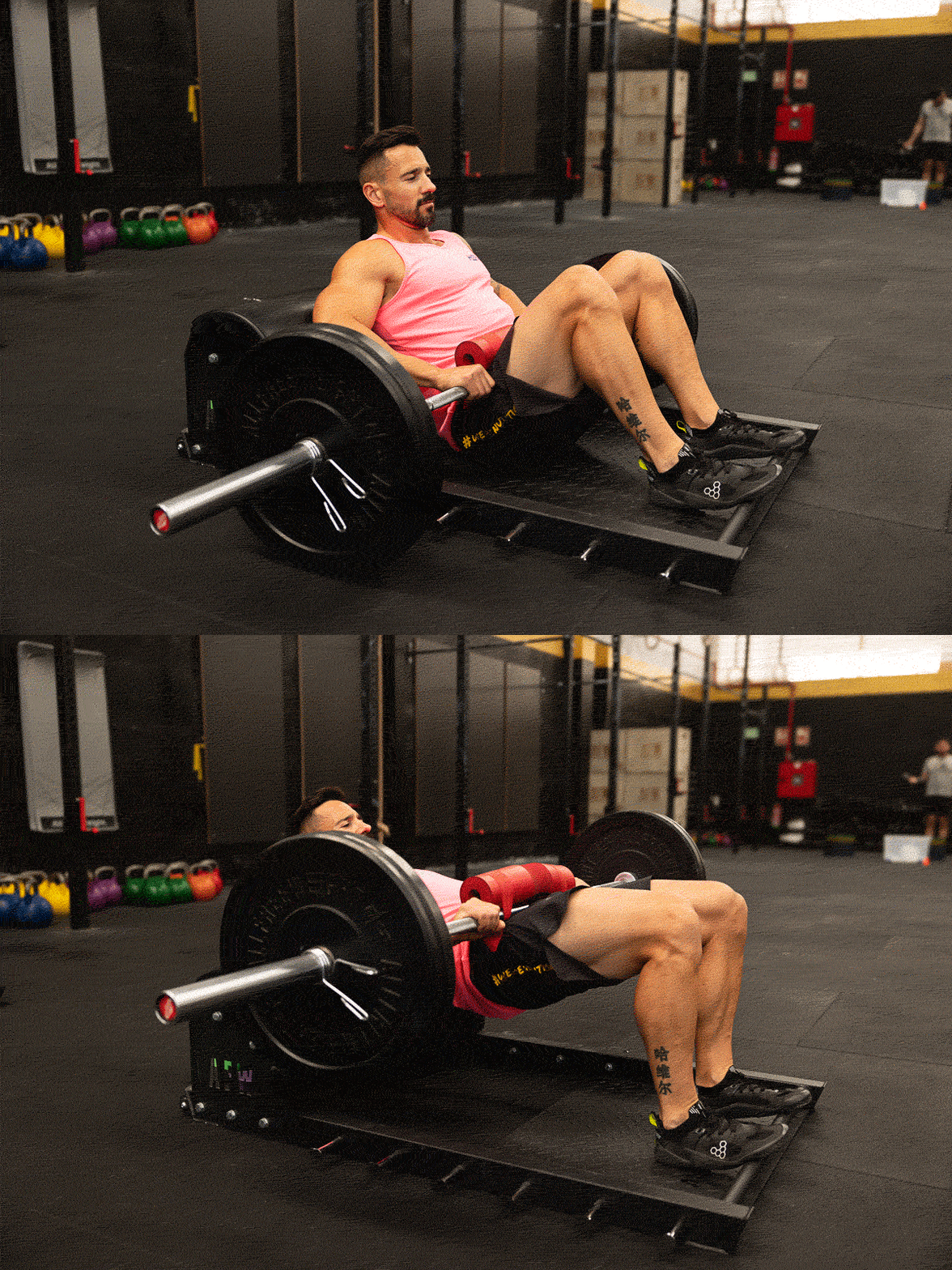
- Starting position: sit on the floor with your back resting on a bench and feet firmly placed on the ground, hip-width apart.
- Place the bar: position the bar over your hips. You can start without weight or with a light barbell.
- Hip lift: push your hips up, keeping your back straight. Make sure your hips are aligned with your back at the highest point. And squeeze.
- Control the movement: lower your hips down in a controlled way to complete one rep.
Hip Thrust variations to maximize muscle growth
There are several hip thrust variations that can be done as alternatives to the usual high-intensity (heavy load) exercise, allowing you to target different areas of the glutes:
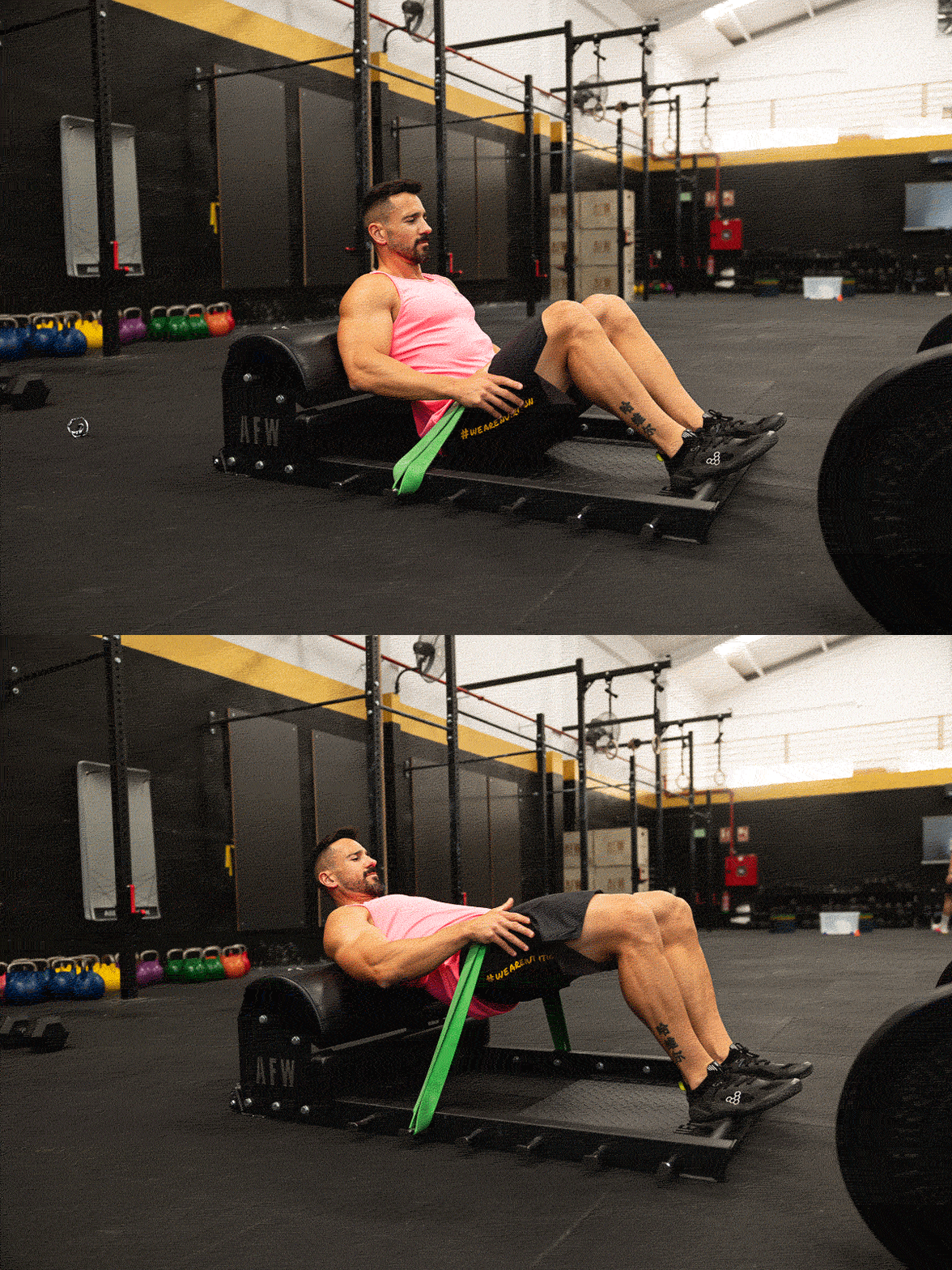
- Hip Thrust with band: place a band around your hips instead of a barbell.
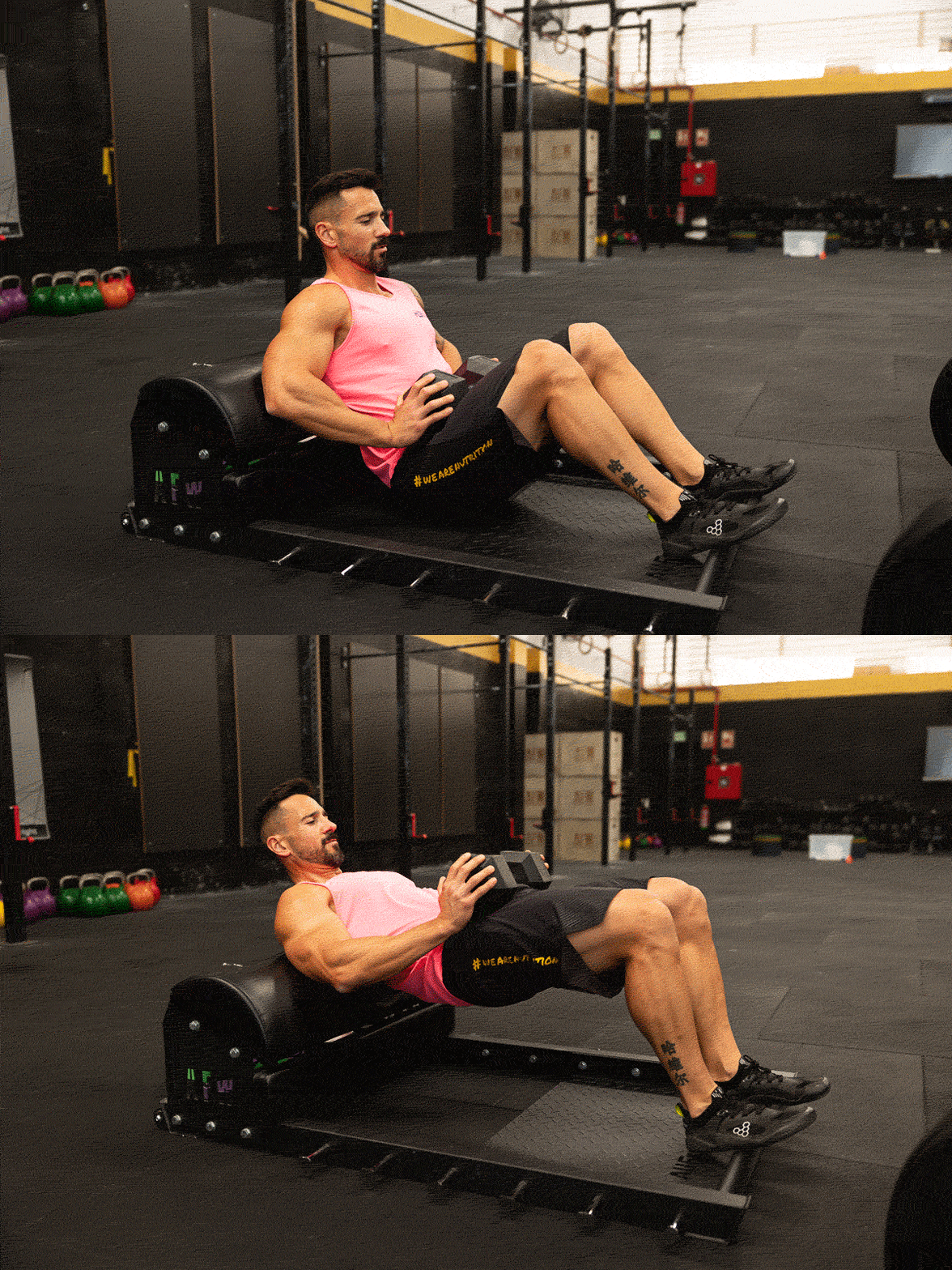
- Hip Thrust with dumbbell: place a dumbbell on your hips instead of a barbell.
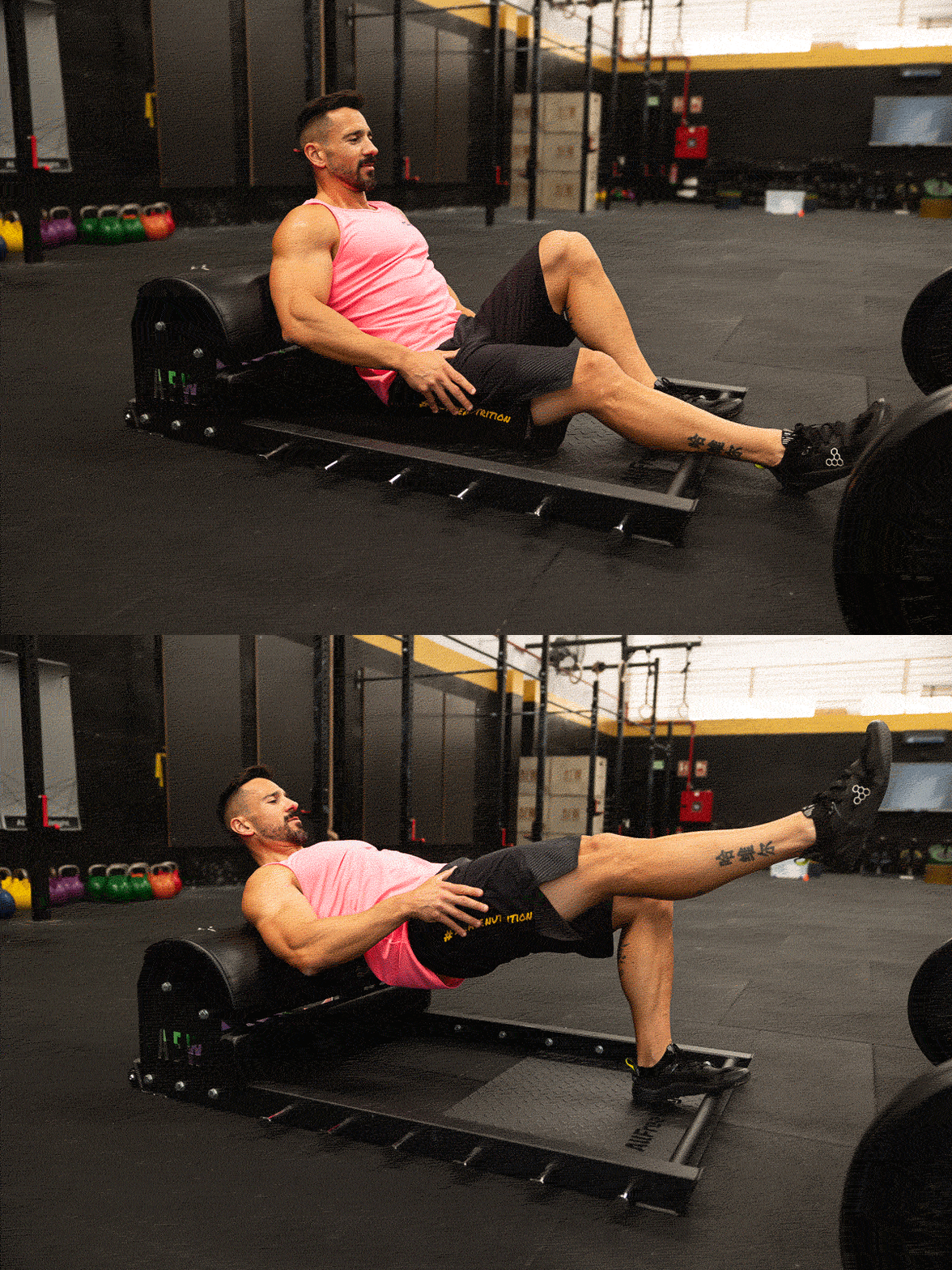
- Unilateral Hip Thrust: do the exercise with one leg only. This not only boosts muscle activation but also improves balance and strength more efficiently.
How to include the Hip Thrust in your leg routine?
If you want to specifically target the glutes, the hip thrust should be a key exercise in your leg routine. Here’s a suggested plan to include it:
- Week 1-2: 3 sets of 12 reps with moderate weight.
- Week 3-4: increase the weight and lower reps to 8-10.
- Week 5 and beyond: add more load and do low reps (3-5).
Where to include it in your routine?
Main exercise (max strength and glutes)
If your goal is to maximize glute activation and lift heavy, do it at the start of your workout, after a good warm-up.
- Recommended sets and reps: 4-6 sets of 3-5 reps with heavy load.
Accessory exercise (after squats or deadlifts)
If you prioritize strength in other compound moves (squat, deadlift), you can include the Hip Thrust afterwards as an accessory exercise and use the variations.
- Recommended sets and reps: 3-4 sets of 10-15 reps with moderate load.
How to choose the right weight for Hip Thrust
Picking the right weight for this exercise is key to avoid injuries.
- Start without weight or just bodyweight and get familiar with the technique: before adding weight, make sure you master the correct hip thrust form. Practice the movement with your own bodyweight, focusing on activating the glutes and keeping good alignment.
- Gradually add weight: once you feel comfortable with the movement, you can start with an empty barbell (usually 15-20 kg). Resistance bands are a great option for beginners since they provide progressive resistance and better control. If you prefer, you can use dumbbells to add weight; start with light loads (2-5 kg) and increase gradually as you get stronger.
- Criteria for choosing the right weight: pick a weight that lets you do 8-12 reps with good form. If you can easily do more than 12 reps, increase the weight. The last 2-3 reps should be challenging but not impossible. You want to feel like you’re working hard, but without compromising technique.
Those with training experience can work with loads around 70-85% of their one-rep max (1RM). This weight range is common in hypertrophy-focused routines and usually done in sets of 8 to 12 reps. For strength gains, they should adjust the load between 90-97%.
Common mistakes when doing the Hip Thrust and how to avoid them
It’s easy to slip up when starting a new exercise, but here’s how to dodge those mistakes:
- Not aligning hips with the back: this can cause lower back discomfort. Always keep perfect alignment.
- Not controlling the movement: avoid jerky motions, as they can cause injuries or reduce the exercise’s effectiveness.
- Using too much weight at the start: start light until you nail the technique before adding load.
Other alternative exercises:
- How to do the Bulgarian split squat correctly .
- How to perform the Pallof press for abs