Fitness, Nutrition, Health and Sports Blog In the HSNstore Blog you will find tips about Fitness, sport in general, nutrition, and health – HSNstore.com

Is there a proven method to help us run better with less effort and less chance of injury?
This is the question that all runners ask themselves and the answer is YES, the POSE method guarantees natural, more efficient running with minimal risk of injury.
Its creator, Nicholas Romanov, began to shape it in the 1970s, in the era of Soviet sports science.
In 1993, it was a revolution in running, became hugely popular and is now applied and taught in different parts of the world.
The idea came about when Dr. N. Romanov observed that there was a need to teach running in a simple, easy and universal way of movement and running technique.
This teaching model is based on both scientific studies and analysis of runners, from amateur to elite levels. The most remarkable thing about this method is that it applies to all types of runners.
If you are a runner and want to improve your running efficiency and technique, take note of how easy it is to implement some of the teachings of the POSE Method.

What makes the Pose Method different from any other indications or recommendations that we may read is that it is a standardised teaching model that has 3 phases.
For Dr. Romanov, RUNNING is not a matter of teaching how to run faster, what to eat and other tips, but in teaching HOW TO DO IT, to teach how to improve that skill:
- Learning to run should be understood as learning to move correctly: a simple and elegant solution that allows you not only to avoid injuries but to run for many years to come.
- A natural running form through this method guarantees a reduction of up to 50 % of the impact on the knee joint, and therefore, the associated injuries.
- Through this method of teaching running, runners naturally learn to land more softly, without the heavy impact of landing with the heel.
Running Pose Technique
The POSE technique is based on:
- A shorter stride with support under the hips, which aims to avoid heel strike;
- Bringing the body slightly inclined forward (taking advantage of the forces of gravity);
- Bending the knee so that the heel is drawn towards the buttock when the leg is drawn up.
- Saving energy and maintaining acceleration.
Unlike most runners: Unlike most runners: who bend at the knees and extend them to land in front, rather than landing more naturally under the hips.
The word “pose” involves the whole body: supporting foot under the centre of mass, hips aligned over the forefoot, upper body aligned over the hips with arms slightly bent for balance.
Regardless of the surface or environment on which you run, if you simply maintain your running posture (move from one posture to another, from one stance to another, etc.), you will never have to think about where or how you land.
If you remember to maintain your running posture, your running technique will remain intact.
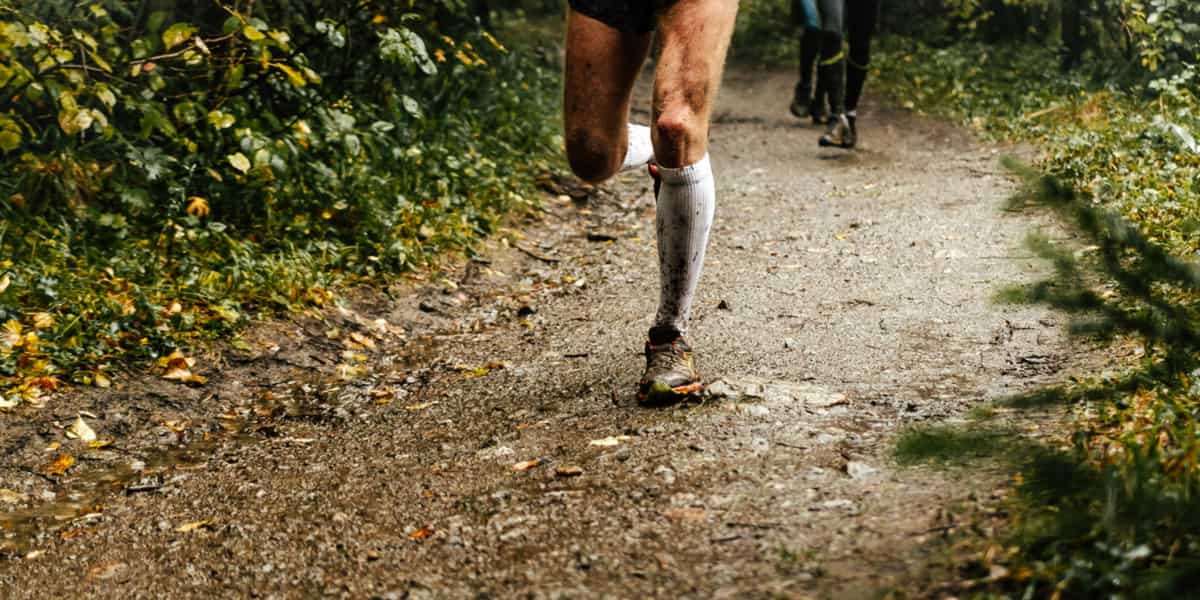
There are millions of postures and among them, there are only a few key postures that make a difference in the movement.
“Running is moving from one posture to another by changing support while falling forward”.
Nicholas Romanov.
Phases
The POSE method has up to three different phases or postures, which are carried out progressively to improve the efficiency of the running technique.
The ideal is to start by performing certain exercises or drills on site, in order to internalise the technique of natural support, as proposed by the method.
Phase One
The one that corresponds to the beginning of the movement: the lifting of the foot.
- Keep it in the air and place it close to the centre of gravity;
- Try to keep your balance (pose like a Flamingo); and
- Maintain stability with the foot remaining on the ground.
Phase Two
The second focuses on the foot drop:
- It must be performed just below the hip: this detail is key to transforming that vertical momentum with which it comes into a horizontal force; fundamental to avoid extra energy expenditure.
- Attention must be paid to coordination and stability: always keep the trunk straight so as not to lose neither balance nor acceleration during the transition to the next phase.
Phase Three
This phase consists of returning to the first position, the lifted foot:
- To do this, instead of throwing the leg, what you have to do is to “pull” or “pick up” the foot that has impacted under the hip.
- In this phase, the strength of the posterior chain of flexion of the knee flexors is necessary.
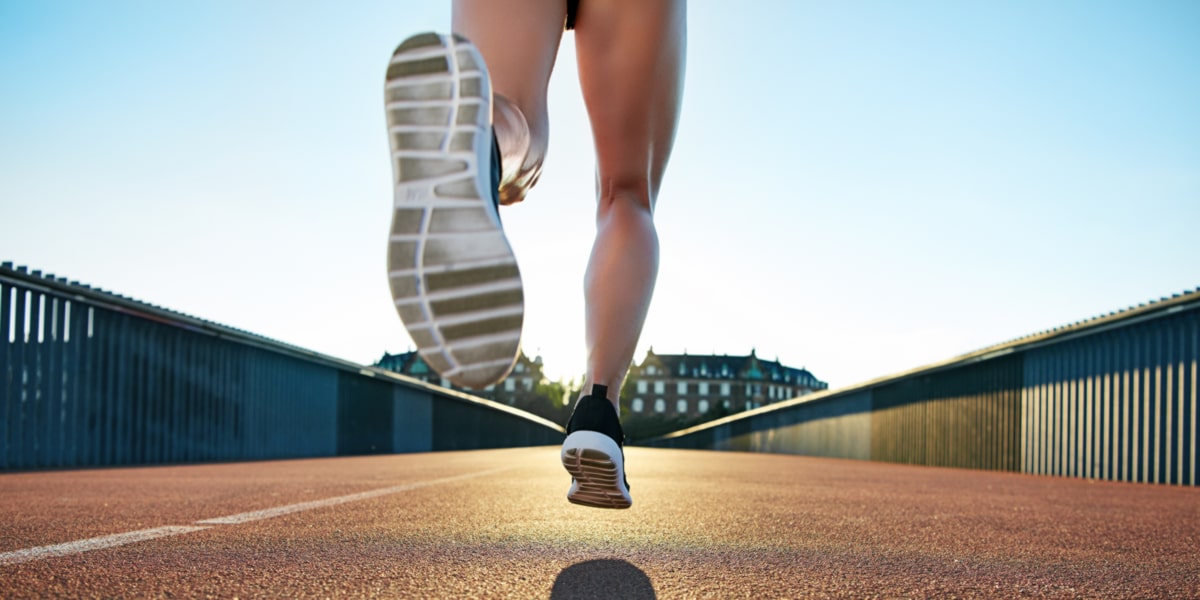
And so, we start the next stride cycle.
Advantages of the POSE Method for running
- Improvement of the natural biomechanics of movement, flexibility and coordination.
- Reduced injuries due to less joint impact on knees and ankles.
- Lower energy costs = improved mechanical efficiency.
- Increased speed and muscular endurance.
- Improved recovery.
Related Entries
- If you are looking for effective supplements for runners we recommend you visit this link.
- Here are 4 keys to running faster.
- Start running with the Run and Walk method.
- How to improve your stride technique?