Fitness, Nutrition, Health and Sports Blog In the HSNstore Blog you will find tips about Fitness, sport in general, nutrition, and health – HSNstore.com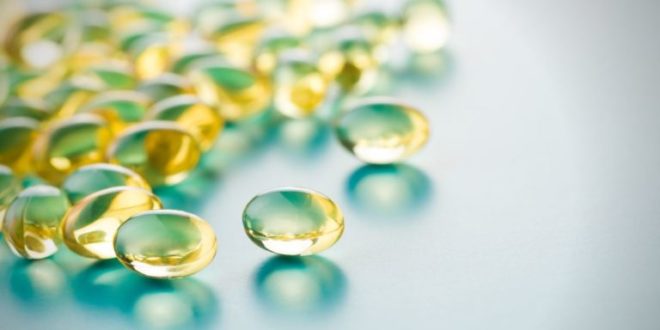

We are living in an era when a window of unlimited content on any subject is just a click away. We carry a universe of information in our pockets from the moment we wake up til we go to sleep. However, how can we know if what we are reading is true or not? In this article, we are going to refute some of the false rumors about Omega-3.
Immediate Information
Now more than ever, information is available to anyone in a few thousandths of a second. However, each person’s critical sense will always prevail, so that the information we can find is real and not a scam.

Contrasting Information
Some say that when a lie is repeated 1000 times it becomes truth… Nothing could be further from reality in a world of sensationalism and misleading information. Logically, this pseudo-principle is applicable to any aspect of our lives. But it becomes specially relevant in the field of advertising and the dynamics that govern competitive commerce.

It is called contrasting information, or using an objective filter.
Source of the Problem
Recently, we received a complaint through our Customer Service Department. Basically, it accused us of selling a product, an Omega-3 supplement, that could be harmful or toxic for health.
Spreading the word
This false rumor about Omega-3 was shared through videos that show a person performing a test with the product. First, they pour it on a plastic glass. Then, after waiting a few minutes, the glass has been dissolved.
Any Youtuber can perform laboratory tests without having the necessary knowledge, jumping to conclusions that are even defamatory…

For example
In one of the videos, the author carries out the following experiment:
- He places two plastic glasses with water, and in each one he pours the contents of a pearl of omega fish oil from two manufacturers.
- Then, he sets the chronometer while he tells us the benefits of omega-3 for our organism.
- After 3 minutes, he stops the clock and shows us how the glass containing the oil from manufacturer ‘B’ has broken part of it. On the other hand, the glass of manufacturer ‘A is intact.
However, in other videos, you can see how other youtubers have a completely different stance…
Is this the free will of information or just the proof of how we can invent different versions of the same “issue” so easily? Do we have the right to invent thousands of videos and upload them to the digital world without any backlash? Is this worth it just for a few hours of viral glory?
Feeding the False Rumors about Omega-3
At this point, we can ask ourselves the following question: if this video were true, that is, if the content of the softgel could dissolve a piece of plastic, do you think that the legislation and its demanding letter of certificates and strict sanitary controls would let it pass?
Our Stance at HSN
According to what we know, the compound called “Acetone” is what causes the problem. In this sense, we can guarantee that our Omega-3 (DHA) does not contain said compound, as stated in the Product Information Page and the Statement from our Supplier. In fact, these confirm that our product does not contain acetone and explains in Spanish the reaction that certain oils can cause to plastics in detail.
This property, which is typical of this type of oil and of oils in general, (depending on their concentrations) is not related to the presence of synthetic chemical solvents.
Maximum Transparency to the Customer
Since we started out as a business, we have been committed to provide quality and transparency in each and every single one of our products. All our suppliers are duly approved and all our products provide the maximum guarantees to the consumer according to the current food legislation.
Related Entries:
- The key functions of fatty acids in your organism, keep reading
- L-Carnitine + Omega-3
- Read the info about its anabolic potential