 Fitness, Nutrition, Health and Sports Blog In the HSNstore Blog you will find tips about Fitness, sport in general, nutrition, and health – HSNstore.com


The Dead Bug is one of the most effective exercises for strengthening your core without putting unnecessary strain on your back. Unlike traditional abdominal exercises, this movement targets the rectus abdominis, improves lumbar stability, posture and helps prevent injuries.
What Is the Dead Bug Exercise and How Do You Do It?
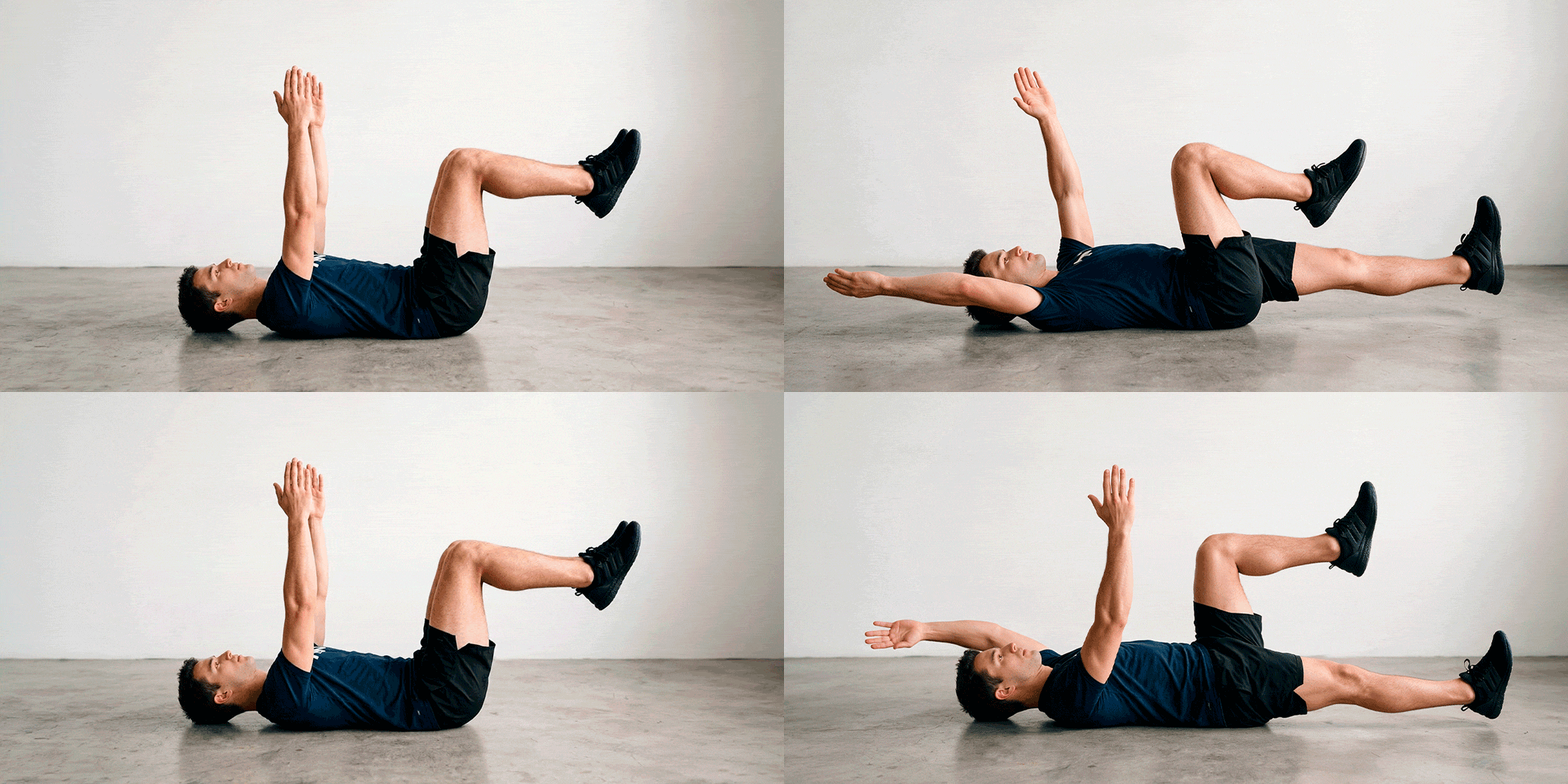
The Dead Bug is a core exercise performed lying on your back that targets the rectus abdominis and improves lumbar stability. With your knees bent at 90° and your arms pointing towards the ceiling, lower one leg while extending the opposite arm backwards, without arching your back, alternating sides.
- Lie on your back and raise your legs with your knees bent at 90°. Extend your arms towards the ceiling, keeping them aligned with your shoulders.
- Press your lower back against the floor (imagine trying to flatten a coin underneath it). Maintain this contraction throughout the exercise.
- Slowly lower your right leg (almost fully extended, without touching the floor) and your left arm backwards. Inhale during this movement.
- Exhale as you return to the starting position. Repeat, alternating sides.
Muscles Worked During the Dead Bug Exercise
The Dead Bug primarily targets the abdominal muscles, although it also engages other muscles that help stabilise the body and control leg movements.
Primary muscles:
- Rectus abdominis: maintains trunk stability and prevents the lower back from arching.
- Obliques: help stabilise the abdomen and prevent pelvic rotation.
Secondary muscles:
- Psoas: contributes to hip flexion and helps control leg movements.
- Quadriceps: help keep the knee extended during the exercise.
- Tensor fasciae latae: assists with hip stability and control.
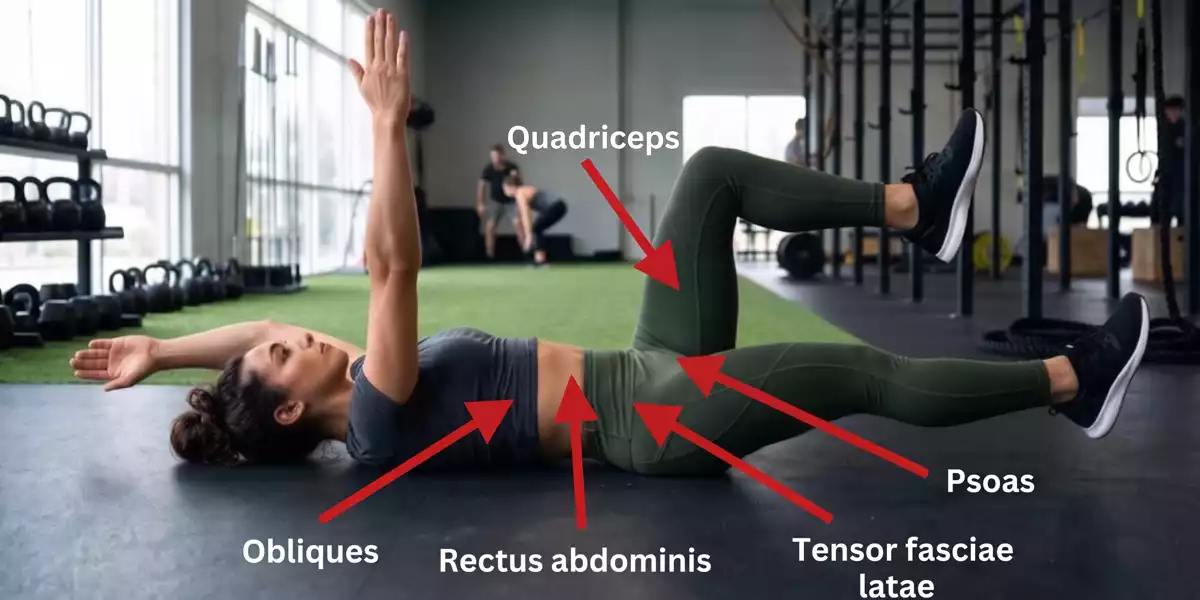
Overall, the Dead Bug is an effective exercise for strengthening the core, improving lumbar stability and developing coordination between the arms and legs.
Recommended Sets and Repetitions
| Level | Sets x Repetitions | Tips |
|---|---|---|
| Beginners | 3 x 8 per side | Focus on controlled movements |
| Intermediate | 3-4 x 10-12 per side | Focus on maintaining proper posture |
| Advanced | 4 x 12-15 per side | Add weight to your hands or slow down the movement |
Dead Bug Variations to Suit Your Fitness Level
Here are some Dead Bug variations to help you find the one that best suits your fitness level and training routine:
1. Dead Bug with Resistance Band
- Sit on the floor and place a resistance band around the soles of your feet.
- Hold the ends of the band with your hands, keeping your elbows slightly bent.
- Lie on your back and inhale as you raise your legs with your knees bent at 90° (as in the classic Dead Bug).
- Make sure the band is taut without creating excessive tension.
- Exhale as you lower your right leg (almost straight) and your left arm backwards, maintaining tension in the band. Slowly return to the starting position while exhaling, then alternate sides.
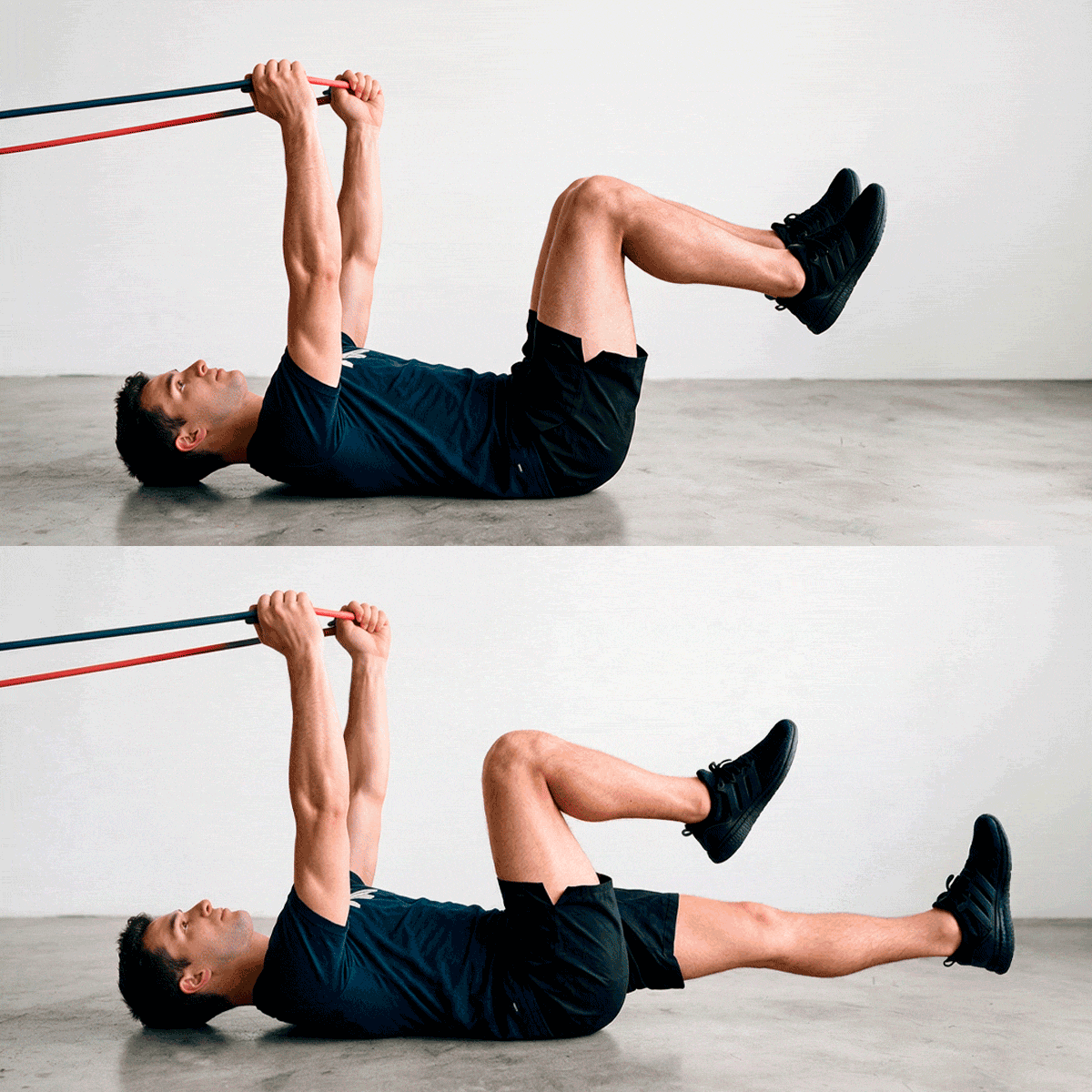
- HSN Recommendation: use resistance bands with 7-10 kg of resistance to balance effort and control.
2. Unilateral Dead Bug
- Lie on your back and raise both legs with your knees bent at 90°.
- Extend your arms towards the ceiling.
- Lower only your right leg towards the floor (keep your left leg bent at 90°).
- At the same time, move your left arm backwards without arching your back.
- Exhale as you lower your right leg towards the floor and move your left arm backwards.
- Inhale as you return to the starting position and repeat on the opposite side.
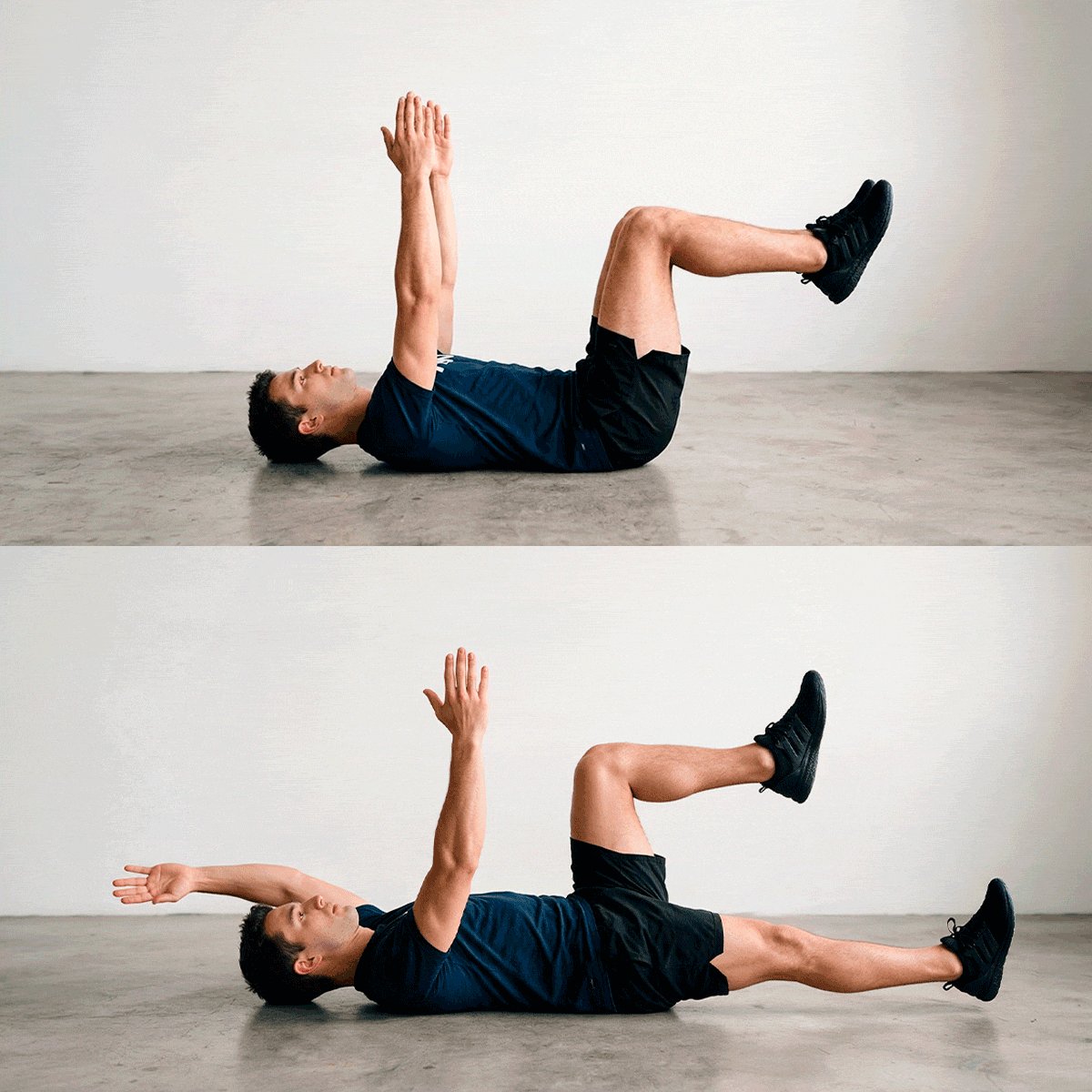
- HSN Recommendation: if you lose stability, reduce your range of motion or place one hand on your abdomen to monitor core engagement.
3. Dead Bug with Medicine Ball
- Hold a medicine ball with both hands, keeping your arms extended towards the ceiling.
- Lie on your back with your legs raised and your knees bent at 90°.
- Lower your left arm backwards (as in the classic Dead Bug) while holding the ball in one hand.
- Exhale as you lower your left arm backwards (without releasing the ball). Inhale as you return to the starting position and alternate arms.
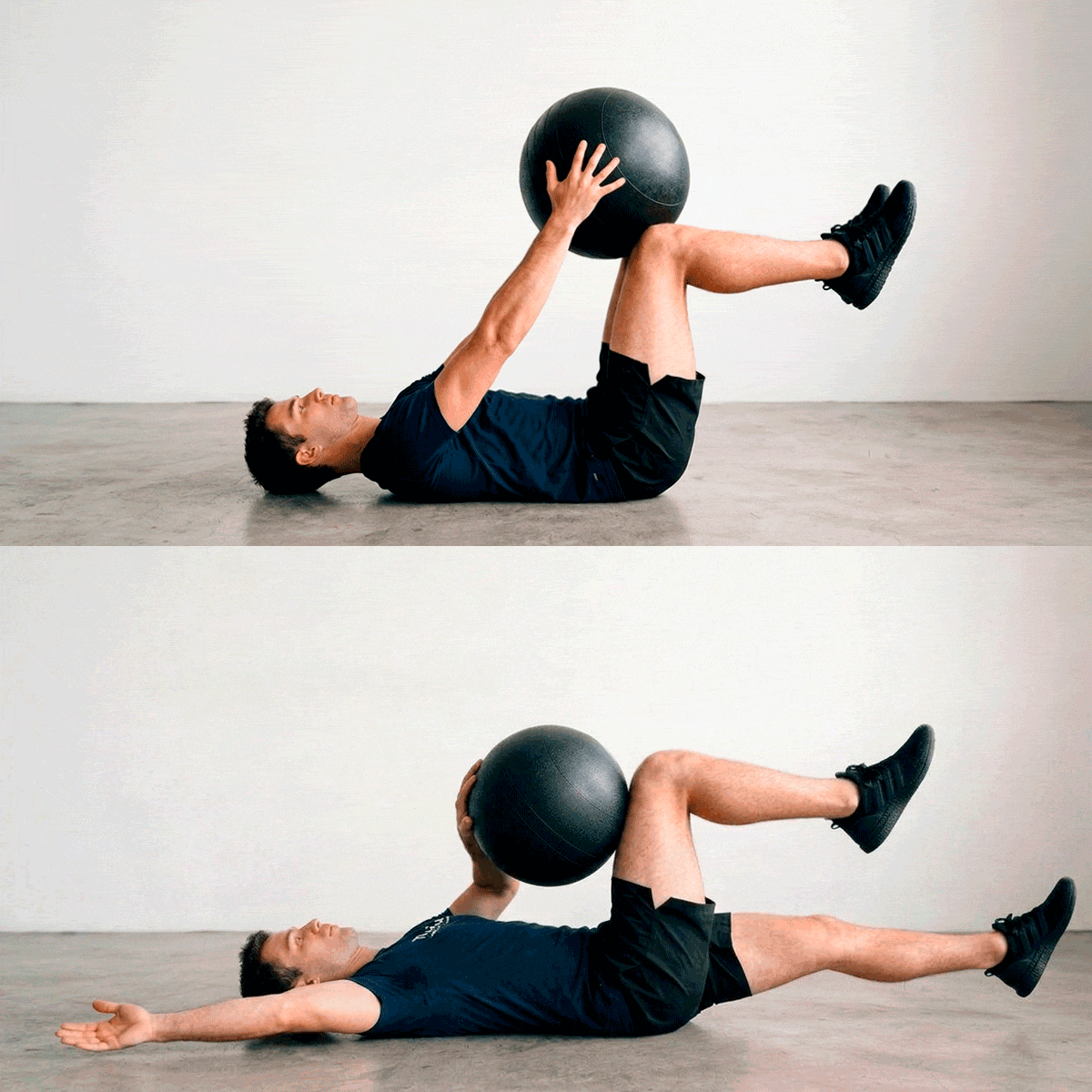
- HSN Recommendation: use a medicine ball weighing between 2 and 8 kg, depending on your fitness level.
4. Dead Bug with Kettlebell
- Lie on your back and raise both legs with your knees bent at 90°.
- Hold a kettlebell with both hands and extend your arms towards the ceiling, keeping the weight aligned with your chest.
- Keep your arms stable as you slowly lower your right leg towards the floor, extending it in a controlled manner.
- Avoid arching your lower back and keep your abdominal muscles engaged throughout the movement.
- Exhale as you lower your right leg, keeping the kettlebell stable and your back pressed against the floor.
- Inhale as you return to the starting position and repeat with your left leg, alternating sides.
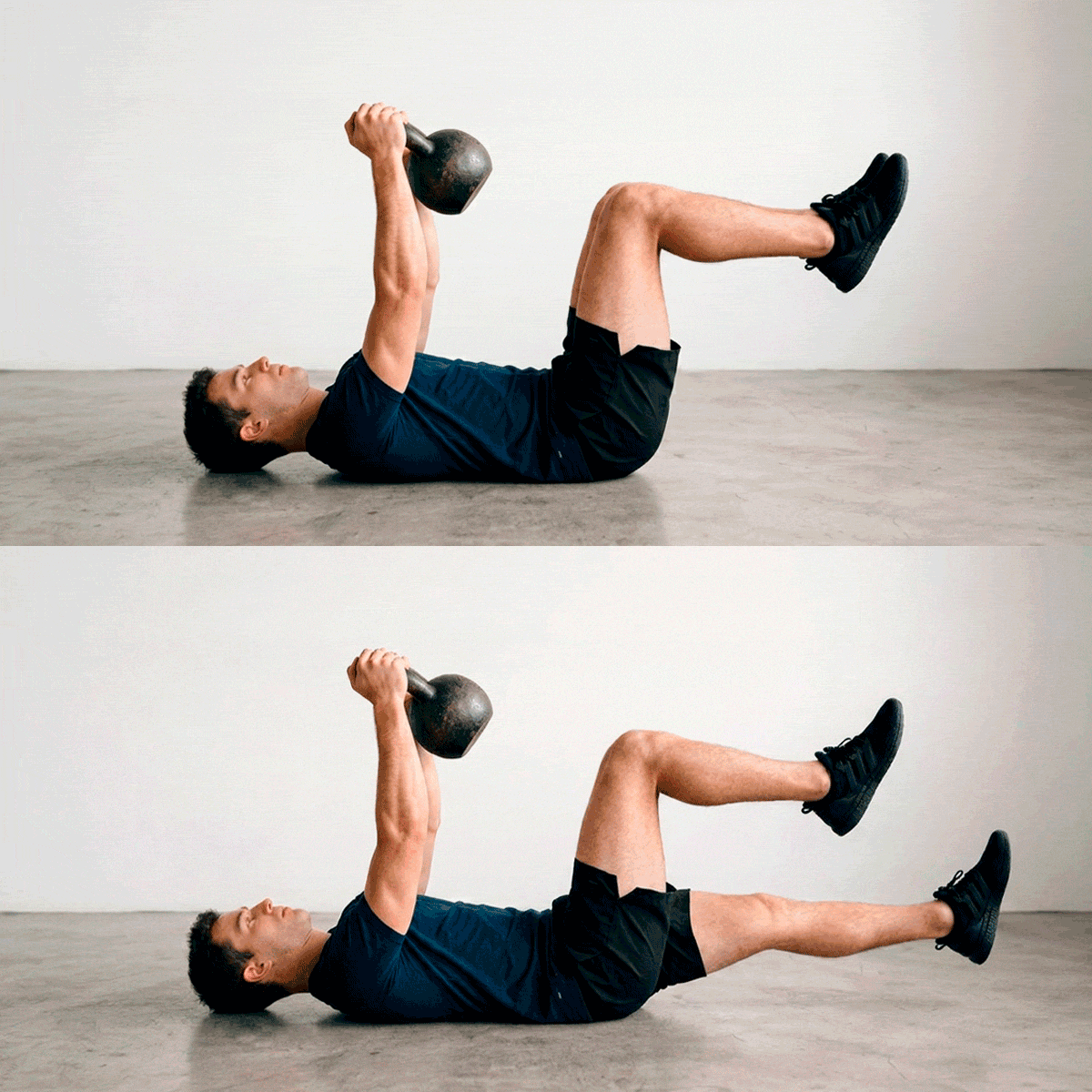
- HSN Recommendation: if you feel pressure in your lower back, place a thin towel underneath your lumbar region for support.
Common Mistakes When Performing the Dead Bug Exercise
| Common Mistake | How to Correct It |
|---|---|
| Arching your back | Draw your belly button towards your spine and keep your ribs down. |
| Moving your neck | Keep your gaze fixed on the ceiling and your head fully supported on the floor. |
| Moving only your arms | Coordinate opposite arm and leg movements. If you find this difficult, reduce your range of motion. |
| Moving too quickly | Prioritise slow movements (4 seconds lowering and 2 seconds returning). |
| Failing to engage your core | Before starting, take 3 diaphragmatic breaths to activate your core muscles. |
References
- Kelvin N. King Jr. (2019) “6 Dead Bug Variations for the Weekend Athlete”
- Peter Fiasca, Ph. D (2010) “Discovering Pure Classical Pilates”
- José María González Ravé and Christian Roberto López Rodriguez (2014) “Core Training”
- Abigail Ellworth (2017) “Core Anatomy & Training”
Related Posts
- How to Do the Side Plank
- Learn How to Do the Farmer's Carry
- Strength Exercises for Biceps and Triceps
- Learn How to Do the Romanian Deadlift
- Abdominal Exercises for Teenagers