 Fitness, Nutrition, Health and Sports Blog In the HSNstore Blog you will find tips about Fitness, sport in general, nutrition, and health – HSNstore.com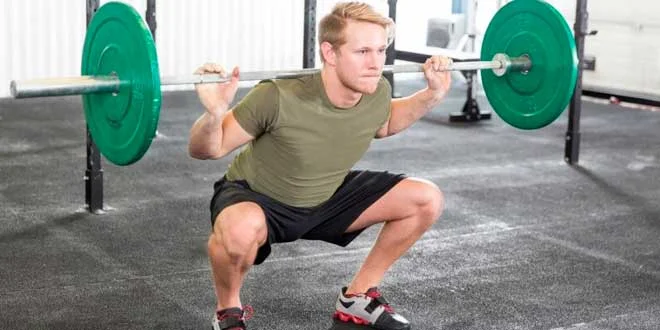

The Lombard Paradox is an unusual phenomenon. It explains the simultaneous activation of two antagonistic muscles to perform multi-joint movement
Lombard paradox, what is it and what’s it good for?
Lombard coined the term known as “Lombard’s paradox” back in 1907.
It consists of the simultaneous activation of antagonist muscles during a hip and knee flexion-extension movement at the same time.
Like sitting down on a chair or doing a squat

Reciprocal inhibition
We all know the theory of “reciprocal inhibition.” One muscle gets the nerve signal to contract to start the movement (agonist). Meanwhile, its antagonists get the signal to relax to make the movement easier.
Example
Biceps curl
The agonist muscle is the biceps brachii, brachioradialis.
And all the muscles on the front side of the arm responsible for elbow flexion are the agonists. At the same time, the antagonist muscles responsible for elbow extension, the triceps brachii, relax.
Because if they contracted at the same time, the elbow flexion movement wouldn’t be possible due to competing forces.
Squat
In the squat movement, a dominant movement of the muscles on the front of the thigh (quadriceps), their antagonists (hamstrings and gluteus maximus) contract simultaneously.
Since the quadriceps produce knee extension and the hamstrings are responsible for hip extension. If one of these muscle groups didn’t activate, the movement would be impossible.
Lombard paradox and the squat
If you’re a regular strength training athlete, you’ve probably noticed this:
Experienced lifters with good squat technique, when approaching their 1RM or lifting while fatigued, tend to perform the movement with a forward trunk lean.
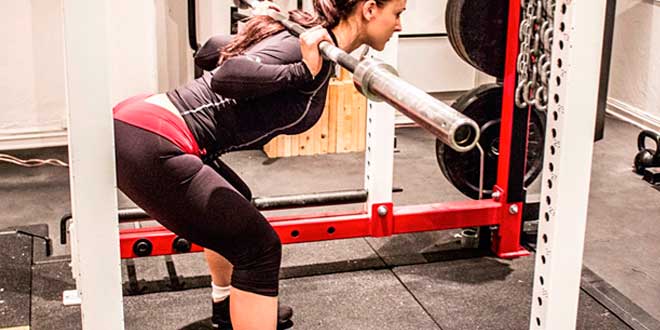
High bar VS low bar
Some lifters use a “low” bar placement during the squat to adopt a less vertical position. This way, they facilitate posterior chain activation during the lift and reduce the moment arm relative to the lever axis.
Which makes the lift easier
Simply because it’s easier to apply force in this position, overcoming biomechanical disadvantages. That’s why all lifters have higher maxes in back squats than front squats.
Is the Lombard paradox dangerous?
Athletes who, even unintentionally and having shown proper technique in submaximal lifts, when increasing load, their technique degenerates into a uncoordinated movement:
The hips rise first. Much faster than the torso. Ending in this unbalanced position that’s not only dangerous
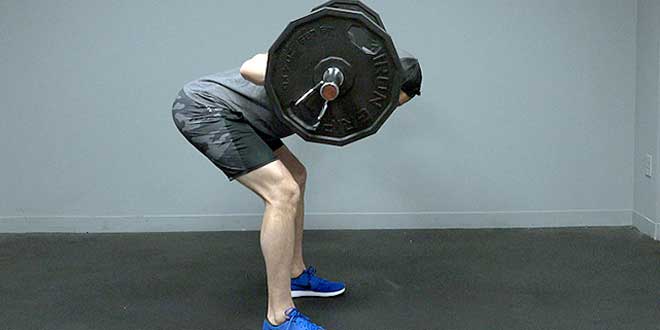
Why does this movement imbalance happen?
The “good mornings” position where the hips rise before the torso happens due to a weakness in the posterior chain muscles.
People with a strong dominance of the anterior thigh muscles can experience this
Fixing the Lombard paradox
The fix for this problem is strengthening the posterior chain. Through analytical hip extension exercises to produce more force in the hip during the squat movement.
Specifically, we can work partial squat ranges with the “porta” training method
- Here we place a stop (could be the rack safety pins) at the level of a 90º knee flexion. We apply force isometrically in that position.
- It’s also useful to reduce the load and perform the movement with tempos or a pause in the middle of the concentric phase.
Related posts
- Front Squat and its Benefits
- Valsalva Maneuver, better performance in heavy lifts
- Fainting and syncope during exercise