 Fitness, Nutrition, Health and Sports Blog In the HSNstore Blog you will find tips about Fitness, sport in general, nutrition, and health – HSNstore.com

Should you cut out fruit when trying to lose weight? Is eating fruit bad during cutting? Does having fruit for dinner make you gain weight…? Let’s clear up these questions
As I always say, we live in a time where getting information has never been easier, yet we’re more misinformed than ever. While this applies to many areas of life, today I’ll focus on what matters most to me: Nutrition.
We constantly read and hear about low-carb diets being better, that fruit makes you fat, that nuts shouldn’t be part of your diet, and other similar myths.
Is Fructose Stored as Fat?
This is probably one of the most common questions when trying to lose fat. The idea comes from the sugar content (mainly fructose) in fruit, assuming this sugar will be stored as body fat.
To understand this hypothesis firsthand, we need to go back a few decades when it was discovered that fructose behaves differently than other sugars, which led to many fructose-rich products being marketed for diabetics.
Today, we still find derivatives of this (fructose syrup) in most “processed” foods like chips, sodas, sweets, or fast food.
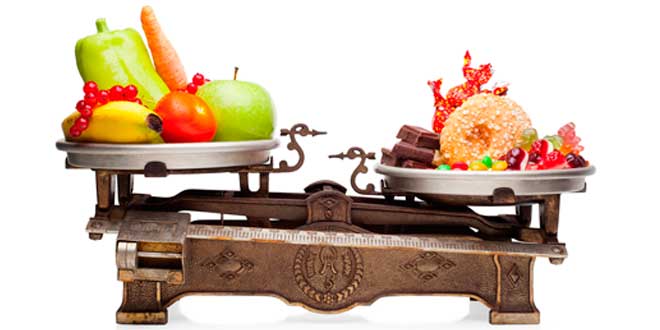
Obviously, comparing a hyperpalatable food with low nutrient density and no fiber to a fruit would be, at the very least, “bold”
The Key: Where the Fructose Comes From
Looking at published evidence, we find that fructose consumption is linked to either weight loss or weight gain.
Foods with Added Sugars
Still, consuming foods with added sugars (table sugar or fructose syrup) does NOT increase overweight risk when consumed in normal amounts or as a substitute for other carbs1.
However, in reality, this doesn’t happen for two reasons:
- The “consume in moderation” message doesn’t work because most people can’t define what that amount is2
- Most foods with added sugars are hyperpalatable, making people eat more of them
What Do Studies Say?
If we check meta-analyses on the topic3, they tell us:
Sugars containing fructose can only lead to weight gain and other unintended cardiometabolic risk factors to the extent of the excess calories they provide
Risk of Sugary Drinks
Still, researchers give us another important message:
Prospective cohort studies, which provide the strongest observational evidence, have shown a link between foods with added fructose and cardiometabolic risk, including weight gain, cardiovascular disease, and diabetes only when limited to sugary drinks and not sugars from other sources.
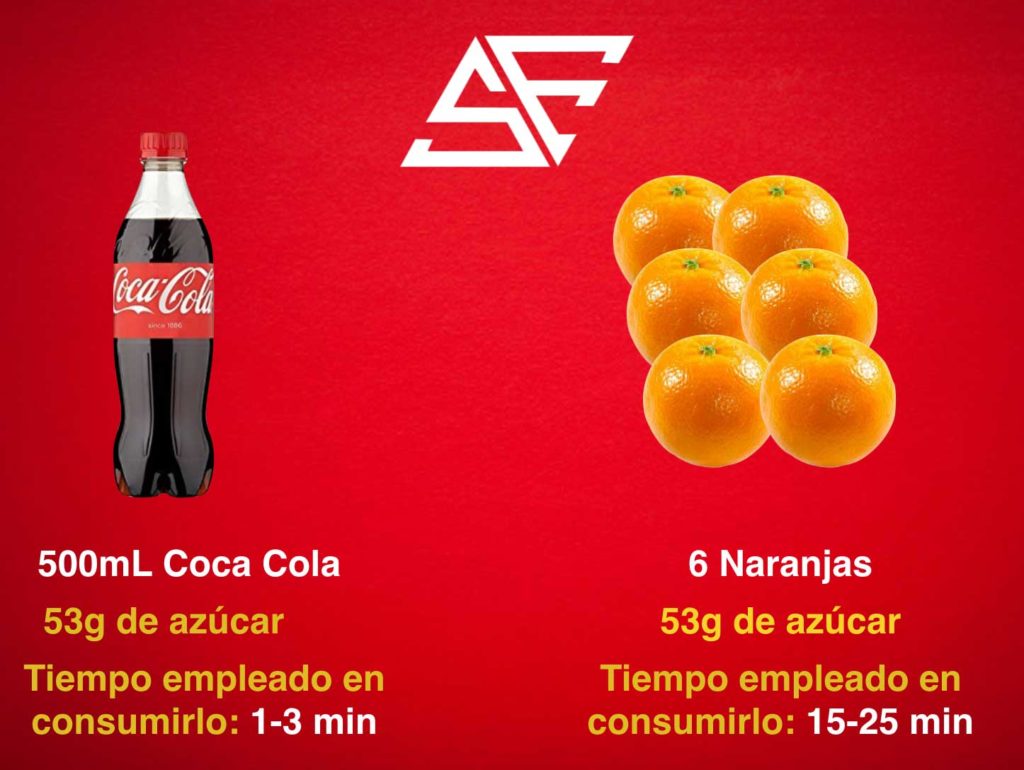
Same amount of sugar, different nutritional value and totally different contexts
Looking at the association between different foods and body weight change, we see:
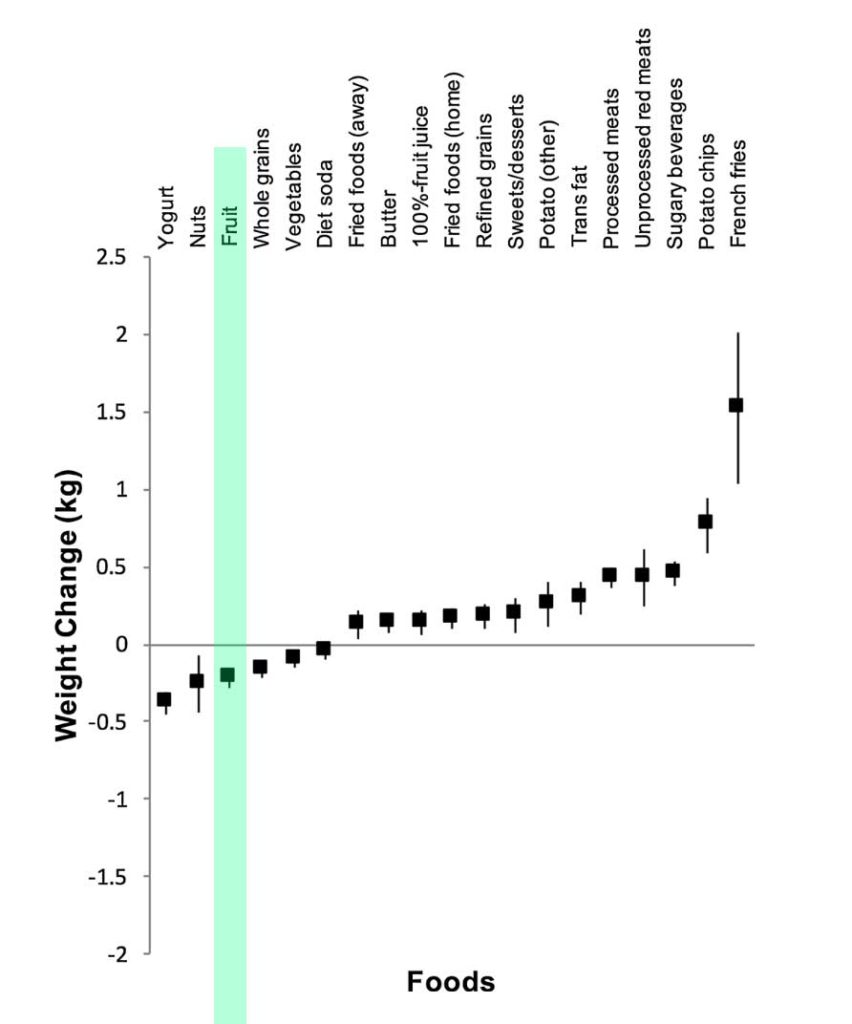
Fruit, along with nuts and yogurt (obviously natural), are the 3 foods linked to positive changes in body weight. On the other hand, chips (both packaged and fried) and sodas are the ones that would make us gain the most.
Hypercaloric Diet and Fructose
As we saw earlier, context matters a lot since results won’t be the same in a hypercaloric (excess calorie) diet compared to a controlled calorie diet.
The next figure shows results when adding fructose to create a calorie surplus:
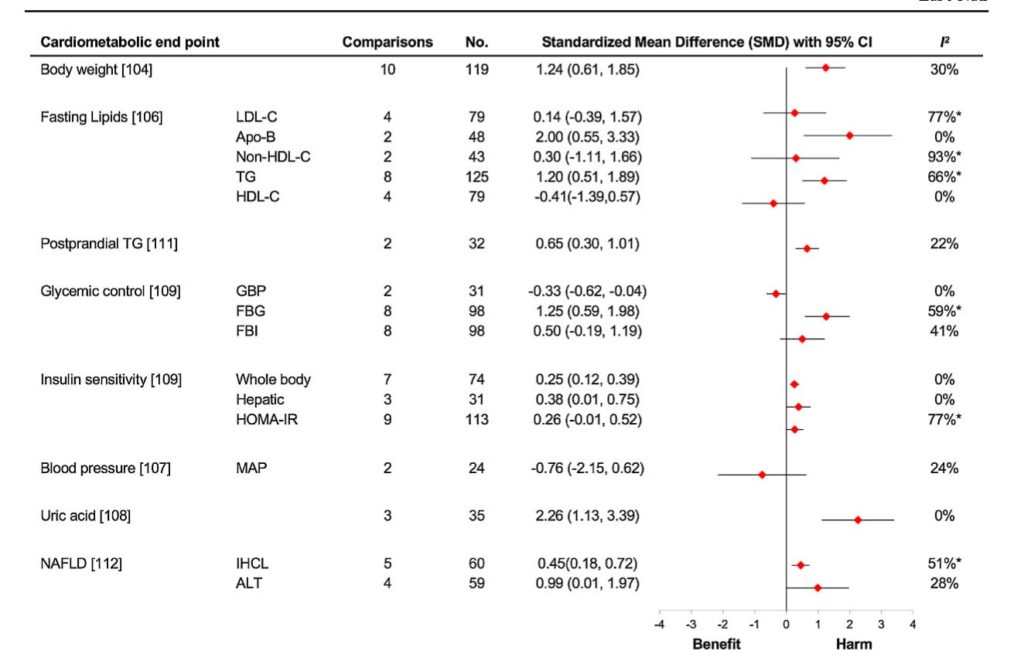
Looking at the data, we see that a hypercaloric diet high in fructose is linked to worse health markers like body weight, uric acid, and lipid profile.
However, is it due to fructose or the calorie surplus?.
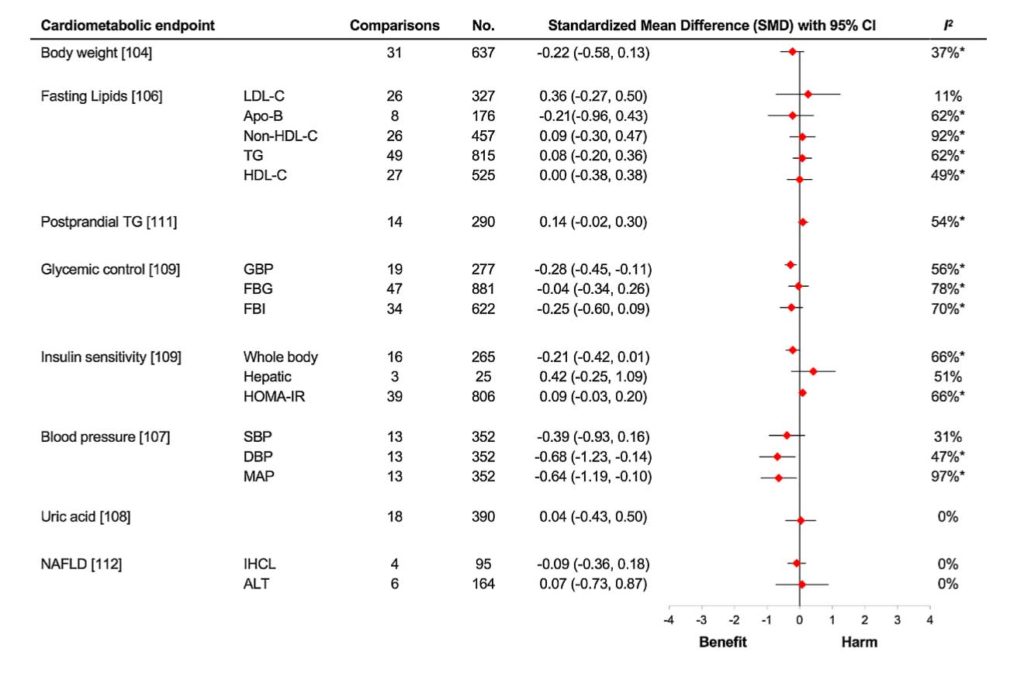
Controlled Calorie Intake and Fructose
When we look at studies in controlled calorie intake situations, results are totally different, showing no adverse effects:
 Is Fruit Bad When Trying to Lose Fat?
So, once again, we see that context is key to understanding if fructose is bad for fat loss.
The studies mentioned earlier show how replacing carbs with sugars is NOT linked to worse body composition as long as it’s an isocaloric situation (same calorie amount).

That said, this is utopian since no one really knows how many calories they eat daily, and satiety varies a lot depending on the carb consumed (baked potato VS Coca-Cola soda).
This means people eating sugar-enriched foods (processed or fast food) will consume more calories and, therefore, more sugar than those basing their diet on foods like fruits or vegetables, which have much lower calorie density and provide greater satiety.
Sources
- J M Rippe and T J Angelopoulos. Added sugars and risk factors for obesity, diabetes and heart disease. International Journal of Obesity (2016) 40, S22–S27; doi:10.1038/ijo.2016.10
- VanDellen MR. Isherwood JC, Delose JE.- How do people define moderation? 2. Appetite. 2016 Jun 1;101:156-62. doi: 10.1016/j.appet.2016.03.010. Epub 2016
- Tauseef A. Khan · John L. Sievenpiper. Controversies about sugars: results from systematic reviews and meta‐analyses on obesity, cardiometabolic disease and diabetes
Related Posts
- Exercises to Lose Weight
- Foods Rich in Vitamins and Minerals
- 20 Tips to Burn Fat