Fitness, Nutrition, Health and Sports Blog In the HSNstore Blog you will find tips about Fitness, sport in general, nutrition, and health – HSNstore.com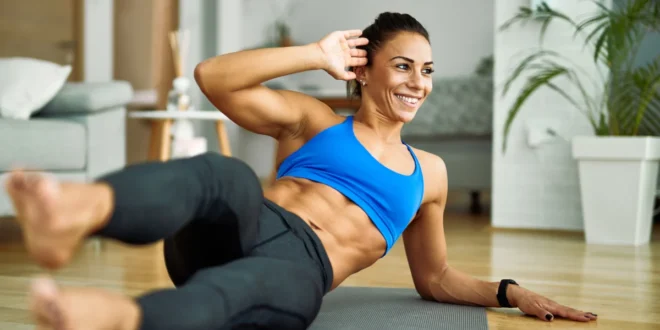

If you still can’t get the famous “6-pack”, now is the time to learn the secrets to the abdomen of your dreams.
What is the abdomen and what is its purpose?
The abdomen can be defined as the set of muscles that go from the ribs to the pelvis and protect internal organs.
In the anterior part, there is the rectus abdominis, which is composed of several muscle groups (the so-called six pack).As part of their duties, they:
- Bring the ribs closer to the pelvis (upper portion gets more stimulation)
- Hip retroversion (bringing your knees closer to your chest: lower portion gets more stimulation)
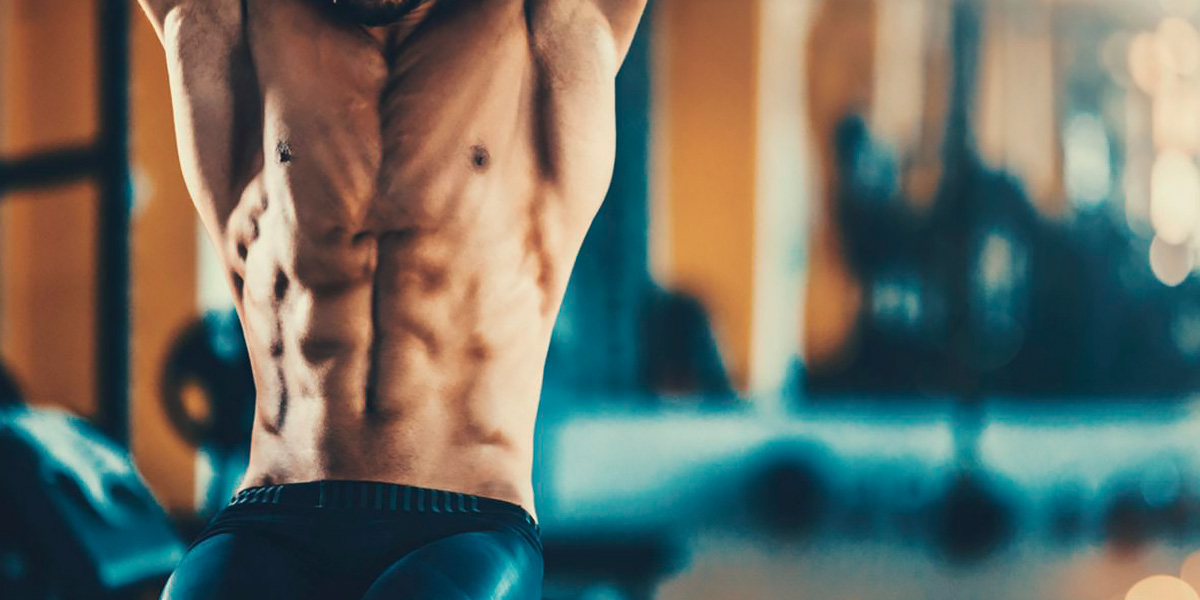
In both functions, the entire abdomen is stimulated, but depending on the movement there’s greater stimulation of one part or another.
The abs on the side are called “obliques”
- Contraction of the left oblique pulls the ribs towards the pelvis on the left side, causing the ribs to separate from the pelvis on the right side.
- When the major and minor obliques contract, they rotate the hips without moving the shoulders.
- If contracted at the same time as the rectus abdominis, they bring the ribs closer to the pelvis in a criss-cross fashion, bringing the right shoulder towards the left hip or the other way round.
The contraction of the transverse muscle acts in a similar way to that of a belt, squeezing the viscera against the spine.
General function of the abdomen
Coordination with the psoas and extensor muscles of the spine to keep the spine straight and fixed.
Great importance in multi-joint exercises and sports performance (it plays an important role in isometric and stabilising contraction in any sporting activity).
There’s no distinction between the upper and lower abdomen.
It’s a set that is worked simultaneously (greater effect on some muscle groups than on others depending on the exercise).
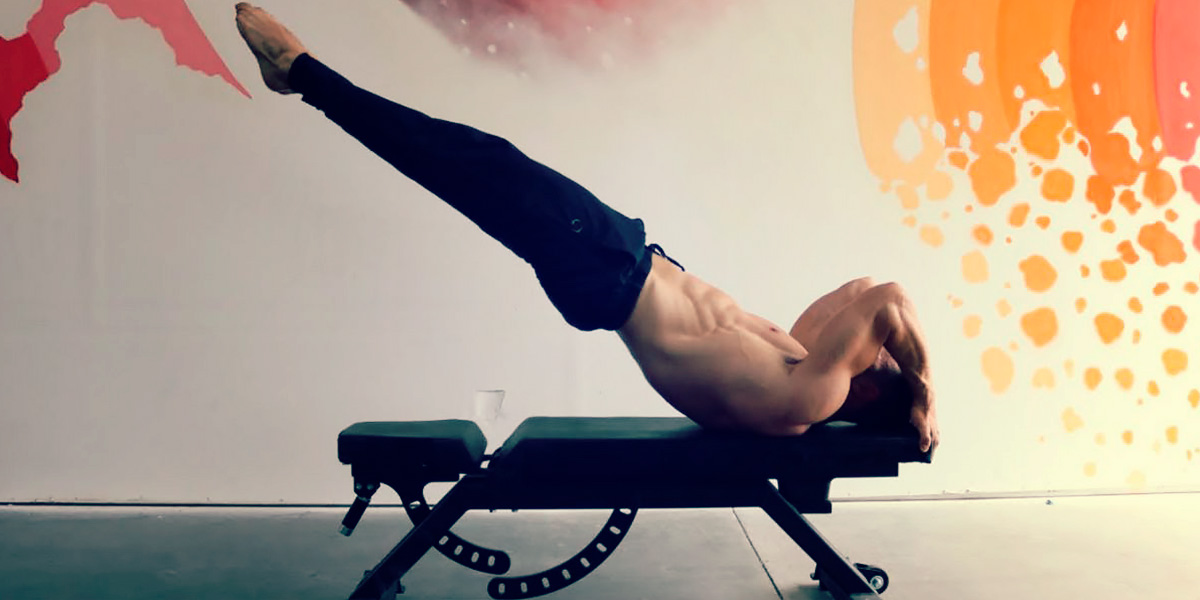
Dragon Flag.
Hip flexion is performed by the hip flexors, but the abdomen works fully and isometrically to stabilise the hip.
Abdomen aesthetics: am I doing something wrong?
I have an uneven abdomen, some taller than others. Is it because I’m not working them properly?
No. Many people have abs like this, usually due to scoliosis or other factors, mainly genetic
I can only see four abs, why?
It can bed due to your distribution of body fat, or simply down to genetics.
Correct technique for working the abs
It’s been shown that performing abdominal crunches on the floor, with legs at 90º, heels resting on a bench, pressing the heels against the bench while performing the concentric phase of the crunch (going up), stimulates the entire anterior rectus abdominis.
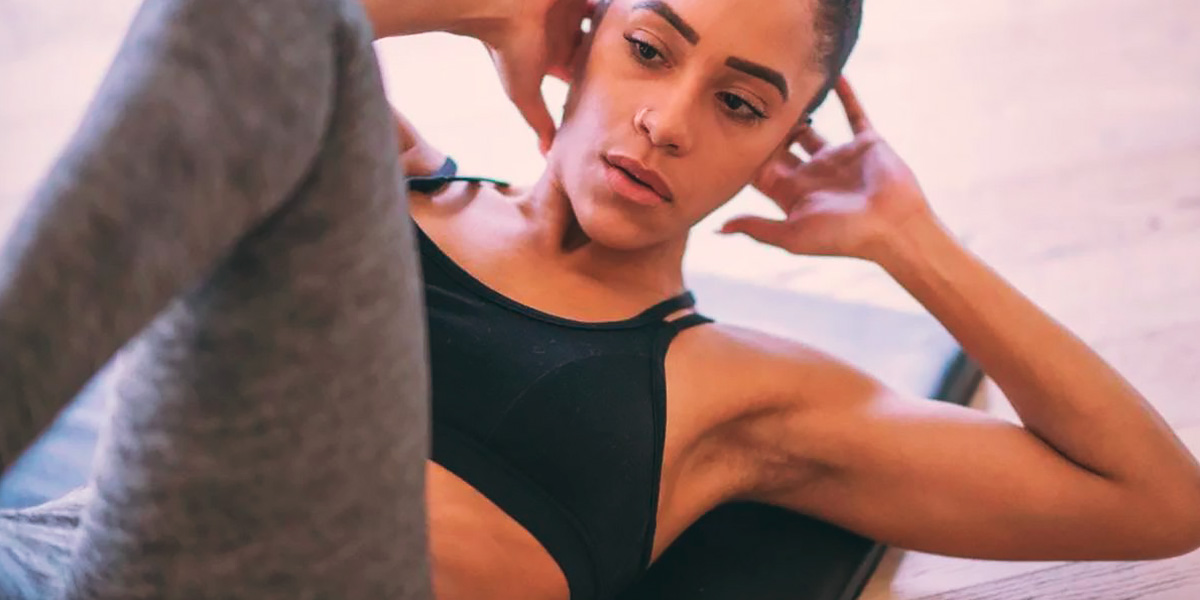
Abdominal crunch.
Moreover, the faster these crunches are done (without losing the correct posture, stimulation, concentration, etc…) the more the obliques are involved (the obliques act as core flexors on the pelvis when they perform a bilateral contraction).
Ways to train the abdomen and their effectiveness
Classic (crunch, leg lift, etc.)
Isometric (very effective)
- Dragon flags
- Planks
- Ab wheel
Hypopressives
Unstable platforms?
Using unstable platforms in strength work doesn’t show any benefit in strength development, in fact, it decreases the application of force.
Training frequency and number of exercises
The abdomen is the first thing to concentrate on before performing any exercise.
In other words, in the starting position of any exercise, whether basic (squats, deadlifts, rows, push press…) or accessory (alternating biceps with dumbbells, lateral raises…), the first thing you need to be aware of is your abdomen.
It’s incredibly important to understand that they already get worked in all basic stabilising exercises (squats, deadlifts, bench press, rows, etc…), meaning, indirectly, it’s a muscle that receives a great amount of stimulation.
Ab wheel
There’s no problem in training them every day, but exercises such as the abdominal roll may be too hard to do on a daily basis.
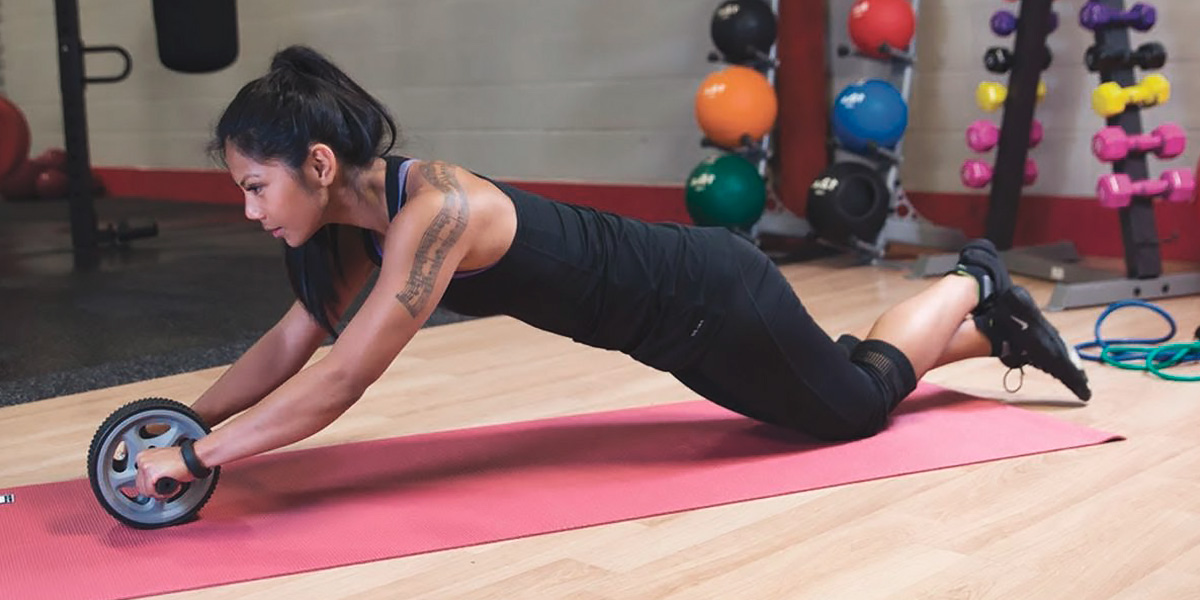
It mainly depends on how trained you already are.
Related Entries
- For a “6-pack”, you need a low fat percentage. Strength Training will help with this: continue reading.
- We tell you all about Hypopressive Abs in .