Fitness, Nutrition, Health and Sports Blog In the HSNstore Blog you will find tips about Fitness, sport in general, nutrition, and health – HSNstore.com

Behind that strange name lies a natural compound found in red wine, whose fame has been steadily growing as a result of its potential health benefits.
No wonder, as we are dealing with one of the most acclaimed products in dietary nutrition, thanks to its therapeutic properties for maintaining and enhancing health and because, among other reasons, its appeal lies in being considered the “Molecule of Youth”…

What is Resveratrol and what is it used for?
In recent years, plant bioactive compounds, including flavonoids, have risen to the top of the ranking of supplements that attract the greatest interest.
One of the most sought-after substances in this group is the now famous resveratrol.
It is found in high concentrations in red wine (Vitis vinifera) and there is confidence that its beneficial effects on health play a protective role against age-related degenerative diseases.
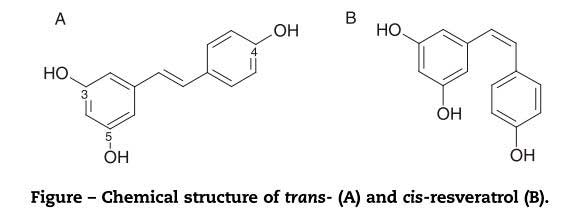
Its structure corresponds to that of a polyphenol and it occurs naturally in the form of cis and trans isomers 1.
In plants, this substance acts as an antioxidant, protecting them from the harmful effects of the sun.
Which foods contain the most Resveratrol?
From what has been said so far, you may have decided that you can only ingest resveratrol through food by drinking red wine. Well, that is not the case because, although this is its best-known source, it is also present in other foods, as it can be synthesised by both plants and microorganisms.
Among foods rich in resveratrol, the most notable are red grapes, peanuts, blackberries, raspberries and dark chocolate.
Therefore, one of the main sources of resveratrol is the plant Vitis vinifera and, in particular, the juice obtained from its fruits, the grapes.
There are numerous studies that have shown its very low toxicity and potential health benefits, which make resveratrol a highly functional ingredient that you should not overlook.
What is its relationship with Phytoestrogens?
Classified as a phytoestrogen, resveratrol is a chemical component present in plants. Among its virtues, it is worth mentioning that it serves as a powerful defensive shield against environmental aggressors or stressors (insects, radiation, etc.)
At the molecular level, its structure resembles oestrogens.
This explains its behaviour as an antagonist of the body’s oestrogen receptors.
Likewise, the scientific community is focusing on this substance because of its potential effect in helping fight certain diseases and conditions, especially those linked to women such as menopausal symptoms and osteoporosis…

Discover its medicinal properties
The scope of action of resveratrol is by no means limited. It acts in many different ways, and various lines of research point to its ability to modulate different pathways.
In this regard, it is worth highlighting the powerful properties of this compound:
- Cardioprotective
- Antioxidant
- Antiplatelet
- Anti-inflammatory
- Reduces blood glucose levels
- Anticancer
- Protective against neurodegenerative diseases
- Improves osteoporosis
However, many of these benefits have been observed in studies carried out at the cellular and animal level, so it can be said that some of the research into the functionality of resveratrol is still in its early stages.
What role does it play in obesity?
In order to focus on this point, a prior clarification is needed: obesity is a disease caused by different factors. Considered one of the major health problems affecting the population, it goes far beyond the mere excess of body fat.
Thus, it can be said to alter a multitude of metabolic parameters that predispose the body to the development of other pathologies.
Anti-obesogenic effect
In animal trials, resveratrol has shown signs of inhibiting the proliferation of adipocytes (cells that store body fat), reducing de novo lipogenesis and promoting lipolysis and beta-oxidation.
In other words, it could be said to be a molecule capable of creating an anti-obesogenic environment at the metabolic level.
The aforementioned studies to date suggest that resveratrol may mimic the effects of caloric restriction, with the significant consequences this entails for weight loss.
Studies related to weight loss
Likewise, it did not show significant effects on basal metabolism. In other words, it has not been demonstrated to have a “thermogenic” effect or to enhance energy expenditure.
It is worth mentioning that, in the opinion of the authors of the meta-analysis themselves, most of the studies that failed to show an effect on body weight were carried out over short periods of time that never exceeded 2 months.
If we start from the premise that in many of them participants were instructed not to alter their dietary routines, it is not surprising that 2 months is considered far too short a period to observe significant differences.

Increase in adiponectin
In another vein, adipose tissue produces a hormone known as adiponectin.
Take note of the main effects of adiponectin!
- Promotes insulin sensitivity
- Improves endothelial function
- Promotes fatty acid oxidation
- Reduces glucose production in the liver
- Acts as an anti-inflammatory and cardioprotective agent
It is the low levels of this hormone which, together with high levels of leptin (another hormone secreted by fatty tissue), are associated with greater adiposity, atherosclerosis and cardiovascular risk.
A meta-analysis of clinical trials on resveratrol concluded that it was effective in increasing adiponectin concentrations, regardless of dose, treatment duration and the baseline levels of this hormone and leptin. That said, its authors urge caution when interpreting such results.
Resveratrol and liver disease
Non-alcoholic fatty liver disease (NAFLD) is considered the most prevalent chronic liver condition worldwide. Why? Its close link with overweight and obesity.
Both conditions promote fat accumulation at the visceral level.
In patients with NAFLD, resveratrol managed to show a reduction in the severity of the disease in participants who were supplemented with 500 mg of resveratrol daily.
Despite this, this study is among the small number that indicated that supplementation was associated with reductions in body weight and fat. For this reason, it is possible that the aforementioned lower disease severity is more closely related to fat loss than to the supplementation itself.
By contrast, in another of the studies included in the same review, a decrease in intrahepatic fat levels was observed without any significant reduction in weight or fat.
Long-term benefits
In 2016, an intervention was carried out in patients with NAFLD. The idea was for them to receive a daily supplement of 3 doses of 500 mg of resveratrol or a placebo for 6 months, such that the association between the intake of resveratrol supplements and the reduction of liver fat and transaminase levels (liver enzymes) was characterised by weakness.
Going one step further, in a study in which participants received a lower dose of 150 mg/day, such improvements were not even observed.
Even so, overall there could be a reduction in the pro-inflammatory state in liver patients, which in principle could mean fewer complications in the medium and long term.
How does it work in glycaemic control?
Resveratrol has shown effectiveness in animal studies, improving insulin sensitivity and the control of blood glucose levels. On the other side of the coin, the results of the studies carried out in humans so far are not as clear.
A meta-analysis indicated that resveratrol supplementation reduced:
- Fasting blood glucose and insulin levels
- Glycated haemoglobin (HbA1c, a measure of medium-term blood glucose)
- Improved insulin resistance in patients with diabetes
However, such results were not replicated among those who did not suffer from this disease.
Although these results undeniably appear promising at first glance, the most recent evidence seems to move away from that line. Why? In a much more recent study, no differences were observed in diabetic patients when consuming either 40 mg or 500 mg.
However, the use of 250 mg of resveratrol in conjunction with drugs prescribed for glycaemic control did prove superior to taking those medications on their own.
What is its role in cardiovascular disease?
Metabolic syndrome triggers complications of many different kinds, one of which is the feared cardiovascular disease. Specifically, hypertension contributes significantly to its development.
Therefore, avoiding high blood pressure values may become an important preventive mechanism.
Resveratrol has shown activity through different pathways by which it is capable of generating an anti-hypertensive effect.
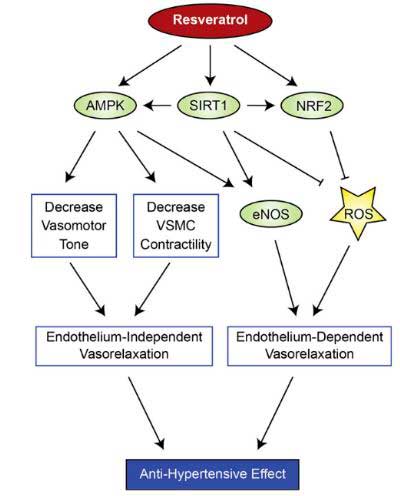
Likewise, resveratrol seems to be able to reduce in particular systolic blood pressure, considered a key element in the increase of cardiovascular risk factor.
Reduces hypertension
A study showed that resveratrol supplementation improved the action of a medicine typically used for the treatment of high blood pressure. Even so, such results must be taken with caution, but at first glance they suggest that this is a substance that could contribute to reducing drug doses in hypertensive patients.
Reduces atherosclerosis
Another factor that contributes to cardiovascular disease is the formation of atheroma plaques, a condition known as atherosclerosis. The formation of such plaques usually begins with the oxidation of LDL, one of the main vehicles by which cholesterol travels in the blood.
These oxidised particles enter the wall of the blood vessel, promoting inflammation and increasing its stiffness.
That said, there is no unanimous opinion among experts as to whether resveratrol can improve the lipid profile (made up of concentrations of LDL, HDL, total cholesterol and triglycerides), as there are studies both in favour and against.
Reduces inflammation
On the other hand, combining resveratrol with calcium fructoborate (a substance present in various fruits and vegetables that stabilises resveratrol in the intestine) shows a reduction in inflammation levels and blood dysfunction in ischaemic patients.
Check the standard dose of this compound
The recommended standard dose of resveratrol will depend on the individual factors of each person, such as health, sex, age and their particular circumstances.
As of today, there is still no scientific information that can be considered sufficiently solid regarding the exact and optimal dose of resveratrol.
Even so, given that it is a completely natural product, taking it is safe. As for the dose, the sensible approach is to follow the instructions in the leaflet of the nutritional supplement in question.
Does Resveratrol have contraindications? And side effects?
In general terms, resveratrol is well tolerated across a wide dosage range. This is supported by the fact that, at present, the adverse effects of consuming this substance have not yet been clearly established, although there are many studies showing high tolerance levels in certain individuals during the course of the research.
The same applies to substances such as cholesterol-lowering agents, antiarrhythmics, protease inhibitors, calcium channel antagonists, ciclosporin, terfenadine, tacrolimus, sildenafil and benzodiazepines.
All the aforementioned medicines follow the action of the cytochrome P450 enzyme as a metabolic pathway, and while there is no evidence that resveratrol inhibits this enzyme, there is evidence that it may react with these medicines, increasing their effects far beyond what is acceptable.
At the same time, it is also known that pregnant and breastfeeding women, young children or people with cancer who have a high susceptibility to hormones, such as ovarian cancer, should not consume this substance. If they do, it could lead to undesirable results or an increase in possible side effects.
In any case, remember not to combine it with commonly taken medicines such as ibuprofen or aspirin, insofar as they are anticoagulants.

Who is it indicated for?
In line with what we have been saying, taking resveratrol capsules is very useful for:
- Those who want to strengthen their cardiovascular system. Researchers have been able to demonstrate that it is a cardioprotective substance that may also prevent the appearance of heart problems
- Those who want to strengthen their eyesight. Likewise, they have discovered that resveratrol has the ability to modulate angiogenesis (or the growth of blood vessels), being able to stop their abnormal growth, which may have a negative effect on vision
- Those who practise endurance sports. And this is due to the antioxidant nature of this substance
In short…
Understanding that we are providing you with a great deal of information about resveratrol and, in our effort to summarise, we are going to condense it into a few important points that are worth remembering:
- It forms part of the group of substances known as You can find it in numerous plant-based food sources, with grapes and red wine being the most famous of all.
- It is its antioxidant nature, together with the multiple investigations carried out both at the cellular level and in animals, that has led resveratrol to achieve the success it has enjoyed in recent years.
- It is often attributed properties associated with anti-ageing or protection against cardiovascular disease, obesity, diabetes or cancer, among many others.
How effective is it really?
Researchers have often tested the effectiveness of this substance against various metabolic complications, and overall the results obtained in animals have not been widely replicated in human clinical studies.
This lack of consistency may be due to the enormous variability that exists between studies in terms of:
- Doses used
- Supplementation time
- Characteristics of the subjects
- Joint administration with other substances or medicines
Although specific recommendations cannot be issued, it is believed that resveratrol could be more effective in subjects suffering from cardiovascular complications. Along the same lines, it could be an adjunct in therapies against diabetes and hypertension.
In conclusion
There is no doubt that resveratrol offers highly promising preclinical results, something that still needs to be confirmed in humans through controlled studies, with larger samples and over the long term, as a guarantee of reliability.
There are many aspects we have covered in this post about resveratrol. Therefore, we hope we have answered your questions about this molecule. If you have any more, we are here to help clarify them!
Bibliographical Sources:
- Kuršvietienė L, Stanevičienė I, Mongirdienė A, Bernatonienė J. Multiplicity of effects and health benefits of resveratrol. Med. 2016;52(3):148-155. doi:10.1016/j.medici.2016.03.003.
- Christenson J, Whitby SJ, Mellor D, et al. The Effects of Resveratrol Supplementation in Overweight and Obese Humans: A Systematic Review of Randomized Trials. Metab Syndr Relat Disord. 2016;14(7):323-333. doi:10.1089/met.2016.0035.
- Mohammadi-Sartang M, Mazloom Z, Sohrabi Z, Sherafatmanesh S, Barati-Boldaji R. Resveratrol supplementation and plasma adipokines concentrations? A systematic review and meta-analysis of randomized controlled trials. Pharmacol Res. 2017;117:394-405. doi:10.1016/j.phrs.2017.01.012.
- Heebøll S, Kreuzfeldt M, Hamilton-Dutoit S, et al. Placebo-controlled, randomised clinical trial: High-dose resveratrol treatment for non-alcoholic fatty liver disease. Scand J Gastroenterol. 2016;51(4):456-463. doi:10.3109/00365521.2015.1107620.
- Kantartzis K, Fritsche L, Bombrich M, et al. Effects of resveratrol supplementation on liver fat content in overweight and insulin-resistant subjects: A randomized, double-blind, placebo-controlled clinical trial. Diabetes, Obes Metab. 2018;20(7):1793-1797. doi:10.1111/dom.13268.