Fitness, Nutrition, Health and Sports Blog In the HSNstore Blog you will find tips about Fitness, sport in general, nutrition, and health – HSNstore.com

Success in sports depends on a number of factors, and nutrition is a key component. An athlete’s dietary requirements depend on several aspects, including the sport, goals and environment.
There is growing recognition of the importance of individualised dietary advice, as well as specific guidance before, during and after training and competition.
Athletes use a variety of dietary strategies to enhance performance, such as maximising glycogen stores, a key strategy for most athletes.
Importance and Influence of Nutrition on Exercise
Nutrition is increasingly recognised as a key component in improving sports performance, with more and more scientific evidence and studies being updated.
Dietary strategies to improve performance include optimising macronutrients and fluid intake.

It is very important to have individualised dietary advice, carried out by a qualified professional, who designs dietary strategies that vary according to:
- the individual sport of the athlete;
- personal goals; and
- practical aspects (e.g. food preferences).
Dietary Carbohydrate Strategies
Pre-exercise carbohydrate intake
The aim is to maximise muscle glycogen stores before exercise. This strategy is particularly useful for sessions or competitions lasting more than 90 minutes.
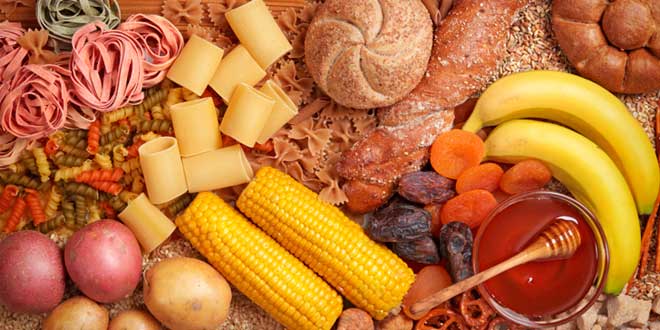
Among the benefits of this strategy are a delay in the onset of fatigue and, therefore, an improvement in performance.
To implement this strategy, current recommendations suggest that for:
- Exercise over 90 minutes -> athletes should consume 10-12g carbohydrate/kg body mass/day in the 36-48h prior to exercise.
- Exercise less than 90 minutes -> athletes should consume 7-12g carbohydrate/kg in the 24 hours prior to exercise.
Carbohydrate intake during exercise
In competitions lasting 1 hour or more, carbohydrates improve performance primarily by preventing hypoglycaemia and maintaining glycogen levels. Recommendations would be 60-90g of carbohydrate in competitions lasting 2-3h.

Fluids and Electrolytes
Fluid intake before exercise is recommended to ensure that the athlete is well hydrated. However, fluid overload can increase the risk of hyponatremia and negatively influence performance due to feelings of being too full or bloated, and the need to urinate.
Maintaining good hydration and thermoregulation is another key factor that benefits athletic performance.
Hydration recommendations depend on several factors such as:
- the type and duration of exercise;
- the temperature of the environment; and
- the individual characteristics of each athlete.
Nutritional Supplements: Beta-Alanine, Vitamin D and Nitrates
Beta-alanine, has been shown to reduce feelings of fatigue. Meanwhile, vitamin D is essential for maintaining bone health and controlling calcium homeostasis, and is also important for muscle strength, regulation of the immune system and cardiovascular health.During exercise, nitric oxide potentially influences skeletal muscle function.
During endurance exercise, nitrate supplementation has been shown to increase exercise efficiency, reduce fatigue and attenuate oxidative stress.
Nitrate is most often provided as sodium nitrate, beetroot juice, or even Red Spinach Extract
Specific Post-Training Diets
Good recovery from an exercise session is essential for athletes’ training and performance. Without adequate recovery of carbohydrates, protein, fluids and electrolytes adaptations and performance can be hampered.
Muscle glycogen synthesis
Carbohydrate consumption immediately after exercise has been used as a strategy to maximise muscle glycogen synthesis rates and thus enhance post-exercise recovery.
Muscle protein synthesis
An intense exercise session influences protein turnover and the protein balance is negative after the session.
Protein intake after exercise increases protein synthesis and net protein balance.

The recommendation is to take about 30g of high quality protein after strength and high intensity aerobic endurance exercise to maximise protein synthesis.
Fluids and electrolyte balance
Fluid and electrolyte replacement after exercise can be achieved by drinking fluids to improve hydration.
Conclusions
Dietary recommendations should be individualised for each athlete and adapted to their characteristics, objectives and sporting modality, and this should be done by a qualified professional to ensure optimal performance.

Athletes are always looking for an edge to improve their performance, and there are a variety of dietary strategies that can be undertaken.
Sources
- Hansen EA, Emanuelsen A, Gertsen RM, Sørensen SSR. (2014). Improved marathon performance by in-race nutritional strategy intervention. Int J Sport Nutr Exerc Metab.
- Jeukendrup A. (2014). A step towards personalized sports nutrition: carbohydrate intake during exercise. Sports Med.
- Fairchild TJ, Fletcher S, Steele P, Goodman C, Dawson B, Fournier PA. (2002). Rapid carbohydrate loading after a short bout of near maximal-intensity exercise. Med Sci Sports Exerc.
- Burke LM, Hawley JA, Wong SH, Jeukendrup AE. (2011). Carbohydrates for training and competition. J Sports Sci.
- Van Loon LJ. (2014). Is there a need for protein ingestion during exercise? Sports Med.
- Hoffman MD, Stuempfle KJ. (2014). Hydration strategies, weight change and performance in a 161 km ultramarathon. Res Sports Med.
- Jones AM. (2014). Dietary nitrate supplementation and exercise performance. Sports Med.
- Quesnele JJ, Laframboise MA, Wong JJ, Kim P, Wells GD. (2014). The effects of beta-alanine supplementation on performance: a systematic review of the literature. Int J Sport Nutr Exerc Metab.
- Stockton KA, Mengersen K, Paratz JD, Kandiah D, Bennell KL. (2011). Effect of vitamin D supplementation on muscle strength: a systematic review and meta-analysis. Osteoporos Int.
- Phillips SM, Van Loon LJ. (2011). Dietary protein for athletes: from requirements to optimum adaptation. J Sports Sci.
Related Entries