


 Fitness, Nutrition, Health and Sports Blog In the HSNstore Blog you will find tips about Fitness, sport in general, nutrition, and health – HSNstore.com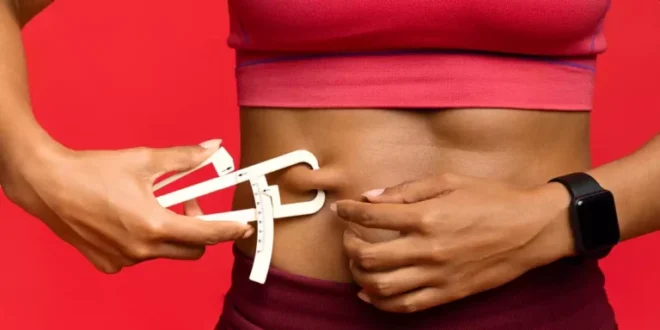

Discover your body fat percentage accurately using our skinfold calculator, a tool designed under scientific standards to provide precise results for tracking your body composition.
Body fat calculatorHow does the skinfold body fat calculator work?
The skinfold method is based on anthropometry, a branch of anthropology that studies the quantitative measurements of the human body.
This technique is based on the premise that the thickness of subcutaneous adipose tissue is representative of total body fat.
By measuring the thickness of the skin and the fat accumulated just beneath it at specific anatomical points, the calculator uses regression equations to estimate body density and, subsequently, body fat percentage. It is considered the gold standard in sports due to its excellent balance between cost, speed, and accuracy.
The body fat formula using skinfolds
To convert the millimeters measured with the caliper into a body fat percentage, science relies on validated formulas. The most common are Durnin-Womersley, Jackson-Pollock (3, 4, or 7 skinfolds), and Faulkner.
Steps to use the HSN body fat calculator
1. Preparation
To minimize margin of error, make sure to:
- Use a calibrated caliper (avoid low-pressure plastic ones if you seek professional accuracy).
- Take measurements while fasting or at rest, preferably in the morning.
- Avoid measuring after training, as increased blood flow to the skin may inflate results.
- Stay normally hydrated; dehydration affects tissue thickness.
2. Measure skinfolds correctly
Technique is key. Follow these golden rules:
- Right side: by international convention (ISAK), measurements are always taken on the right side of the body.
- The “pinch”: firmly grasp the skinfold with your thumb and index finger, ensuring you separate fat tissue from the underlying muscle.
- Placement: place the caliper jaws 1 cm away from your fingers, perpendicular to the fold.
- Reading: read the result 2 seconds after releasing the caliper trigger.
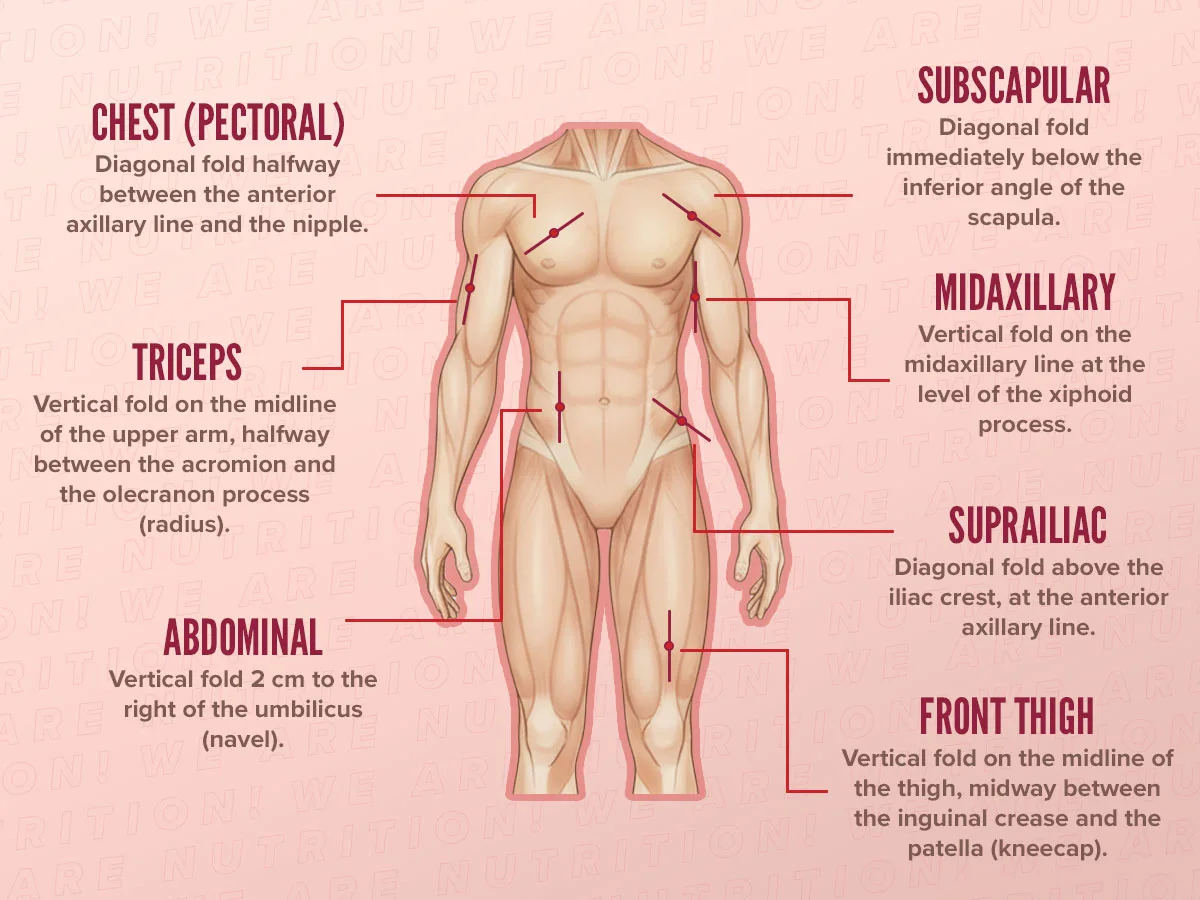
In this video, you will see the exact location of the suprailiac, abdominal, and triceps skinfolds to avoid common positioning errors.
3. Enter the data
Enter the measured values (in millimeters) into the corresponding fields of the calculator. Make sure to correctly select your age and sex, as bone density and fat distribution vary significantly based on these factors.
4. Interpret the results
The result obtained is an estimate of your fat mass.
- If the value is high: it may indicate the need to adjust your caloric balance toward a deficit.
- If the value is very low: in athletes it is common, but extremely low levels may compromise the endocrine system.
5. Repetition and tracking
Anthropometry is more useful for observing trends than for isolated snapshots.
- Frequency: we recommend measuring every 4 to 6 weeks.
- Consistency: try to have the same person take the measurements each time to reduce “inter-evaluator” error.
What body fat percentage is considered healthy?
Optimal levels vary depending on the goal (health vs. athletic performance). Here is a general guide:
| Classification | Women (%) | Men (%) |
|---|---|---|
| Essential fat | 10-13 | 2-5 |
| Athletes | 14-20 | 6-13 |
| Fitness | 21-24 | 14-17 |
| Average | 25-31 | 18-24 |
| Overweight / Obesity | >32 | >25 |
Alternative methods to measure body fat
Although the caliper is excellent, there are other technologies with varying degrees of accuracy:
- Bioelectrical Impedance (BIA): smart scales that send an electrical impulse (highly sensitive to hydration status).
- DEXA (Dual-energy X-ray Absorptiometry): the clinical gold standard that also measures bone density.
- Hydrostatic weighing: measurement by water displacement in a tank.
- Bod Pod: similar to hydrostatic weighing but using air displacement.
- Measuring tape (Navy Method): uses circumferences (neck, waist) to estimate fat; less accurate but very simple.
