Fitness, Nutrition, Health and Sports Blog In the HSNstore Blog you will find tips about Fitness, sport in general, nutrition, and health – HSNstore.com

Salt offers many benefits to our body when consumed properly, helping keep our immune system active and ready to defend against external threats. But if we overdo it with salt, it can cause dangerous setbacks to our body. That’s why, besides knowing how to consume this seasoning properly, we also need to know which type to choose.
What is sodium?
Sodium is an essential mineral for humans, which we get through our diet, absorbing it to later pass into the body’s liquid phase. Because of this, it influences the movement of fluids found between tissues and in the vascular system, especially located in the extracellular space.

In this environment, sodium concentration depends on the total amount of the mineral, as well as the amount of water in the liquid phase distributed through tissues and the vascular system, also considering that the sodium concentration in this environment is comparable to that found in the blood.
Sodium and Salt equivalence
Although they may seem like identical terms, they’re not: molecularly speaking, salt is sodium chloride, meaning one molecule of sodium and one of chloride are present. While half of the salt molecule is sodium, it’s not half by weight, so you can’t just halve the salt weight to find the sodium equivalent.
Sodium is about 40 percent of the weight of salt, and chloride makes up the remaining 60 percent.
If you want to know how many milligrams [mg] of sodium are in X [mg] of salt, multiply by 2.5 and divide by 1000
Example:
- 300mg of sodium
- 300 x 2.5 = 750
- 750 / 1000 = 0.75g of salt
300mg of sodium equals 0.75g of salt
Why is sodium important?
Sodium is an electrolyte that plays a fundamental role in hydration. Sodium works to push water into cells while potassium pushes waste out of cells. This balance helps prevent dehydration and promotes healthy cell function. Plus, sodium is necessary for nerve function, muscle function, and maintaining healthy blood pressure.
However, regarding sodium levels in the body, it’s sometimes seen negatively due to its contribution to possible high blood pressure, even though, as we mentioned earlier, it’s essential for functions like cellular, nerve, and muscle activity.
Minerals in the Body
What’s the right amount of sodium intake for humans?
This leads us to ask, and according to the World Health Organization (WHO), the recommendation for sodium intake is not to exceed 2,500–5,000 milligrams daily per person, which is roughly equivalent to one tablespoon of table salt.
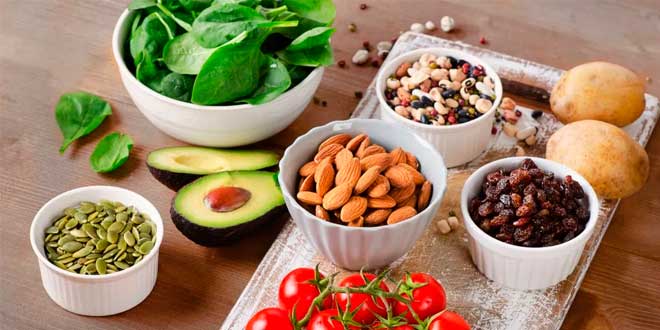
Avoid processed foods to control sodium intake
However, experts say the real culprits when it comes to sodium intake are processed foods, and this should be considered to control consumption and stay close to the recommended amount. For people with high blood pressure, intake should be limited to 1,500 milligrams per day, and the minimum sodium requirement for proper body function is about 500 milligrams daily per person.
Dangers of excess sodium
Too much sodium can cause high blood pressure or hypertension, which is a risk factor for heart disease, stroke, and kidney failure. It’s good to get familiar with processed food labels and check sodium content. Some canned soups have 1,000mg of sodium per serving. Also, limit salty foods at the table.
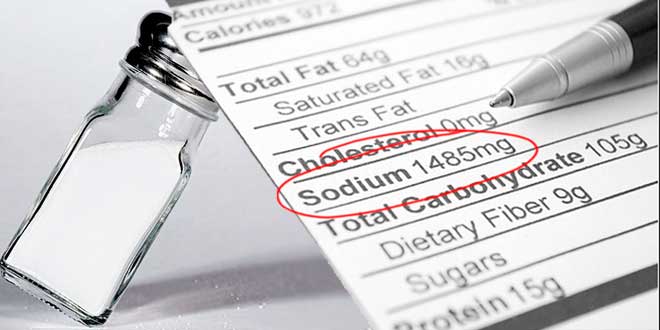
Low sodium levels can also be harmful to health
What most people don’t know is that low sodium levels can be harmful to the body’s normal functioning. In this sense, people who regularly and intensely do physical activities, like athletes, could have low sodium levels due to sweat loss, possibly showing symptoms like fatigue, muscle cramps, weakness, poor memory, or dehydration.
The amount of sodium in the body is important since, as an electrolyte, it plays a crucial role.
It helps push water into cells, while potassium pushes waste out; this process creates the balance that helps prevent dehydration and promotes healthy cell function. It’s also necessary for reactivating the nervous system or more intense brain activity, plus helping muscle function properly and maintaining healthy blood pressure.

Types of salt we can buy
As we know, you’ll usually find two types of salt in supermarkets or grocery stores: refined salt and sea salt. In the first case, although it’s the most common for seasoning and preserving cooked or pre-cooked foods because it’s an excellent preservative, it’s the least healthy for our body, and overusing it can cause the problems mentioned earlier, beyond the flavor it adds to dishes.
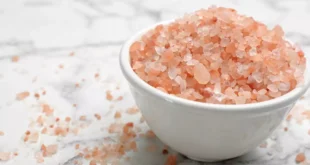
Sea salt or Himalayan pink salt is the best choice…
Purity
Himalayan salt is considered the purest of all and minimally processed, made up of minerals like calcium, potassium, magnesium, sulfur oxide, iron, manganese, fluorine, iodine, zinc, chromium, among other natural components; trace elements important for, among other things, good bone health. 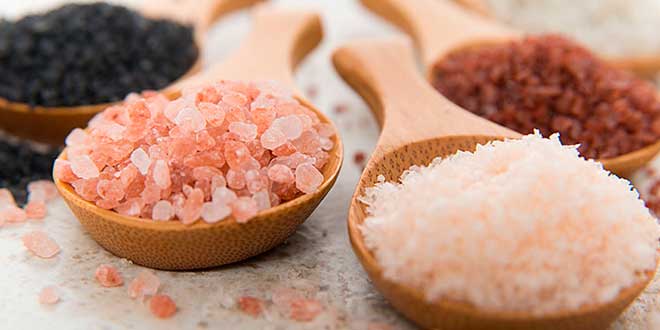
This, plus being free from contaminants you might find on the market.
Characteristics
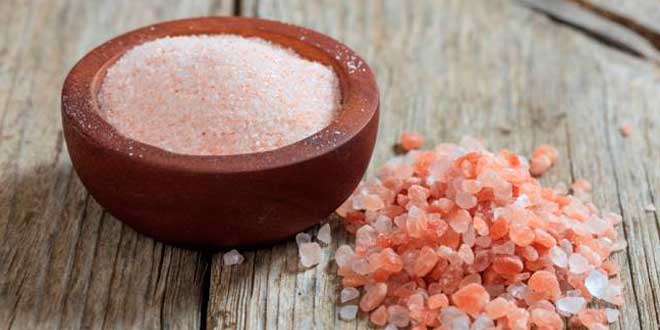
It usually comes as “pink crystals” so it can be ground before use and is the best for consumption because, unlike typical table salt, it’s not chemically treated. Also, it’s used to relieve rheumatic pain, skin problems, revitalize skin, relaxation, nasal decongestion, and acne treatment as an exfoliant and detoxifier.

Health Benefits
They also help solve respiratory system problems like asthma by relieving lung inflammation; they help regulate high cholesterol levels, making the circulatory system freer and healthier. Also, sea salt is well known for relieving dry or irritated skin, as baths with sea salt water protect and relax the skin, an effect that happens because this action helps our body produce melatonin and serotonin, hormones that prevent stress and depression.
Flavor
With a much stronger flavor, you don’t need as much, letting you enjoy the benefits without overdoing it when using it as seasoning. Even though it’s much better than commonly used refined salt for seasoning dishes, it still shouldn’t be consumed beyond the recommended amounts mentioned earlier in this article, since its inherent risks remain if we’re not mindful of proper use and benefit.
Sources
- Book: Dr. Robert Thompson “The Calcium Lie”.
- Book: Ricardo. J Gelpi – Martín Donato “Cardiovascular Pathophysiology” 2010 Corpus Editorial
- https://academic.oup.com/ajcn/article/83/6/1289/4632984
- http://www.physiology.org/doi/abs/10.1152/physrev.00056.2003
Related Posts
- What you should know about Additives and Preservatives
- Hydration in Long-Distance Runners
- Sodium Bicarbonate to Improve Performance