 Fitness, Nutrition, Health and Sports Blog In the HSNstore Blog you will find tips about Fitness, sport in general, nutrition, and health – HSNstore.com

Today in this article we analyze Fat and Endurance Sports, is it better than consuming carbohydrates?
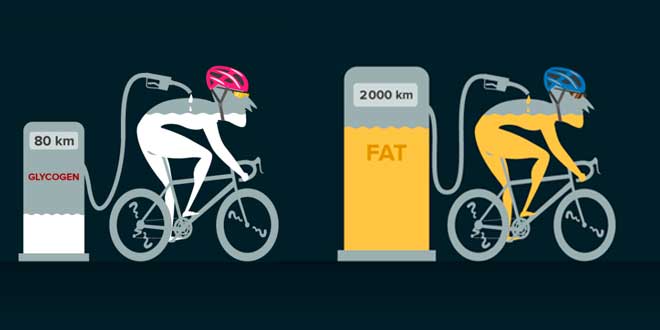
Glucose has always been used as an energy source for athletes; in fact, it’s the ideal fuel for intense efforts, but the glycogen “store” is very limited, whereas the “store” for fat is huge, so could fat be the best energy for endurance athletes?
High-Fat Diet
If we stick to the previous premise and manage to get our body used to using fat as the main fuel, any of us, no matter how skinny, will have enough energy to finish a marathon without problems (mind you, I’m talking about having energy, being adapted to run that distance is another story).
But the idea doesn’t stop there, if we have more fat and use it more, we’ll have more intact glycogen reserves for when it’s needed since the body would be used to burning fat most of the time and only in “emergencies” would we need that extra energy (from glycogen).
There’s also an evolutionary perspective on focusing on eating more fat, which is that it’s assumed humans have been used to high-protein and high-fat diets for millions of years, so our bodies should be better adapted to digest and use this kind of energy.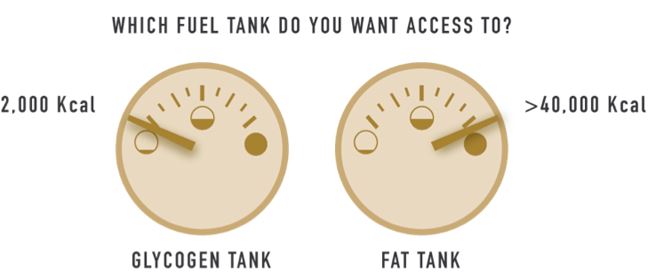
Extreme fatigue states are linked to very low glycogen reserves, so if we were “pro-fat burners” we wouldn’t reach those states
Was the Paleo Diet High in Fat?
It’s clear that in the Paleolithic era, humans were hunter-gatherers, but that doesn’t mean they only ate meat and fat. On one hand, if we focus on the wild animals they ate, these had much leaner meat than today’s animals, meaning they didn’t have as much fat as modern ones.
On the other hand, wild plant foods contained less fat, more protein, more fiber, and more nutrients. In fact, it’s most likely that the Paleolithic diet (1) was around 22% of calories from fat (5% of that fat being saturated fat).
Is Fat a Better Fuel for Endurance?
There’s a study (2) that analyzed five elite endurance cyclists over a week where they were given a carbohydrate diet (60% carbs, 30% fat, and 10% protein) and then switched to a ketogenic diet (85% fat, 13% protein, 2% carbs), with the same calorie amount, for 4 weeks.
The test was to monitor endurance capacity by cycling at 62 to 64% intensity VO2 MAX, where results were 151 minutes on the high-fat diet versus 147 minutes on the high-carb diet, not very significant…
The only important difference was that much more fat (double) and much less carbohydrate was metabolized during exercise on the high-fat diet. In other words, high-fat diets preserve more carbohydrates, which is good, but at the same time store less carbohydrate, which can be bad.
Eating More Fat Helps in Endurance Sports
Many studies link a performance boost in endurance sports with increased fat intake, but these studies have certain quirks like subjects depleting all glycogen before the test or tests done at low intensities…
Same Performance and Better Cholesterol
Looking at well-conducted studies like this one (3) from the University of Otago, where 34 experienced endurance cyclists were split into two groups: one on a high-carb diet (60% carbs, 20% fat, 20% protein), and the other on a high-fat diet (45% fat, 40% carbs, 15% protein), for 12 weeks.

Both groups improved time to exhaustion during effort tests with no change in VO2max during the study period. Therefore, endurance cyclists could choose between high-fat or high-carb diets without any negative impact on their progress.
Studies Supporting Carbohydrates?
We should also consider a study (4) from the University of Copenhagen, where two groups of 10 men were put on a high-carb diet (65% carbs) and a high-fat diet (62% fat) with training 3-4 days a week for 60-75 minutes at 85% VO2max, for 7 weeks.
The result concluded that high-carb diets had better performance than high-fat diets over 7 weeks, since although VO2max increased 11% in both groups after seven weeks, time to exhaustion in effort tests (82% VO2max) was much longer in the high-carb group (102 minutes vs. 65% of the high-fat group).
Keep in mind these were untrained people, meaning they had no experience or metabolic adaptation to endurance exercise, so results could be different in experienced athletes metabolically adapted to “fat burning“.
Most studies concluding that high-carb diets outperform high-fat diets for endurance sports are done over short periods, not allowing enough time for metabolic adaptation to primarily using fat as fuel, although some like this one (5) show that normal carb loading didn’t improve half marathon times in experienced runners.
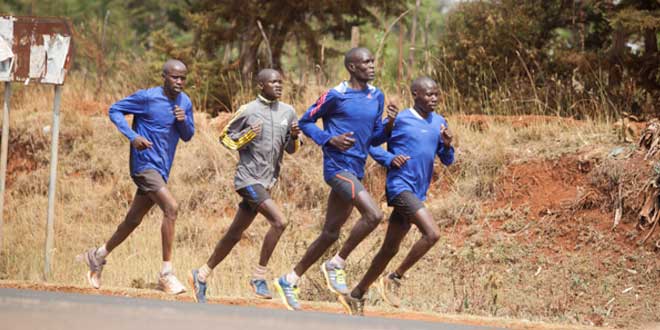
It’s true that Kenyans follow a high-carb, low-fat diet year-round, avoid fatty foods, and moderate protein intake, yet they’re the best in endurance sports. While genetically superior (so you can’t just apply this to everyone), no one has tested giving them a high-fat diet, what if they got even faster?
High-Fat Diet with Carb Loading
A slightly different study (6) tested cyclists with very high-fat or high-carb diets followed by 3 days of carb loading (150 minutes at 70% VO2 max followed by 20 km all-out), concluding that the high-fat diet (with carb loading) improved the 20 km time by 4.5% (from 30.9 minutes to 29.5 minutes) compared to the high-carb diet (also with loading).

Adapting to Fat as Fuel
If you want fat to be the Best Energy for Endurance Sports
With everything we’ve seen so far, it’s reasonable to think that for very long endurance stages, a few weeks on a high-fat diet with a 3-5 day carb loading before competition can be a much better nutritional prep than just a high-carb diet.
This is because when you eat a high amount of fat for a while, the body gets better at oxidizing it and using it as energy, so during the race this energy (fat) is mainly used, and the “store” for this energy type is much bigger than glycogen’s.
Also, that 3-5 day loading supercompensates muscle glycogen levels, so when higher intensity is needed during the race, you can tap into those stores without any problem. Full glycogen levels and less time needing that energy become the perfect ally for long stages where relying only on glycogen would lead to complete depletion and dreaded extreme fatigue (the wall, the bonk, hitting the wall…).

Conclusion
Fat is very abundant in the body, so trying to use it as a nearly unlimited energy source would be a very smart strategy, although for very high intensities it seems we need carbs, but it looks like the body can adapt to handle high intensities with more fat use, though more studies are needed.
The key for endurance isto keep enough glycogen in muscles and stores, and what’s scientifically proven is that this is achieved with high-fat diets for weeks and specific carb loading, so more fat is used at moderate intensity, more glycogen is stored, and more is available when needed.
Original source |Web Peak Performance
Sources
- Paleolithic Nutrition Revisited: A Twelve-Year Retrospective on its Nature and Implications, European Journal of Clinical Nutrition, vol. 51, pp. 207-216, 1997
- The Human Metabolic Response to Chronic Ketosis without Caloric Restriction: Preservation of Submaximal Exercise Capability with Reduced Carbohydrate Oxidation, Metabolism, vol. 32 (8), pp. 769-776, 1983
- Effects of high fat versus high carbohydrate diets on plasma lipids and lipoproteins in endurance athletes, Med Sci Sports Exerc. 1998 Dec;30(12):1677-83. Brown RC1, Cox CM.
- Interaction of Training and Diet on Metabolism and Endurance during Exercise in Man, Journal of Physiology, vol. 492 (1), pp . 293-296, 1996
- Effect of Exercise-Diet Manipulation on Muscle Glycogen and Its Subsequent Utilisation during Performance, International Journal of Sports Medicine, vol. 2, pp. 114-118, 1981
- Effects of a Low-Carbohydrate High-Fat Diet Prior to ‘Carbohydrate Loading’ on Endurance Cycling Performance, Clinical Science, vol. 87, Supplement, pp. 32-33, 1994
Related Posts
- Manipulating Carbs: Boost Your Performance
- Saturated and Trans Fats: What They Are, Differences, Are They Really Bad?
- High-Fat, Low-Carb Diet for Weight Loss