Fitness, Nutrition, Health and Sports Blog In the HSNstore Blog you will find tips about Fitness, sport in general, nutrition, and health – HSNstore.com

It’s pretty common for runners starting out to feel heavy, tired legs, and even some muscle discomfort. The first thing to figure out are the possible reasons for tired legs when running:
- Lack of recovery: Overtraining, not enough rest, and muscle inflammation.
- Poor blood oxygenation – capillary network: Bad blood circulation means tissues don’t get enough oxygen or nutrients, so when you run, oxygen doesn’t reach them properly.
- Spending many hours standing or sitting: Staying still in one position for hours straight messes with blood flow, causing swelling and fluid retention.
- Wearing clothes that are too tight: They block good blood flow and venous return, directly affecting oxygen supply when you start running.
- Poor hydration: Without enough minerals, muscle contraction is impaired and you often get cramps, a pretty common issue among runners.
- Lack of muscle endurance: Low muscle strength and endurance also cause early fatigue during exercise.
- Not enough rest after strength sessions: Strength training should be part of a runner’s plan, but you need to schedule loads and running sessions well to avoid negative interference between both.
- Iron deficiency: This stops the body from delivering oxygen to muscles, organs, and tissues.
What are the symptoms?

Usually, if your legs feel “tired” often, you’ll notice it through these symptoms, whether before, during, or right after your runs:
- Muscle stiffness that stops your legs from moving freely.
- Swelling around ankles and calves that also causes stiffness.
- A heavy feeling and clumsy legs.
1 Warm up and cool down before every run
Spend at least 10-15% of your total session time warming up and cooling down.
Start with a very gentle walk-jog at low intensity. This lets your musculoskeletal system gradually kick in, raising body temperature and oxygen flow.
2 Pre-activation with Foam Roller
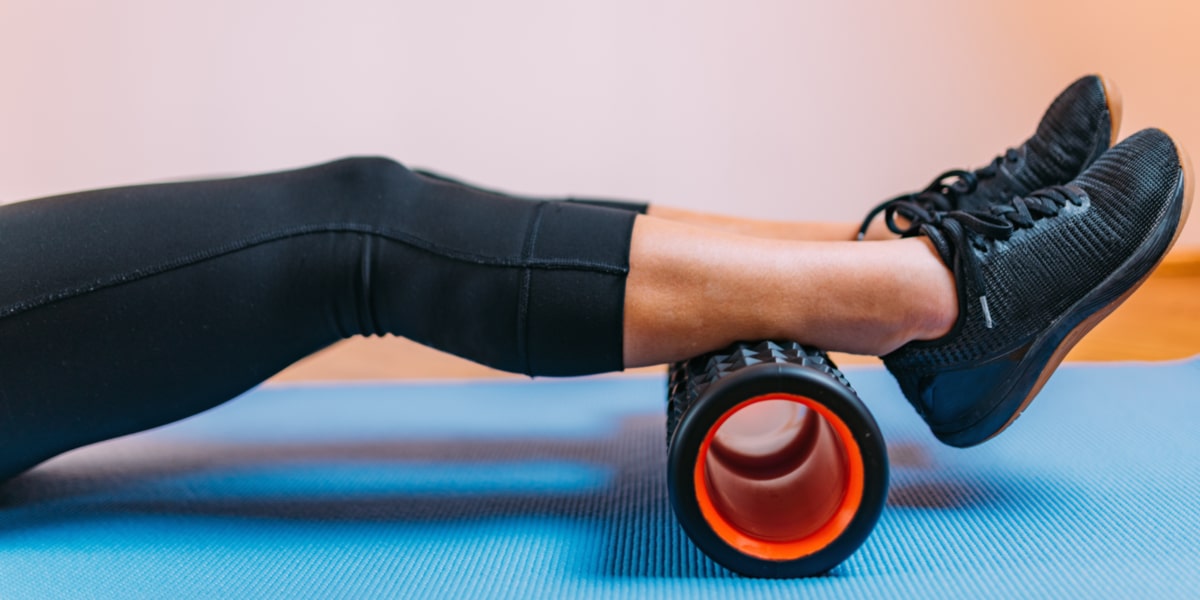
To boost blood flow in your lower limbs, you can use the foam roller as a tool to activate muscles before your run.
3 Post-workout myofascial release
To avoid muscle overload and fascia sticking to tissues—which causes stiffness and discomfort over time—it’s highly recommended to do release massages with this tool on the most affected areas during running: tibialis, calves, tensor fasciae latae, quads, glutes, and hamstrings.
4 Improve your running technique
Less ground contact time helps the stretch-shortening cycle of muscles work better, making the effort less muscular and more efficient.
This helps prevent early muscle fatigue.
To do this, shorten your stride—take shorter, quicker steps to be more efficient.
5 Stay hydrated throughout the day
Herbal teas, water, isotonic drinks…
Not drinking enough and lacking minerals messes with your nervous and muscular systems, so staying hydrated and adding minerals via isotonic drinks prevents dehydration and helps flush out toxins and waste.

Evolytes Powder (Mineral Salts) from SportSeries
6 Movement snacks
After sitting or standing for several hours at work, it’s highly recommended to take a walk or move around every now and then. Plus, it helps you refocus to keep working.
7 Self-massage with anti-inflammatory cream
You can massage your legs after runs, long walks, or whenever you feel stiffness and heaviness.
Always do upward strokes, starting from the ankles going up to help venous return, improve blood flow and oxygenation, reduce fluid retention, and promote toxin elimination.
8 Include iron-rich foods and supplements
Try to eat a variety of iron-rich foods, like dark leafy greens, legumes, and whole grain bread.
Also, iron supplements can be a great way to boost your intake.
Related Posts
- Learn how to train to run 5 km from scratch
- Follow the CaCo Method to get started with running
- Discover the 4 keys to boost your running speed
- Improve your running performance with our technique guide
- Learn how to improve your running posture