 Fitness, Nutrition, Health and Sports Blog In the HSNstore Blog you will find tips about Fitness, sport in general, nutrition, and health – HSNstore.com

To begin to understand the relationship between physical exercise and the nervous, emotional and cognitive effects it produces, it is important to understand one of the main nervous system modulation mechanisms it possesses, its endorphin hypersecretory activity.

What are Endorphins?
Endorphins are hormones, specifically neuro-hormones as they are produced in our neurons, and act as neurotransmitters, sending information from one neuron to another.
“Your friend would be the equivalent of the presynaptic neuron (sending information) when he gives you the key (endorphin) that opens the lock (postsynaptic receptor) of his house (postsynaptic neuron), but not the neighbour’s (ligand-receptor specificity)”.
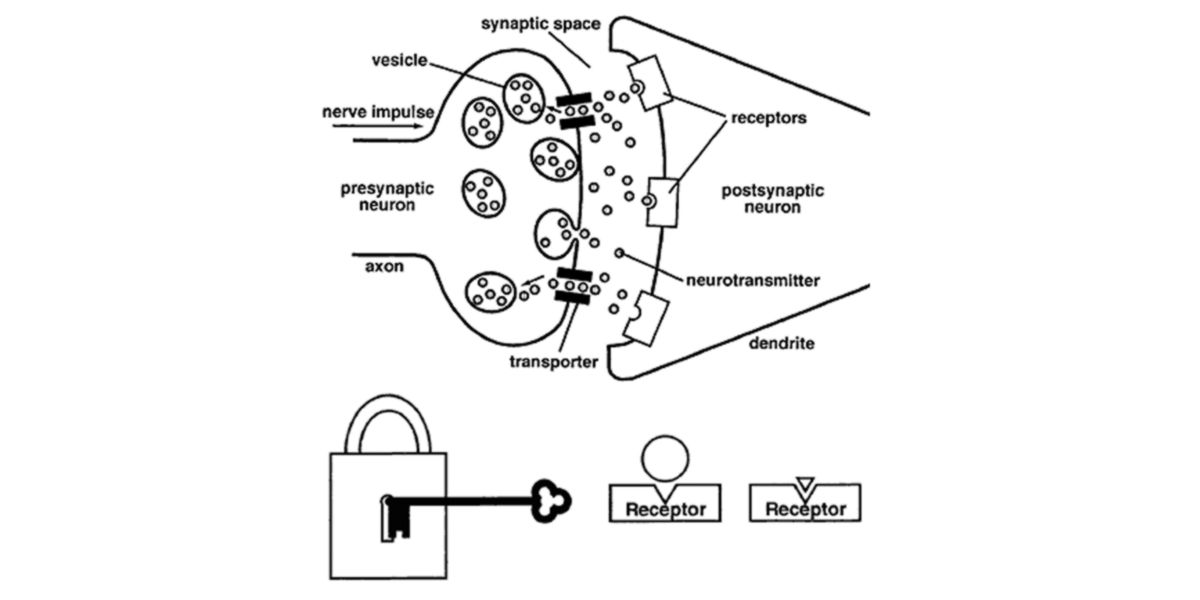
Chemical synapses and the key-lock model metaphor.
Endorphins have two distinct lexical segments: the prefix “endo-” meaning internal and “-rphin” referring to morphine, a synthetic opioid used for the inhibition of pain nerve signalling.
The name is not random, because endorphins are our internal “opioid drugs”, the ones that our own body generates to produce an effect of analgesia, euphoria, well-being and anxiolysis.
How do Endorphins work?
There are several subtypes of endorphins, of which β-endorphins are the most significant for humans.
There are also several subtypes of opioid receptors, of which at least 3 can bind, the most relevant being the δ-opioid receptor.
A stressor (such as physical exercise) triggers a stimulation of neurons in certain regions of our central nervous system.

Physical exercise is a stressor for the organism.
This region of the brain receives this signal and releases a hormone called “corticotropin-releasing hormone” (CRF) which many of you may be familiar with because it is responsible for triggering the whole process of adrenal synthesis of glucocorticoid hormones such as cortisol and corticosterone.
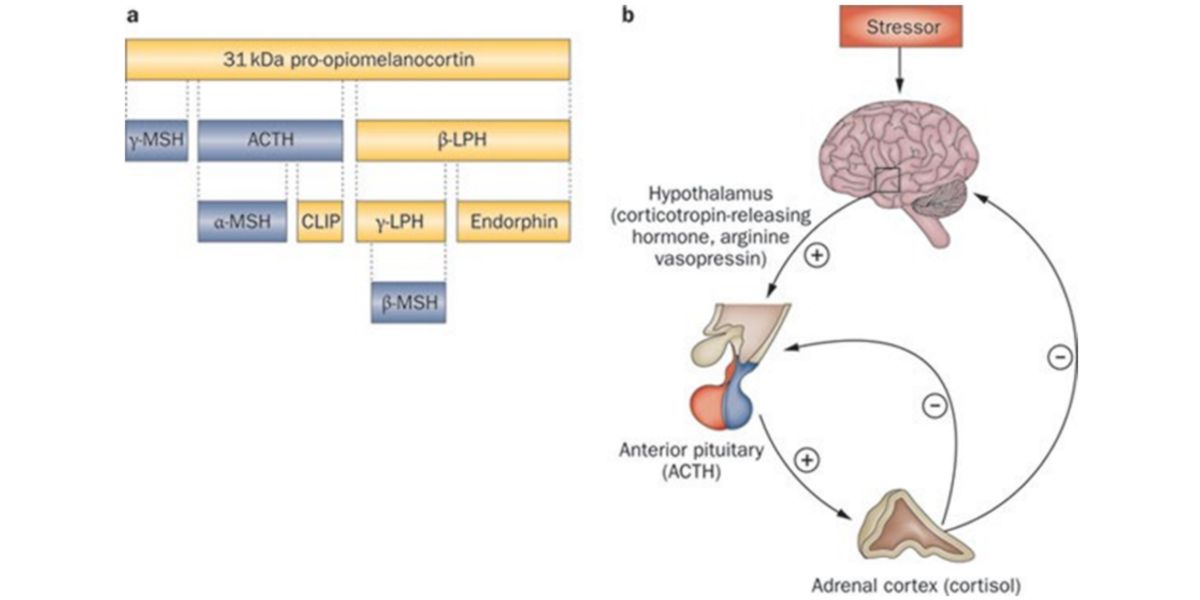
Simplified mechanism of glucocorticoid hormone and endorphin biosynthesis.
This CRF travels to the pituitary (another region of the brain further downstream) and stimulates its neurons to break down the pro-opiomelanocortin (POMC) they hold, transforming it into β-lipotropin (β-LPH) and this in turn into endorphins, especially β-endorphins.
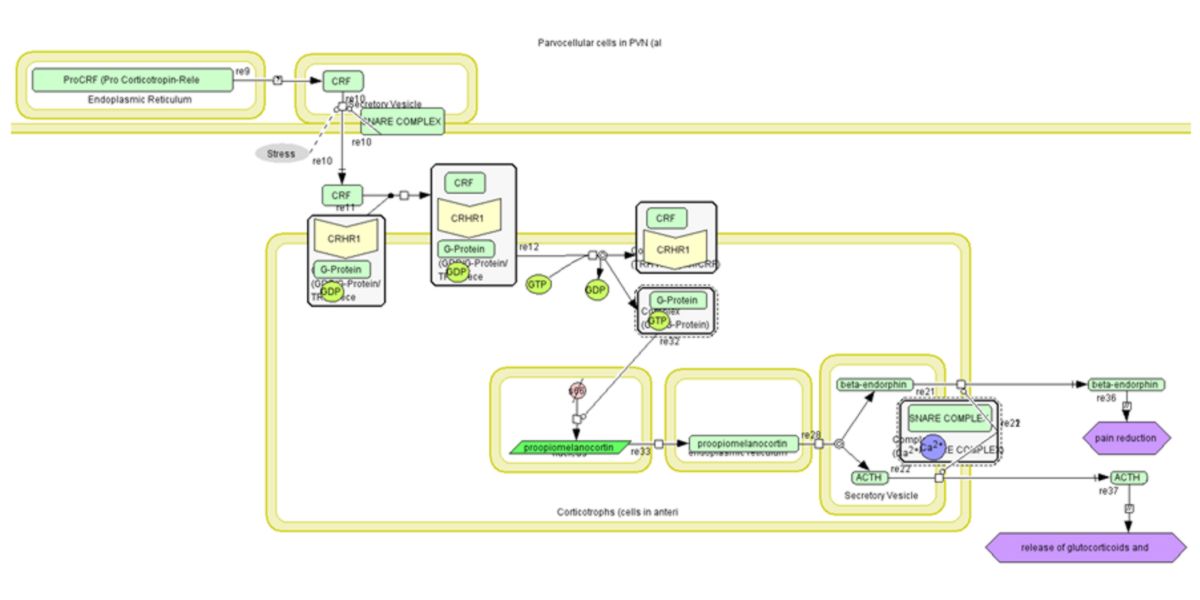
Map of the biosynthesis pathway of glucocorticoid hormones and endorphins.
They bind to them and trigger a cascade of molecular reactions (↓AC, ↓AMP, ↓cAMP, ↑K+ Output, ↓Ca2 input, etc.) that end up “relaxing the neuron” and preventing it from releasing the neurotransmitters that will produce the sensation of pain.
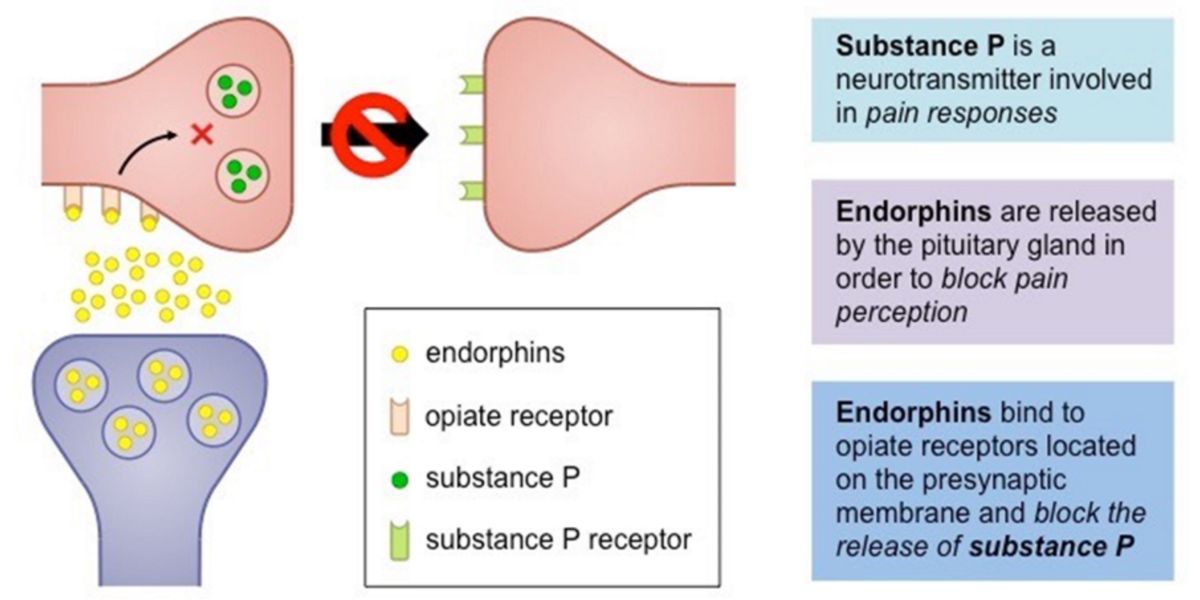
Simplified mechanism of action of endorphins on the inhibition of the release of substance P, one of the main neurotransmitters involved in pain signalling.
Let’s recap
So, is physical exercise a painkiller?
Yes, if you’ve come to that conclusion, you’ve got it all right!
Sport Benefits for Endorphin Release
Physical exercise is a drug.
In fact, we might have come up with the real polypill (Vina et al., 2012), my mentor in the research world once said:
“To what extent do you think there is a drug or treatment in the world that is capable of influencing as many dimensions of physical, mental and cognitive health as physical exercise does?;
And if they find it, develop it and commercialise it, they will become multimillionaires;
Because nowadays physical exercise is considered the polypill, the magic pill that positively modulates our health.”
Cognitive benefits
Physical exercise has been shown to be able to positively influence the regulation of neurotransmitters (other than enkephalins) that can help us, among others (Meeusen and De Meirleir, 1995):
- Improve rest.
- Reduce stress.
- Improve our cognitive performance.
- Increase our tolerance to effort and pain.
- Modulate the body’s capacity for resilience.
Mental performance
It has been shown to modulate certain transcription mechanisms capable of modifying our genes leading to the development of a neurotrophic response (via BDNF, GDNF and IGF) that makes our neurons grow and have more potential to respond to stimuli, improving our mental performance directly, and could be a promising strategy for tackling neurodegenerative diseases such as Alzheimer’s, Huntington’s or Parkinson’s disease.

Modulation of physical exercise on neuroprotection mediated by the neurotrophic factor BDNF.
Neuroprotection
Physical exercise seems to be able to make our brain wake up, its cells survive and be healthy, those that are not healthy are recycled and do not undergo a process of spontaneous death that induces neurotoxicity.
Happiness
In other words, physical exercise and its relationship with neurotransmitters such as endorphins can make us happier, have less pain, lengthen our lives, improve lifespan and life quality, which is currently the focus of research in 90% of the biomedical literature.
Incredible, isn’t it?
Sport as a health regulator
Physical exercise has been consistently associated with reductions in chronic pain in people suffering from fibromyalgia, chronic low back neck pain and, osteoarthritis (Skelly et al, 2018).
In addition to other conditions such as possible pain associated with chemotherapy, rheumatoid arthritis and other musculoskeletal disorders.
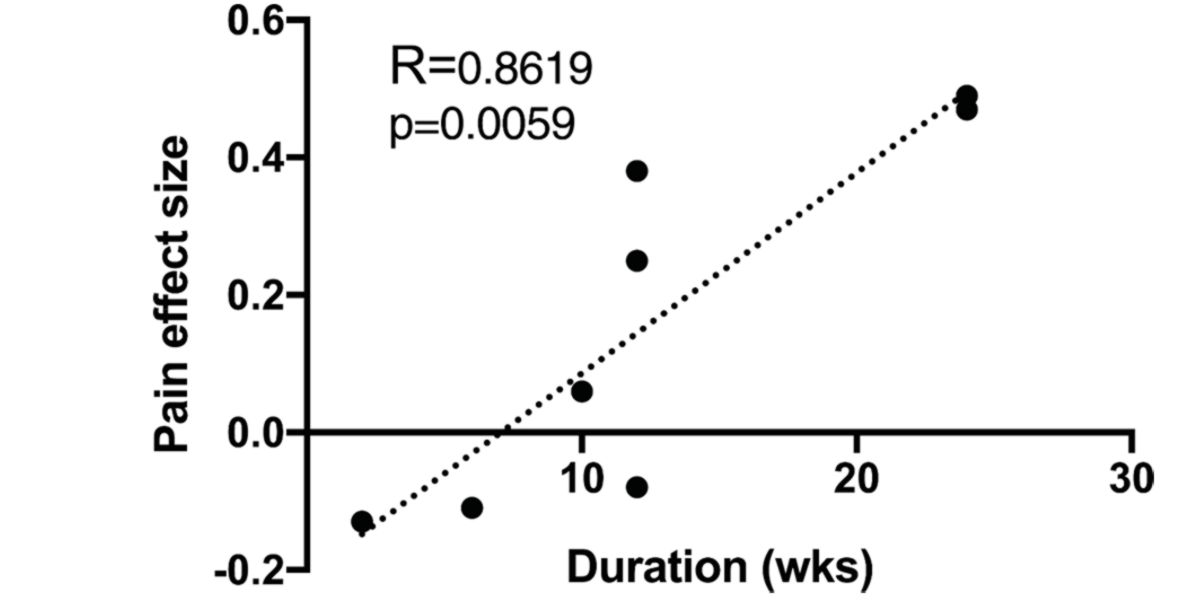
Statistically significant linear relationship between the duration of physical exercise and the magnitude of perceived pain.
This is related to the general mood modulation observed in more active people:
“Those who lived in places with a socio-economic status that allowed them access to free and regular recreational physical exercise were happier and reported a better overall quality of life regardless of the socio-economic status of the household.”
(Huang y Humphreys, 2011).

Physical exercise is health for all.
Physical exercise is currently the most effective non-pharmacological therapy for the improvement of health status (physical, mental, emotional and social) at any age, in practically any health condition and in any modality of physical exercise performed.
Bibliographical references
- Anderson, E., & Shivakumar, G. (2013). Effects of exercise and physical activity on anxiety. Frontiers in Psychiatry, 4(APR), 27.
- Gong, R. (2012). The renaissance of corticotropin therapy in proteinuric nephropathies. Nature Reviews Nephrology, 8(2), 122–128.
- Gradari, S., Pallé, A., McGreevy, K. R., Fontán-Lozano, Á., & Trejo, J. L. (2016). Can exercise make you smarter, happier, and have more neurons? A hormetic perspective. Frontiers in Neuroscience, 10(MAR), 93.
- Huang, H., & Humphreys, B. R. (2011). Sports participation and happiness: Evidence from US micro data. In The Economics Of Sport, Health And Happiness: The Promotion of Well-being through Sporting Activities (pp. 163–183).
- Jain, N. (2012). presentation on Endorphin hormone [Diapositivas].
- Meeusen, R., & De Meirleir, K. (1995). Exercise and Brain Neurotransmission. Sports Medicine, 20(3), 160–188.
- Palasz, E., Wysocka, A., Gasiorowska, A., Chalimoniuk, M., Niewiadomski, W., & Niewiadomska, G. (2020). BDNF as a promising therapeutic agent in parkinson’s disease. International Journal of Molecular Sciences, Vol. 21.
- Schäfer, M. (2011). Mechanisms of action of opioids. In A. S. Evers, E. D. Kharasch, & M. Maze (Eds.), Anesthetic Pharmacology (2nd ed., pp. 493–508).
- Skelly AC, Chou R, Dettori JR, et al. Noninvasive Nonpharmacological Treatment for Chronic Pain: A Systematic Review [Internet]. Rockville (MD): Agency for Healthcare Research and Quality (US); 2018 Jun. (Comparative Effectiveness Review, No. 209.).
- The Brain—Lesson 2—Neurons, Brain Chemistry, and Neurotransmission (Page 1 of 2). (s. f.).
- Viña, J., Sanchis-Gomar, F., Martinez-Bello, V., & Gomez-Cabrera, M. C. (2012). Exercise acts as a drug; The pharmacological benefits of exercise. British Journal of Pharmacology, 167(1), 1–12.
Related Entries
- We recommend you to visit this article: Sport in People with Intellectual Disabilities.
- Do you know these 12 Health Benefits of Sport? Find out here.
- Practising sport can help us to improve our mood… read more.