 Fitness, Nutrition, Health and Sports Blog In the HSNstore Blog you will find tips about Fitness, sport in general, nutrition, and health – HSNstore.com

Calcium can be said to be the main basic nutrient that bones need. After all, 99% of calcium is found in bones and teeth. This explains why, in order to have strong and healthy bones, you should stock up on calcium-rich foods. Fill your shopping basket with them, give yourself the gift of bone health!

Although until now you may have considered the calcium-milk pairing to be completely infallible, you may be surprised to learn that there are foods that provide much more calcium than a glass of milk, and they are within easy reach!
More information in the link about its importance, properties and benefits – https://www.hsnstore.eu/blog/nutrition/minerals/calcium/
What role does Calcium play at the different stages of life?
Your body requires generous amounts of calcium every day, as it is essential for the formation of the skeletal system. To bind this calcium to your skeleton, you need to consume vitamin D (click here), or receive it through sunlight.
Specifically, an adult’s requirements range between 800 and 1,200 mg daily. For the foods we are going to present in this post, we have considered a daily calcium intake of 800 mg, according to the NRV (Nutrient Reference Values) established in Regulation (EU) 1169/2011 of 25 October 2011.
Childhood and adolescence are stages with special daily calcium requirements, during which care must be taken to ensure that a deficiency does not occur.
However, there is another crucial time for adequate calcium intake, and that is during pregnancy and breastfeeding. During this demanding stage, calcium needs intensify.
What are its main natural sources?
Fortunately for the palate and for health, there is a wide range of foods that contain calcium.
Take note of some of the most important ones that are easy to include in your diet!
- Parmesan cheese. It tops the ranking of foods with the highest calcium content with its 183 mg per 100 g, almost 150%, a real record!
- Chia seeds. A superfood that also stands out as a notable source of calcium, since 100 g provides up to 630 mg (78.8%)
- Squid and octopus. Per 100 g of product, they provide 144 mg of calcium (18%)
- Canned clams and cockles. They provide 142 mg of calcium per 100 g (17.7%), which means that from this delicacy you obtain more of the mineral than from the same amount of milk
- By consuming 100 g, you ingest 130 mg of calcium
- The same serving of this food allows you to consume 115 mg of calcium
- Mussel. Apart from being delicious, 100 g of this mollusc provides you with 80 mg of calcium
- A model of virtues that is made from soya, which explains its low calorie content; however, it contains high levels of calcium. Specifically, they are around 20% higher than those of cow’s milk
- Egg, as with tofu, each yolk provides a significant amount of this nutrient, around 53 mg (6.7%) per unit
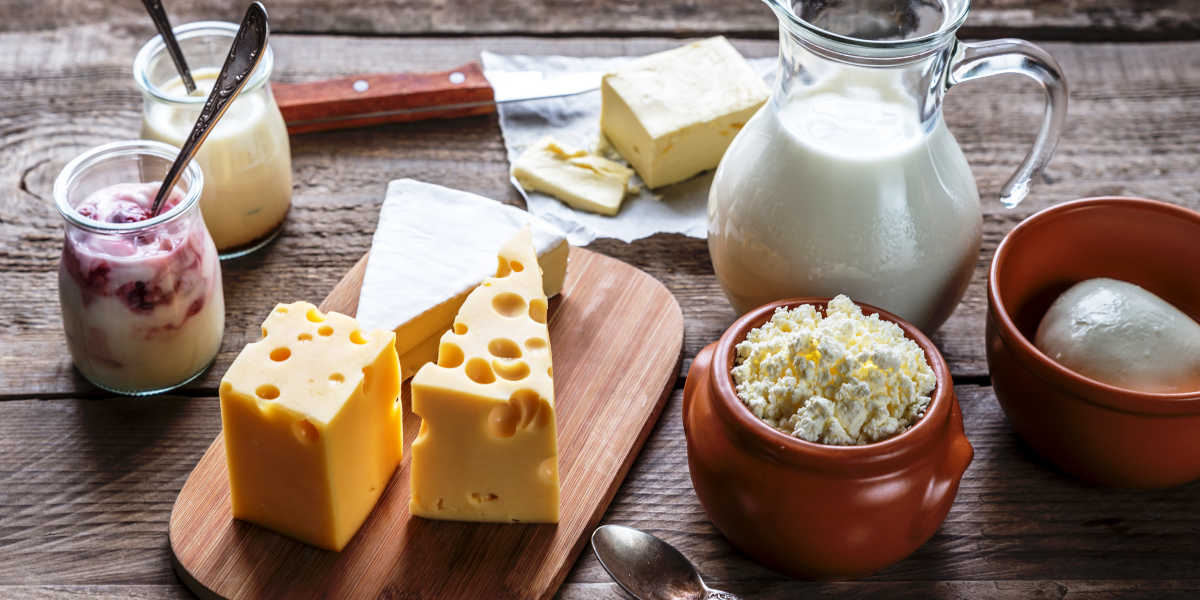
Other foods that provide a greater amount than dairy products
In the previous list we have already given you some clues, but now we want to classify the foods richer in calcium than dairy products by category.
There is no doubt that, among the foods with the highest bioavailability of calcium, milk and its dairy derivatives stand out, such as yoghurts, cheese, cottage cheese, butter and cream. However, its repertoire goes far beyond this food category.
In the following comparative table, you can see dairy sources and their calcium content:
| Dairy Source (per 100g) | Amount of Calcium |
| Whole Cow’s Milk | 125mg (15.6%) |
| Goat’s Milk | 134mg (16.75%) |
| Cottage Cheese | 85mg (10.6%) |
| Yoghurt | 150mg (18.75%) |
| Semi-cured cheese | 760mg (95%) |
Will you join us on our journey beyond milk and foods related to it?
Which fruits contain the most calcium?

Fresh, delicious and healthy: that is how the fruits that provide the most calcium appear to us! The best examples? Kiwi, strawberries, figs, raspberries, plums, lemons, papaya and redcurrants (also known as the miracle fruit). And this is without taking any merit away from breba figs. In case you do not know the difference between breba figs and regular figs, the former also come from the fig tree, but appear in spring, while the latter grace the table in autumn.
| Fruit (per 100g) | Amount of Calcium |
| Orange | 40mg (5%) |
| Kiwi | 34mg (4.25%) |
| Strawberry | 16mg (2%) |
| Redcurrants | 55mg (6.8%) |
| Papaya | 24mg (3%) |
Which vegetables provide the most?

The vegetables richest in calcium are green leafy vegetables. Among them, spinach, watercress, chard, leeks, lettuce, parsley and cabbage stand out for their special content. Nor should you underestimate the mineral-providing power of onion, pumpkin and tomato, although they contain somewhat less calcium than the vegetables mentioned above.
| Vegetable (per 100g) | Amount of Calcium |
| Spinach | 100mg |
| Chard | 51mg |
| Broccoli | 47mg |
| Kale | 135mg |
| Curly kale | 145mg |
Which fish are richest in this mineral?

Calcium from the sea is led by the sardine as the main source of this mineral in fish. Experts also grant this privilege to herring, cod, sea bream, gilthead bream and salmon. Follow nutritionists’ advice and include them 3 times a week in your diet.
| Fish (per 100g) | Amount of Calcium |
| Salmon | 11mg (1.4%) |
| Sardines | 382mg (48%) |
| Cod | 16mg (2%) |
| Herring | 57mg (7%) |
| Tuna | 10mg (1.25%) |
Which legumes have the highest content?
In the legumes section, we continue to enjoy notable sources of calcium, among which soya stands out as a perfect alternative for those who suffer from lactose intolerance. Pinto beans, lupins, lentils and chickpeas form part of the traditional culinary range that represents a formidable option for obtaining this nutrient.
| Legume (per 100g) | Amount of Calcium |
| Soya | 277mg (346.3%) |
| Chickpeas | 105mg (13.2%) |
| Lentils | 56mg (7%) |
| Beans | 186mg (23.3%) |
| Peanuts | 92mg (11.5%) |
Which nuts contain the most calcium?
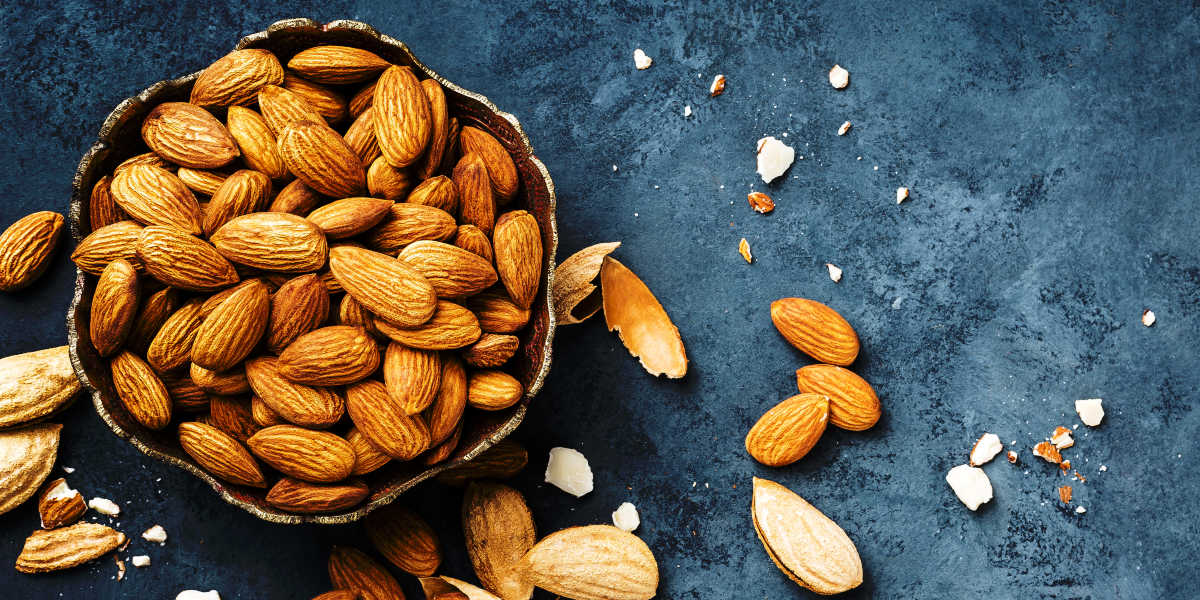
Calcium also comes in snack form! And the thing is, in addition to providing energy, you now know that nuts are excellent ways to assimilate calcium into your body. Those that can boast the greatest richness in this mineral are almonds, hazelnuts, pistachios, walnuts, cashews and chestnuts.
| Nuts (per 100g) | Amount of Calcium |
| Almonds | 264mg (33%) |
| Walnuts | 117mg (14.6%) |
| Pistachios | 105mg (13%) |
| Cashews | 45mg (5.6%) |
| Hazelnuts | 114mg (14.3%) |
Bibliographical Sources:
- https://www.ecured.cu/Macrominerales
- https://www.webconsultas.com/dieta-y-nutricion/dieta-equilibrada/micronutrientes/minerales/calcio-1828
- https://www.danone.es/es/salud/tendencias/alimentos-calcio-no-lacteos.html
- http://www.fao.org/docrep/006/w0073s/w0073s0x.htm
- “Macronutrients and micronutrients” Fabian Ávila 2016