 Fitness, Nutrition, Health and Sports Blog In the HSNstore Blog you will find tips about Fitness, sport in general, nutrition, and health – HSNstore.com


The hamstrings are a muscle group located at the back of the thigh, consisting mainly of three muscles:
- Biceps femoris: it has a long head and a short head. Both contribute to knee flexion, while the long head also plays a role in hip extension.
- Semitendinosus: contributes to knee flexion, hip extension and internal rotation of the lower leg when the knee is bent.
- Semimembranosus: contributes to hip extension, knee flexion and the stability of the knee joint.
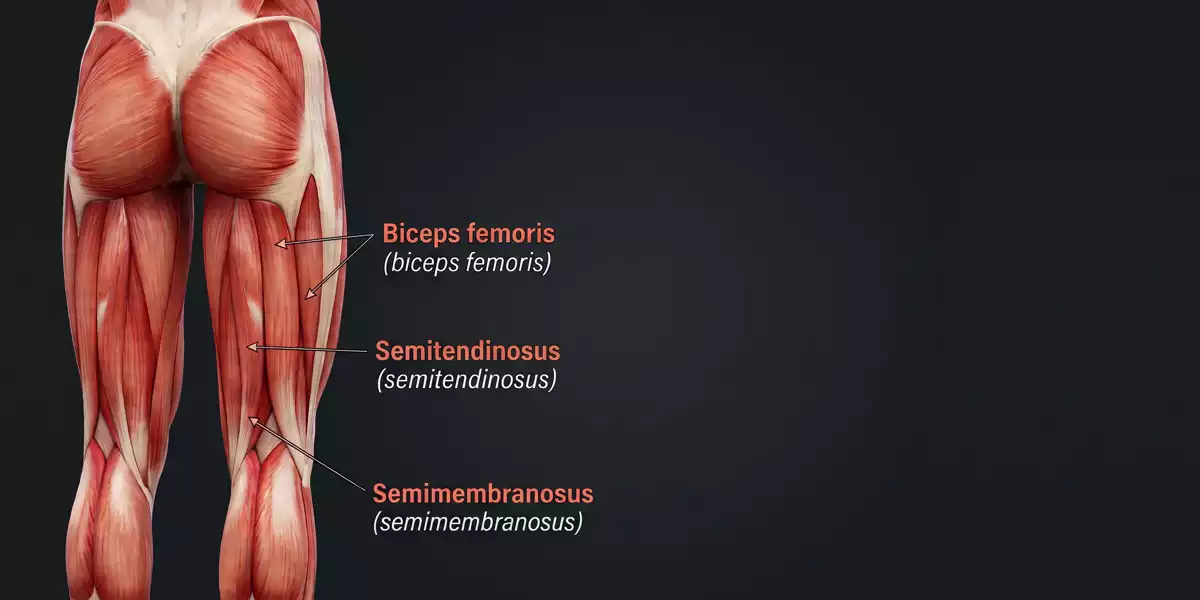
Together, they perform two main functions: flexing the knee and extending the hip (the short head of the biceps femoris acts only on the knee). Strengthening them is important for:
- Improving sports performance: they are involved in running, accelerating, jumping and changing direction.
- Promoting muscular balance: they complement the work of the quadriceps and help develop well-proportioned legs.
- Improving knee stability: they help control the forces acting on the joint during movement.
- Reducing the risk of muscle injuries: progressive strength training, particularly eccentric work, may help reduce certain hamstring injuries.
How to choose the best hamstring exercises
- Combine hip extension and knee flexion. Hip hinge movements, such as the Romanian deadlift, primarily target the hip extension function. Leg curls directly train knee flexion, including the short head of the biceps femoris.
- Prioritise training in stretched positions. Some studies suggest that training the hamstrings at longer muscle lengths, such as during the seated leg curl (where hip flexion lengthens the biarticular muscles), may produce greater hypertrophy than training with the muscles in a shortened position.
- Control the eccentric phase. Lowering the weight under tension is particularly useful for developing strength and improving the hamstrings’ ability to withstand loads.
- Apply progressive overload. Gradually increase repetitions, resistance or sets while maintaining proper technique.
Hamstring strengthening exercises: technique, sets and repetitions
These eight exercises target the hamstrings from different angles, with options for both the gym and home workouts.
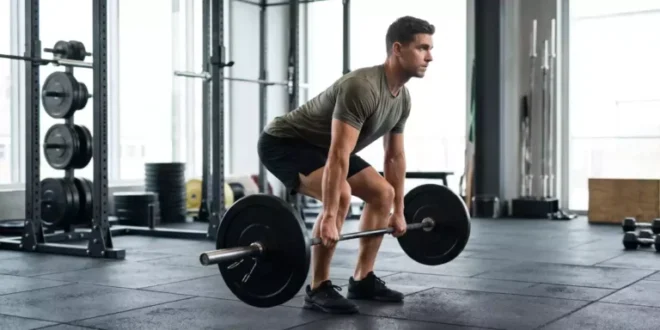
1. Romanian deadlift with a barbell or dumbbells
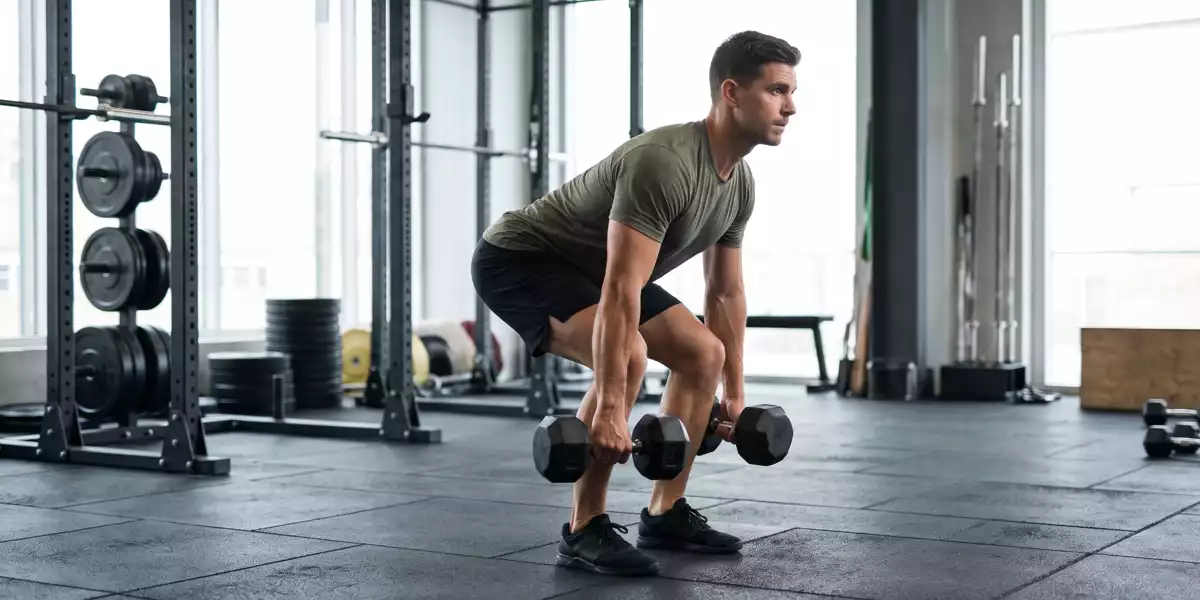
It is one of the most complete exercises for developing the hamstrings, particularly because of the high tension it generates during hip extension.
- Main muscles worked: hamstrings (especially the biarticular muscles) and gluteus maximus.
- Recommended repetitions: 6-12.
How to perform it:
- Stand with your feet hip-width apart and the barbell or dumbbells in front of your thighs.
- Push your hips backwards, keeping your knees slightly bent and your back in a neutral position.
- Lower the weight close to your legs until you feel a comfortable stretch in your hamstrings.
- Extend your hips to return to the starting position without hyperextending your back.
Common mistake: rounding your lower back or bending your knees too much, turning the movement into a squat.
2. Seated leg curl
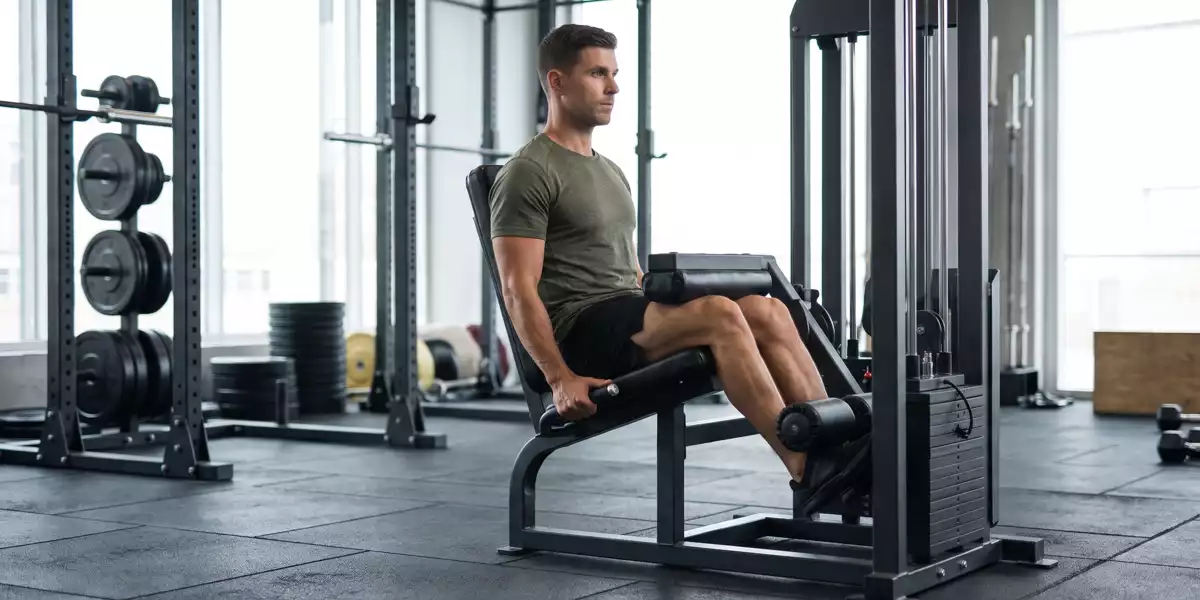
This isolation exercise is particularly effective for targeting the hamstrings during hypertrophy training. The flexed hip position allows the biarticular muscles to work at a longer length than during the lying leg curl.
- Main muscles worked: biceps femoris, semitendinosus and semimembranosus.
- Recommended repetitions: 10-15.
How to perform it:
- Adjust the machine’s seat and supports to your height, aligning your knees with its axis of rotation.
- Position your extended legs under the roller pad and keep your back against the backrest.
- Bend your knees, bringing your lower legs downwards and backwards without lifting your hips.
- Slowly return to the starting position, controlling the weight.
Common mistake: using too much weight and lifting your pelvis off the seat to complete the repetitions.
3. Lying leg curl
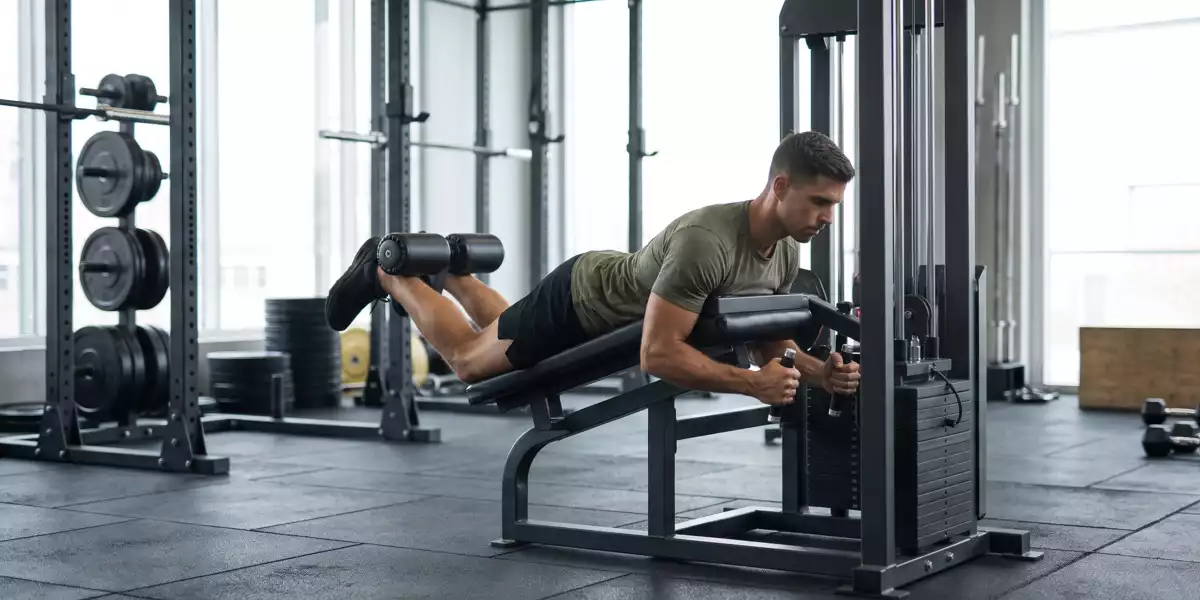
This exercise directly targets knee flexion and complements hip hinge movements. It is a useful alternative when a seated leg curl machine is unavailable.
- Main muscles worked: biceps femoris, semitendinosus and semimembranosus.
- Recommended repetitions: 10-15.
How to perform it:
- Lie face down on the machine and position your ankles under the roller pad.
- Keep your pelvis supported and your abdominal muscles slightly engaged.
- Bend your knees, bringing your heels towards your glutes.
- Extend your legs in a controlled manner, avoiding letting the weight drop suddenly.
Common mistake: excessively arching your lower back or lifting your hips to move a heavier load.
4. Nordic hamstring curl
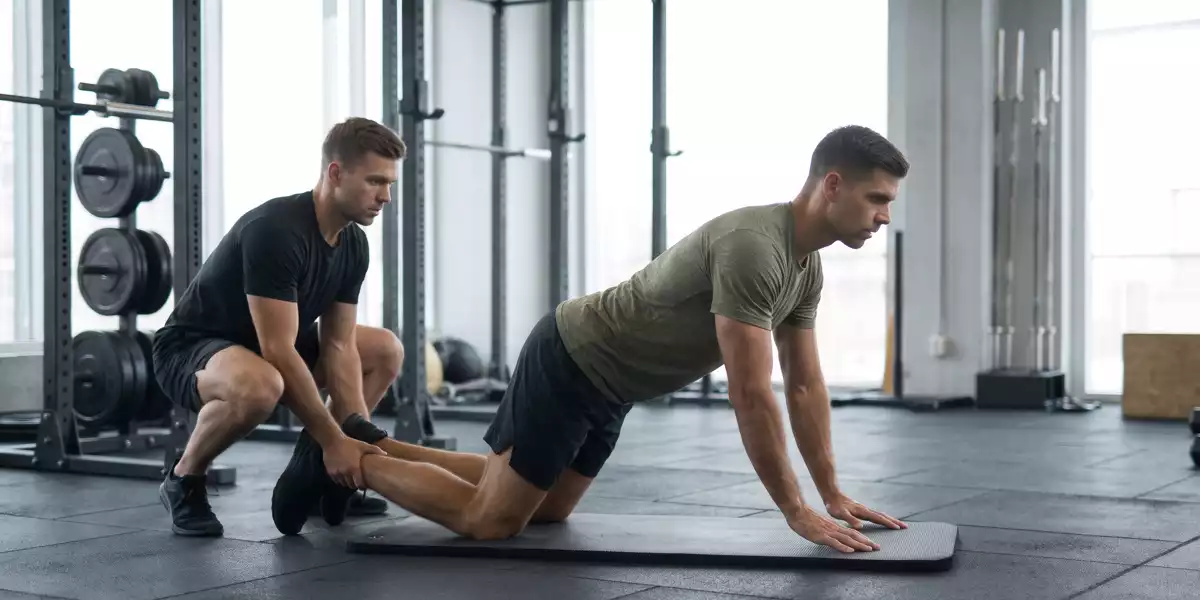
This exercise stands out for its high eccentric demand: the hamstrings must control the body’s descent while lengthening. It is a demanding exercise widely used in programmes designed to prevent muscle injuries.
- Main muscles worked: hamstrings, particularly in their role as knee flexors.
- Recommended repetitions: 3-6, depending on your level.
How to perform it:
- Kneel on a padded surface with your ankles securely held in place (by a partner or an anchor).
- Keep your torso and hips aligned without bending at the waist.
- Slowly lean forwards, resisting the descent with your hamstrings.
- Place your hands on the floor to cushion the descent and help you return to the starting position.
Common mistake: lowering yourself too quickly and losing control of the movement.
5. Single-leg deadlift
This exercise targets the hamstrings while developing balance and hip control. It also helps identify differences in strength and coordination between the two legs.
- Main muscles worked: hamstrings and gluteus maximus, with the involvement of the hip stabilising muscles.
- Recommended repetitions: 8-12 per leg.
How to perform it:
- Stand on one leg with your knee slightly bent.
- Push your hips backwards while leaning your torso forwards and extending your free leg behind you.
- Lower your torso while keeping your pelvis stable and your back neutral.
- Return to the starting position by extending the hip of your supporting leg.
Common mistake: rotating your pelvis outwards or rounding your back to lower yourself further.
6. Barbell good morning
This hip hinge exercise strengthens the posterior chain: hamstrings, glutes and spinal extensor muscles. Because it requires good technique, start with light weights and master the movement pattern before increasing the load.
- Main muscles worked: hamstrings, gluteus maximus and erector spinae.
- Recommended repetitions: 8-12.
How to perform it:
- Place a barbell across your upper back, as you would for a back squat.
- Keep your knees slightly bent and your core engaged.
- Push your hips backwards while leaning your torso forwards, maintaining a neutral spine.
- Return to the starting position by extending your hips.
Common mistake: rounding your lower back or using excessive weight that prevents you from controlling the range of motion.
7. Hamstring curl with sliders, a towel or a ball
An excellent alternative for training the hamstrings at home without machines. It combines knee flexion with maintaining hip extension, creating a high muscular demand.
- Main muscles worked: hamstrings, with the involvement of the glutes.
- Recommended repetitions: 8-15.
How to perform it:
- Lie on your back with your heels resting on sliders, a towel or a stability ball.
- Lift your pelvis and keep your abdominal muscles engaged.
- Bend your knees, sliding your heels towards your glutes.
- Slowly extend your legs while trying to keep your pelvis elevated.
Common mistake: allowing your hips to drop as you extend your legs or using momentum to perform the movement.
8. Hip thrust or glute bridge with feet positioned further forwards (complementary)
This is primarily a glute exercise, but positioning your feet slightly further forwards than usual increases hamstring involvement. It does not replace the Romanian deadlift or leg curls when your main goal is to maximise hamstring hypertrophy, so use it as a complementary exercise.
- Main muscles worked: gluteus maximus, with the involvement of the hamstrings.
- Recommended repetitions: 10-15.
How to perform it:
- Rest your upper back against a bench, or lie on the floor if performing a glute bridge.
- Position your feet slightly further forwards than in the conventional variation.
- Lift your pelvis by extending your hips while keeping your core engaged.
- Lower yourself slowly without losing pelvic stability.
Common mistake: placing your feet too far forwards or excessively arching your lower back to lift your hips higher.
Common mistakes when training the hamstrings
Incorrect technique reduces muscular stimulation and unnecessarily increases the demands placed on other structures. These are the most common mistakes:
- Rounding your back during Romanian deadlifts: this makes it harder to maintain a controlled hip hinge. Prioritise hip movement and adjust the range of motion to your mobility.
- Lowering yourself too quickly during Nordic curls: you lose control of the eccentric phase. Use assistance if you cannot yet control the descent.
- Compensating with your lower back: excessively arching your back during hip extension exercises shifts some of the effort to the lower back muscles.
- Reducing the range of motion to lift heavier weights: this limits training in positions where the muscles are at longer lengths.
- Training only with deadlifts: they are an excellent exercise, but it is also advisable to include specific knee flexion movements.
How to train your hamstrings at home
You don’t need machines to strengthen your hamstrings: with your body weight and a few simple accessories, you can perform a complete workout.
- Resistance band leg curl: secure the band to a stable anchor point and bend your knees against its resistance while lying face down.
- Sliding leg curl with sliders or a towel: slide your heels towards your glutes on a slippery surface while keeping your pelvis elevated.
- Single-leg glute bridge with the foot positioned further forwards: support yourself on one heel and lift your hips while keeping your pelvis stable. The further your heel is from your hip, the greater the demand on your hamstrings.
- Assisted Nordic curl: perform the descent with the help of a resistance band or your hands to control the difficulty.
- Single-leg Romanian deadlift: you can perform it using a loaded backpack, water containers or dumbbells.
To get started, choose one hip hinge exercise and one knee flexion exercise and perform 2-3 sets of each. As you gain strength, increase repetitions, add resistance or progress to unilateral variations.
Hamstring injury prevention and mobility
The hamstrings are subjected to high mechanical demands during sprints, accelerations and changes of direction. Therefore, improving their strength, particularly their eccentric capacity, is an important strategy within muscle injury prevention programmes.
The Nordic hamstring curl is one of the most extensively studied exercises in this area: meta-analyses associate its inclusion in training programmes with a lower incidence of hamstring injuries, particularly in sprint-based sports such as football.
Strength training should be complemented by other aspects:
- Proper warm-up: start with general activity and specific dynamic movements before performing demanding exercises.
- Hip mobility: progressively work on the ranges of motion needed to perform exercises correctly.
- Flexibility: incorporate stretches suited to your needs to improve or maintain your range of motion.
- Progressive loading: avoid sudden increases in training volume or intensity, especially during eccentric exercises.
- Strength through a full range of motion: train the muscles in different positions, including those where they are relatively lengthened.
One exercise that can complement posterior chain mobility and strength is the Jefferson Curl, which combines controlled spinal flexion with progressively loaded movement. Introduce it gradually, starting with very light loads and respecting your tolerance. It does not replace specific hamstring strengthening exercises.
Ultimately, the best strategy combines strength, mobility and appropriate training progression, rather than relying solely on stretching.
Frequently asked questions about hamstring training
How many times a week should you train your hamstrings?
It is common to train them twice a week, distributing the training volume to support recovery. This frequency allows you to combine hip extension and knee flexion exercises and can be adjusted according to your experience and the rest of your training programme.
What is the best exercise for hamstrings?
There is no single exercise that optimally targets all their functions. The Romanian deadlift is particularly effective for hip extension, while the seated leg curl is especially useful for knee flexion and hypertrophy. Combining both is an excellent option.
How many sets per week do I need?
As a general guideline, 6 to 12 weekly sets spread across 2 sessions are usually a reasonable starting point. Adjust according to your experience and recovery capacity.
Can you train your hamstrings without equipment?
Yes. You can strengthen them with single-leg glute bridges, sliding leg curls using a towel or assisted Nordic curls. To continue progressing, adjust the difficulty and gradually increase repetitions or resistance.
Why do my hamstrings hurt after training?
Delayed onset muscle soreness (DOMS) can appear between 24 and 72 hours after an intense or unfamiliar training session, particularly when introducing eccentric exercises. It usually disappears within a few days. Sharp, localised pain accompanied by bruising or loss of strength may indicate an injury and requires professional assessment.
What should I do if I have tight hamstrings?
Combine strength exercises performed through progressively larger ranges of motion with hip mobility work and stretching adapted to your tolerance. Romanian deadlifts with light weights and controlled execution can help you develop strength in positions where the muscles are at longer lengths. Do not force stretches or confuse a feeling of tightness with an injury or actual muscle shortening.
Are hamstrings and femoral muscles the same thing?
In everyday language, the term “femoral muscles” is sometimes used to refer to the hamstrings, the muscles located at the back of the thigh. Technically, however, “femoral” refers to the femur and other structures in the area.
References
- van Dyk N, Behan FP, Whiteley R. Including the Nordic hamstring exercise in injury prevention programmes halves the rate of hamstring injuries: a systematic review and meta-analysis of 8459 athletes. British Journal of Sports Medicine. 2019.
- Maeo S, et al. Greater hamstrings muscle hypertrophy but similar damage protection after training at long versus short muscle lengths. Medicine & Science in Sports & Exercise. 2021.