 Fitness, Nutrition, Health and Sports Blog In the HSNstore Blog you will find tips about Fitness, sport in general, nutrition, and health – HSNstore.com

An Olympic lifting workout can last around 2h30min, but the actual training time is much less due to the long rest periods needed. A lifter with high strength capacity can move between four and twenty tons (calculated by multiplying lifted weight x total reps) per session, which means a huge amount of work.
Over time, we know that the calorie burn shouldn’t be expressed solely based on the mechanical work done, since it depends on the lifter’s weight, skill and training level, and the specific exercise performed; the latter especially influenced by how much muscle mass is involved in that particular exercise.
Effect of body weight and skill level
After warming up, the energy expenditure of mid-level lifters (let’s say people with around 18 months to 2 years of experience in lifts like squats, snatch, cleans, deadlifts…) can range from 0.98 kcal/min (for 56 kg people) up to 4.60 kcal/min (for super-heavyweights). It’s clear there’s a strong link between weight category and energy expenditure.
So, on average, energy expenditure for mid-level lifters is 2.78 kcal/min. For those with higher skill and experience, it drops slightly to 2.21 kcal/min; which makes sense due to better technical efficiency (Efficiency (%) = 100 x (Mechanical work / Internal chemical energy)) seen in elite lifters as an adaptation to training.
You can see this in the table below. Lighter lifters are more efficient than heavier ones at each skill level, and all lifters improve efficiency as their skill level goes up.

Therefore, it’s possible an elite lifter uses less energy in a workout even though they’re lifting way more than a less experienced lifter. It’s been shown that as body weight increases, energy expenditure goes up so a heavyweight lifter can burn 30% more kcal than someone weighing 56 kg, but mid-level lifters burn on average 43% more than elites.
Effect of different exercises
Not all exercises demand the same energy, as you might guess. For the same distance moved with the same weight, the exercise involving more muscle groups will be the most energy-demanding. That’s why one way to express energy cost per exercise is through the amount of energy needed to move one kilogram one meter [cal/KgM].
The table below shows this unit for a single rep of various exercises at 80% of 1RM (except snatch and C&J, where 100% 1RM is used).
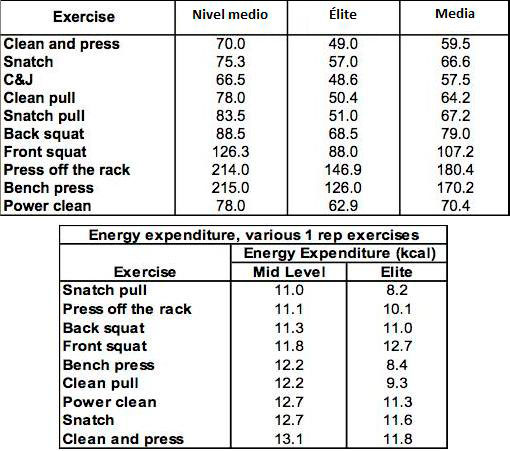
You’ll also notice elite lifters are more efficient in each exercise compared to their mid-level counterparts.
Energy expenditure per session
In an Olympic weightlifting session, an elite lifter can burn up to 1,500 kcal; while a mid-level lifter might burn around 1,200 kcal.
In shorter gym-style sessions, using these exercises (without needing the heavy loads of weightlifters) can still lead to significant energy expenditure (around 7-8 kcal/min for people weighing 60-70 kg) which could even help with fat loss.
The image shows that combining aerobic and strength training, as well as aerobic exercise alone, is generally more effective for fat loss than strength training alone. But that doesn’t mean strength training by itself, combined with proper nutrition planning, isn’t effective.
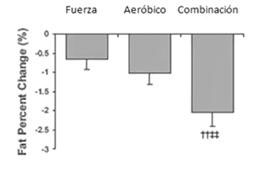
From improving physical capacities, significant increases in VO2 max have been found alongside a body fat drop (-4%) in both men and women starting with about 22% body fat, which is normal for young and middle-aged adults. This fat loss is also linked to a decrease in visceral fat especially around L2, L3, L4, and L5, which are the metabolically most active areas related to risk factors.
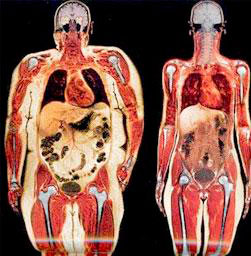
And most importantly, the neuromuscular, endocrine, and metabolic adaptations that come with strength training are ESSENTIAL for health and the much-talked-about “functionality” nowadays.
Sources
- Idoate, F., Ibañez, J., Gorostiaga, E. M., García-Unciti, M., Martínez-Labari, C., & Izquierdo, M. (2011). Weight-loss diet alone or combined with resistance training induces different regional visceral fat changes in obese women. International Journal of Obesity, 35(5), 700-713.
- Vorobyev, A.N. (1978). A Textbook on Weightlifting. J. Bryant, Trans. Budapest, Hungary: International Weightlifting Federation.
- Willis, L. H., Slentz, C. A., Bateman, L. A., Shields, A. T., Piner, L. W., Bales, C. W., … & Kraus, W. E. (2012). Effects of aerobic and/or resistance training on body mass and fat mass in overweight or obese adults. J Appl Physiol. 113(12), 1831-1837.