 Fitness, Nutrition, Health and Sports Blog In the HSNstore Blog you will find tips about Fitness, sport in general, nutrition, and health – HSNstore.com

No wonder more than one reader cracked a smile reading the title of this article, since it’s a phrase that sticks with us almost daily…
It’s true that our view of success when it comes to losing fat has changed over the past few years. The blame goes to misleading advertising (promising incredible results in no time), experts recommending hours of cardio and low-fat diets, or even the false idea that losing weight is always good.
That said, not everyone has the same ease when it comes to losing fat, and in our adipose tissue (where fat is stored) there are slight differences between individuals.
Fat as an energy source
To use our body fat as an energy source, two steps need to happen first:
- Lipolysis, which basically is the process of “breaking down” the stored “fat” and then releasing NEFAs (non-esterified fatty acids)
- Mobilization, which is the transport of these fatty acids to the cell to be used
If our body doesn’t use those fatty acids as energy, they get re-esterified and stored again in our adipose tissue (1).
A clear example of this process is the consumption of caffeine in sedentary people. Their body will release more fatty acids to be used as energy, but since the cells don’t create an energy demand, these get stored again. Result? No significant changes (2).
This lipolysis-mobilization-oxidation process is tightly regulated by hormones such as:
- LPL (Lipoprotein Lipase) which promotes fat storage,
- HSL (Hormone-Sensitive Lipase) which promotes the breakdown and release of fatty acids,
- Adrenaline,
- Insulin, whose role is to control the released NEFAs and NOT to store fat as many believe.
When we eat, our body prevents using body fat for energy, while fasting facilitates this process.
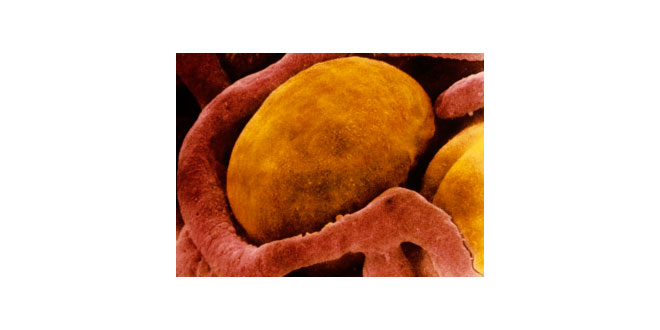
Image of the adipocyte, the cell where body fat is stored
If eating stops our body from tapping into our fat what about those people who eat every 3 h? The answer is simple:
Energy balance
If by the end of the day your body has burned more calories than you’ve eaten, you’ll lose weight. This means that if I eat every 3 h but my calorie intake is low, I’ll lose fat if my body burns enough calories. It’s this last point where most people fail.
Obviously, the main reason for low activity in our adipocytes is simple: we don’t move. If we spend the whole day sitting still, our calorie burn (known as NEAT) will be low, making it harder to create a deficit. Believe it or not, our body burns more calories as we eat more calories, which is why an obese person burns more calories at rest than a thin person.
However, here’s a really interesting fact:
Obese people have different adipocytes than thin people
When comparing the body fat of an obese person to that of a thin person, we see that the first group has “older adipocytes” (3).
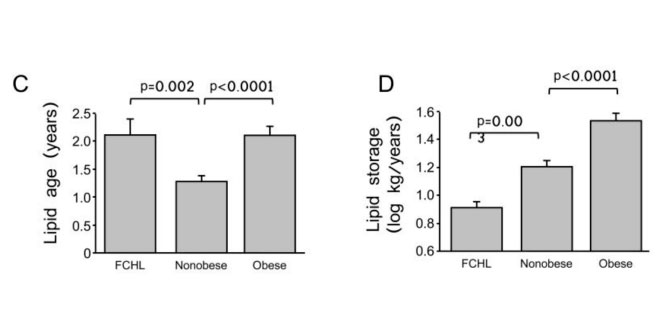
As we see, lipid age is higher in obese people (left graph), which is linked to a greater ease to store fat (right graph)
Not only does adipocyte age influence how much fat we store, but also how much fat we release to be used. The older the adipocyte, the less fat is released, as shown in the following graph (4):
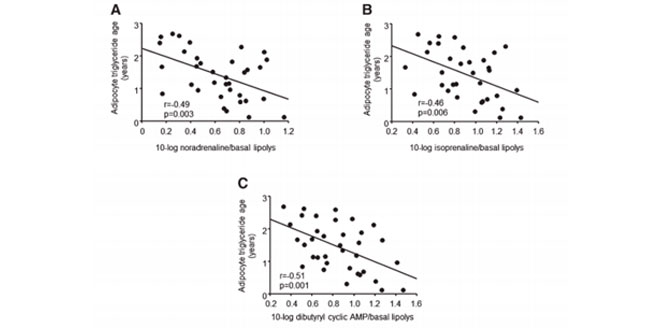
This confirms something I talked about a while ago: Obese people have greater resistance to fat loss
How can we tackle this problem in obese people?
The solution we’ve been giving for a while:
Weight training + hypocaloric, protein-rich diet
Muscle contraction is one of the most powerful tools for fat loss, as it works through different mechanisms. First, it improves glucose sensitivity by making insulin more efficient. As I’ve said before, insulin resistance in muscle promotes energy storage as body fat. On the other hand, muscle contraction during weight training releases substances called myokines, which act on adipose tissue preventing energy storage and increasing lipolysis.
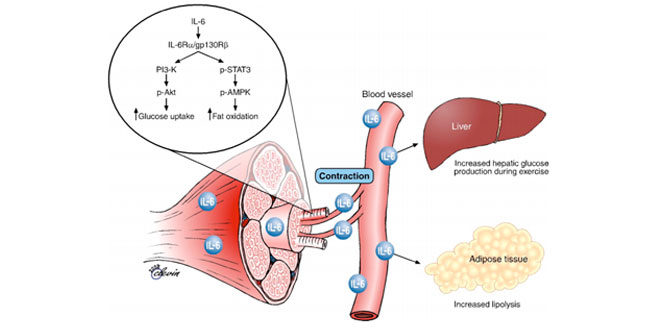
Myokines released with muscle contraction prevent our body fat from storing energy as fat (Original graph: Edward F. Adolph)
Conclusions
We see that weight training in obese people produces:
- Better insulin sensitivity in liver and muscle, reducing the risk of diabetes.
- Greater muscle mass, which translates into better glucose tolerance both short and long term
- Improved metabolic flexibility, increasing the ability to use fat as an energy source
- Release of myokines, which provide systemic benefits
And what recommendations are we giving to obese people?
“Walk, but not too intensely as it might cause problems” WRONG. Obese people should do both. Weight training helps improve the hormonal environment, which is totally off balance in obese people. Light cardio works because it makes the person burn more calories during the day, but the muscle impact is much gentler than the contraction caused by strength training.
The mistake many pros make is thinking “weight training” means loading 200 kg on squats and telling them to do 10 reps. Obviously, the load for an obese person will be much lighter than for a thin person, but enough to create metabolic stress.
So next time you hear “You’re obese, don’t do weights,” put on your headphones, hit play, and forget those words—your body will thank you.
Cheers!
Sources
- 1.Fatty acid cycling in the fasting rat. Kalderon B1, Mayorek N, Berry E, Zevit N, Bar-Tana J.
- 2.Metabolic effects of caffeine in humans: lipid oxidation or futile cycling? Kevin J Acheson, Gérard Gremaud, Isabelle Meirim, Franck Montigon, Yves Krebs, Laurent B Fay, Louis-Jean Gay, Philippe Schneiter, Charles Schindler, and Luc Tappy.
- 3.Dynamics of human adipose lipid turnover in health and metabolic disease. Arner P
- 4.Adipocyte triglyceride turnover and lipolysis in lean and overweight subjects. Mikael Rydén