 Fitness, Nutrition, Health and Sports Blog In the HSNstore Blog you will find tips about Fitness, sport in general, nutrition, and health – HSNstore.com
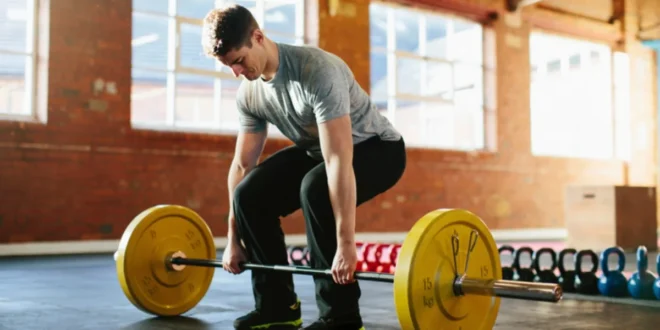

There are situations where variations of the breathing rhythm in weight training (inhale during the eccentric phase and exhale during the concentric phase) can be useful to protect ourselves, keeping proper posture and avoiding technical failure, as well as improving heavy lifts.
The Valsalva maneuver can be used by experienced people (not recommended for beginners) who are going to perform a structural-type exercise; that is, those that load the spine, like squats, standing military press, deadlifts, bent-over rows…
This breathing technique is characterized by holding your breath temporarily during part of the exercise. In it, the glottis (the narrowest part of the larynx) closes to prevent air from escaping the lungs while the abdominal and chest muscles contract. In other words, it’s about exhaling with your throat closed.
The result is that the diaphragm and deep torso muscles contract and generate intra-abdominal pressure against the inner walls of the abdomen, which helps support the spine from the inside out, significantly reducing compressive forces on it. Thus, better control of the inspiratory muscles even helps reduce lower back pain.

There are two ways to do it:
Option 1: Inhale on the eccentric
- Inhale during the eccentric phase (the easier part of the exercise) right before starting the concentric phase.
- Hold your breath during the hardest point.
- Then, exhale.
This method is better suited for exercises like the squat, where the hardest point is at the eccentric-concentric transition and the first degrees of leg extension.

Option 2: Inhale before the rep
- Inhale before starting a repetition.
- Hold your breath during the hardest point of the concentric phase.
- Then, exhale.
No doubt, the deadlift is the go-to exercise for this option.

Although the Valsalva maneuver can be applied both in multiple reps and when testing 1RM, it’s recommended to use it during maximal or near-maximal efforts, always followed by a brief exhale and inhale. For submaximal efforts with medium-high loads, the dynamic breathing we mentioned at the start of the article is recommended.
Contraindications
The benefits of intra-abdominal pressure shouldn’t be overestimated compared to the physiological effects caused by the Valsalva maneuver, especially in pregnant women, people with hypertension, or cardiovascular/cardiac problems. Isometric actions are also prone to be done with this breathing pattern, so they deserve special attention.
There’s a reduction in venous return and cardiac output that causes momentary hypotension during exercise. Baroreceptors, which detect these pressure changes, send a signal to the nervous system to raise heart rate, increase stroke volume, and peripheral resistance to restore normal blood pressure during exercise.

This mechanism also has an advantage from the myocardial oxygen consumption point of view, as it can considerably increase (more kcal burned) for the same mechanical work done compared to doing reps without the Valsalva maneuver.
In any case, it’s important to stress again that it requires strict technique and specialist supervision since it can lead to blood vessel rupture, fainting, ischemia, heart failure, or arrhythmias.
Sources
- Earle, R. W., & Baechle, T. R. (2008). NSCA Manual: Fundamentals of Personal Training. Barcelona. Ed. Paidotribo.
- Hackett, D. A., & Chow, C. M. (2013). The Valsalva maneuver: its effect on intra-abdominal pressure and safety issues during resistance exercise. The Journal of Strength & Conditioning Research, 27(8), 2338-2345.
- Janssens, L., McConnell, A. K., Pijnenburg, M., Claeys, K., Goossens, N., Lysens, R., … & Brumagne, S. (2015). Inspiratory muscle training affects proprioceptive use and low back pain. Medicine and science in sports and exercise, 47(1), 12-19.