Fitness, Nutrition, Health and Sports Blog In the HSNstore Blog you will find tips about Fitness, sport in general, nutrition, and health – HSNstore.com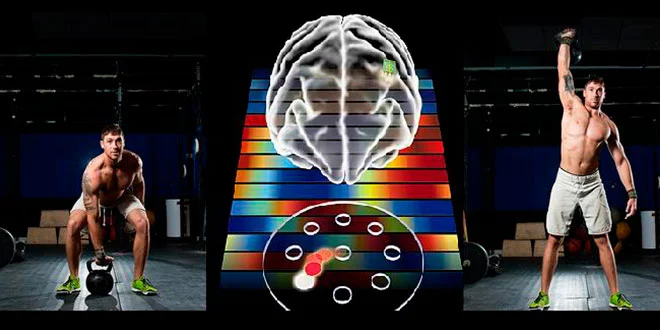

Memory networks
Memory is the result of the interconnection of different memory networks that spread throughout the cortex, reaching beyond the morphological limits of the cortex itself. Any cell can be part of many networks and therefore participate in many memories.
There are two key areas in the formation of memory networks: the hippocampus, which plays an important role in forming associative memory networks, and the amygdaloid nucleus, essential for evaluating the affective and emotional meaning of perceptions.

We can consider the existence of two memories, one motor and the other perceptive acquired through the senses; both are associative, distributed across the cortex, and hierarchically organized.
Perceptive memory
It’s distributed across the parietal, temporal, and occipital lobes, extending from primary sensory areas to associative areas, converging in the limbic zones of the temporal lobe, especially in the hippocampus.
When faced with a specific perception, different memories activate, allowing us to gather a lot more information than what comes as a stimulus. For example, when seeing a ball, different memories get triggered:
- The sensory memory that tells us the color, size, helping us distinguish it from other balls…
- The episodic memory through which we recall a game we played in, the stands, the playing field.
- The semantic memory that helps us understand the meaning of the word ball.
- The conceptual memory that makes us remember the concept of basketball or sport.

Motor memory
It occupies the space of the frontal lobe, and here the networks extend from the most anterior associative area to the primary motor cortex. Motor memory is executive and represents motor acts and behaviors.
- 1º level or lower level: Spinal cord, where there’s an elementary segmental motor memory with a reflex pattern.
- 2º level: Brainstem, where a more generalized memory exists with coordination patterns and reflex regulation.
- 3rd level: Innate memory, related to basic motivations. This level consists of the basal nuclei, thalamus, and should include the cerebellum, where automation of learned movements takes place.
- 4º level: Motor cortex of the frontal lobe.
Each of these levels dominates those below it and can modify the response established by lower levels.
When a motor gesture is repeated, the memory network gets stored in the prefrontal region during learning. Once the motor sequence is learned, the gesture becomes automatic, shifting to cerebellum-dependent control, although certain tasks, like correcting the gesture in response to a contingency, still depend on the motor cortex.

Sources
- Calderón Montero, FJ.; Legido Arce, JC. (2002). Neurophysiology applied to sport. Editorial Tebar. Madrid.
- Hall, JE. (2011). Guyton and Hall. Textbook of medical physiology 12 ed. Elsevier Spain.