Fitness, Nutrition, Health and Sports Blog In the HSNstore Blog you will find tips about Fitness, sport in general, nutrition, and health – HSNstore.com

We analyze the best water temperature to achieve optimal hydration
Heat stress triggers thermoregulatory responses including sweating and skin vasodilation, which can lead to dehydration.
Importance of staying hydrated
Most athletes don’t drink enough to offset sweat losses during exercise because the thirst stimulus appears late, maybe when 2% of body weight is already lost, and this level of dehydration is enough to affect sports performance and thermoregulatory capacity.
fluid intake improves dehydration and at least partially removes the inhibition of thermoregulatory responses (rise in body temperature, fatigue…).
The ability to exercise in the heat depends not only on replacing lost fluids but also on the availability of carbohydrates as substrates for active muscles
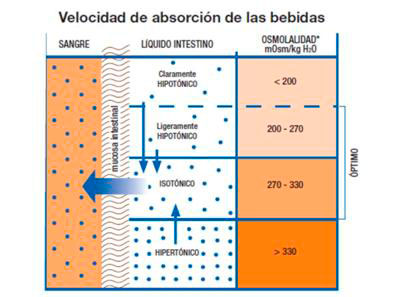
As we’ve seen in other articles, the rate at which water and substrates can be replaced during exercise is limited by gastric emptying (GE) and intestinal absorption; although it’s unclear which process is the limiting factor, it’s usually assumed that the GE rate determines the maximum rate of fluid and substrate delivery.
Gastric emptying and water temperature
Two variables that affect GE are intake volume and drink temperature, closely linked (the more pleasant the temperature, the more liquid is consumed)
Focusing on water as the main component of drinks—if not the only one—let’s see how its temperature influences how much is drunk and how homeothermia (body temperature balance) is maintained.
Existing literature usually analyzes 4 drink temperatures:
- Very cold, refrigerated (3-5ºC)
- Cool, tap water (15-20ºC)
- Warm, room temperature; or hot (24-37ºC)
- Very hot (>50ºC)
Comparing these, gastric emptying is slower for cold solutions than for hot ones, however, drinking hot water seems intolerable for hydration due to the extra heat load it would add to an already high body temperature.
Cold drinks are more appealing because of their thermoregulatory effect (they lower body temperature and reduce sweating rate).
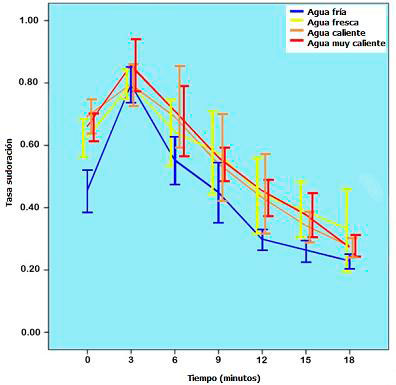
Room temperature or cool water?
Between cool and room temperature options, there’s a clear difference in favor of the first when looking at the amount of liquid consumed
As you can see in the following graph, drinking liquids (water) at cool temperature (14-16ºC) facilitates “ad libitum” intake (voluntary, as much as you want) and this falls within optimal hydration ranges (500-600 ml per serving), also significantly reducing involuntary dehydration.
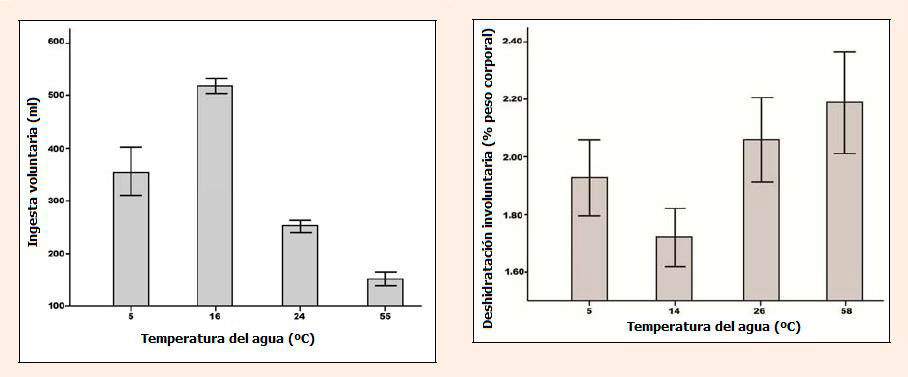
Therefore, athletes should be educated on the need to increase fluid intake even without thirst stimulus, in temperature ranges of 15-20ºC for greater intake.
Also, it’s advised not to exceed 700 ml per serving, as this is the minimum volume limit from which gastric emptying delays at cool temperature, potentially causing stomach issues.
Sources
- Chicharro, J. L., & Vaquero, A. F. (2006). Exercise Physiology. Madrid. Ed. Médica Panamericana.
- Hosseinlou, A., Khamnei, S., & Zamanlu, M. (2013). The effect of water temperature and voluntary drinking on the post rehydration sweating. International Journal of Clinical and Experimental Medicine, 6(8), 683.
- Hosseinlou, A., Khamnei, S., & Zamanlu, M. (2014). Voluntary drinking versus imposed drinking in the methodology of investigations about the drinking-induced thermoregulatory sweating. International Journal of Clinical and Experimental Medicine, 7(10), 3757.
- Khamnei, S., Hosseinlou, A., & Zamanlu, M. (2011). Water temperature, voluntary drinking and fluid balance in dehydrated Taekwondo athletes. Journal of Sports Science & Medicine, 10(4), 718.
Related Posts
- Staying Hydrated with Water-Rich Fruits and Vegetables
- Health Benefits of Seawater
- Mineral Salts: Importance of Hydration
- Water Exercises: Benefits of Aquagym
- Oxygen-Enriched Water