Fitness, Nutrition, Health and Sports Blog In the HSNstore Blog you will find tips about Fitness, sport in general, nutrition, and health – HSNstore.com

High LDL cholesterol levels are one of the major health problems affecting many people worldwide.
What is cholesterol?
Cholesterol is vital for the human body. It is involved in the structure of cell membranes, as well as in the production of a variety of hormones. In addition, it is essential for bile acid synthesis and plays a role in energy metabolism.
It is a substance from the lipid family that we find naturally in our body and in some of the foods we consume through our diet, and it is essential due to its role in certain important bodily functions.
Functions of cholesterol
- Covers neuronal connections in the brain, helping to promote proper synapse or communication between them.
- Participates in the formation of tissues and membranes.
- Participates in the formation of vitamin D, essential for proper bone mineralization.
- Forms part of various hormones such as estrogen and testosterone.
- Forms part of bile acid.
- Participates in energy metabolism.
Plaques can narrow arteries or even block them, leading to atherosclerosis and cardiovascular disease.
Risks
There is a large amount of information indicating that high LDL cholesterol levels are strongly associated with an increased risk of coronary heart disease. When LDL cholesterol levels are high, cholesterol is deposited on artery walls and forms a hard substance called plaque.
Cholesterol levels are measured in milligrams per deciliter of blood (mg/dl). To prevent excess cholesterol from accumulating in our arteries, it is important to maintain balanced cholesterol levels in the blood—meaning high HDL cholesterol and low LDL cholesterol.
To clarify all doubts on this subject, we will now explain the different types of cholesterol, which one is considered good, which one bad, and how each of them works.
Types of cholesterol
When we eat food, the fat it contains also enters our body, and the body must digest and transport it to various tissues so it can perform its functions.
This combination leads to the formation of several types of lipoproteins that vary in composition, weight, and function. In short, a lipoprotein consists of a fat core (insoluble in water) surrounded by proteins and phospholipids, with a water-soluble outer layer.
Depending on the amount of protein bound and the type of fat they contain, lipoproteins are more or less dense.
Fat has a lower density, so the more lipids (fat) there are in relation to the amount of protein or phospholipids, the less dense the lipoprotein will be, and it will be classified as low density. Low-density lipoproteins (LDL) are known as bad cholesterol.
Positive cholesterol
Opposing LDL cholesterol, HDL cholesterol is made up of lipoproteins with higher density that collect excess cholesterol in the blood and transport it to the liver. Therefore, HDL cholesterol is also known as “good” cholesterol.
In summary, there are 4 types of lipoproteins, all of which are important because they are mainly responsible for transporting lipids throughout the body; however, the most important for health are high-density lipoproteins (HDL) and low-density lipoproteins (LDL).

Low-density lipoproteins
- These lipoproteins are not harmful by themselves; their main purpose is to transport cholesterol to body tissues, but an excess can accumulate on the walls of veins and arteries.
- They contain much more fat than protein.
- The fat they contain adheres to elastin in vein walls, promoting atherosclerosis.
High-density lipoproteins
- They contain proportionally more protein than fat.
- The proteins they contain have an affinity for cholesterol and fats circulating in the blood, allowing them to “sweep up” cholesterol and fats as they move through the bloodstream and transport them to the liver, where they are processed, preventing lipids from accumulating on vein and artery walls and forming plaques (arteriosclerosis).
- They promote the “mobilization of old cholesterol” for the creation of cell membranes.
- In a way, they are responsible for cleaning the circulatory system of fats that were stagnant on artery and vein walls.
Tips to reduce cholesterol
To lower LDL levels and raise HDL levels, you should:
- Reduce consumption of processed foods high in saturated and trans fats (pastries, industrial baked goods, and ready-made meals made with partially hydrogenated vegetable oils—trans fats).
- Reduce consumption of certain animal-based high-fat foods (aged cheeses, cured meats, butter, etc.).
- Increase consumption of plant-based fats (olive oil, avocado, walnuts, corn, peanuts, flaxseed, etc.).
- Increase fiber intake in your diet (fruits, vegetables, cereals, etc.).
- Exercise, walk, or try to engage in some form of physical activity daily.
- Increase consumption of fish or products containing omega-3 fatty acids.
- Monitor your weight and maintain it at healthy levels, or lose weight if necessary.
- Undergo regular medical check-ups that include total cholesterol, HDL, and LDL analysis. In cases where lipoprotein imbalances are due to metabolic or genetic factors, a doctor should prescribe appropriate treatment so that, combined with the recommendations above, the desired results can be achieved.

Natural products to control cholesterol
In this article, we show you some of the most beneficial natural supplements to help maintain LDL cholesterol at healthy levels:
| Niacin | Niacin is a B-complex vitamin with great potential to reduce LDL cholesterol levels (bad cholesterol) and triglycerides, while increasing HDL cholesterol (good cholesterol). |
| Soy isoflavones | Soy isoflavones are plant compounds with antioxidant action that help reduce LDL cholesterol and improve cardiovascular health, helping to decrease cholesterol oxidation and promote a more balanced lipid profile. |
| Soy lecithin | Soy lecithin is a natural source of phospholipids that helps emulsify and transport fats in the body, promoting the reduction of LDL cholesterol and preventing its accumulation on arterial walls. |
| Garlic extract | Garlic extract contains bioactive sulfur compounds that help reduce total cholesterol, LDL cholesterol, and triglycerides, while also improving circulation and exerting a protective effect on the cardiovascular system. |
| Policosanol | Policosanol is a complex of natural alcohols that helps reduce LDL cholesterol and increase HDL cholesterol, supporting hepatic cholesterol synthesis regulation and improving cardiovascular health. |
| Omega-3 fatty acids | Omega-3 fatty acids, especially EPA and DHA, help reduce blood triglyceride levels, improve blood vessel elasticity, and contribute to maintaining a healthy lipid profile and normal heart function. |
| Red yeast rice | Red yeast rice contains monacolin K, a natural compound that helps reduce LDL cholesterol and total cholesterol by inhibiting hepatic cholesterol synthesis, contributing to cardiovascular health. |
| Plant sterols | Plant sterols are plant-based compounds that reduce intestinal cholesterol absorption, helping to lower LDL cholesterol levels without negatively affecting HDL cholesterol. |
| Pectin | Pectin is a soluble fiber that helps reduce LDL cholesterol by binding to bile acids in the intestine, promoting their elimination and contributing to cholesterol control and digestive health. |
| Berberine | Berberine is a bioactive plant compound that helps reduce LDL cholesterol and triglycerides, improves insulin sensitivity, and supports lipid metabolism regulation, promoting cardiovascular health. |
| Coenzyme Q10 | Coenzyme Q10 is an essential antioxidant for cellular energy production that helps protect the cardiovascular system, improves endothelial function, and helps prevent oxidative stress associated with high cholesterol. |
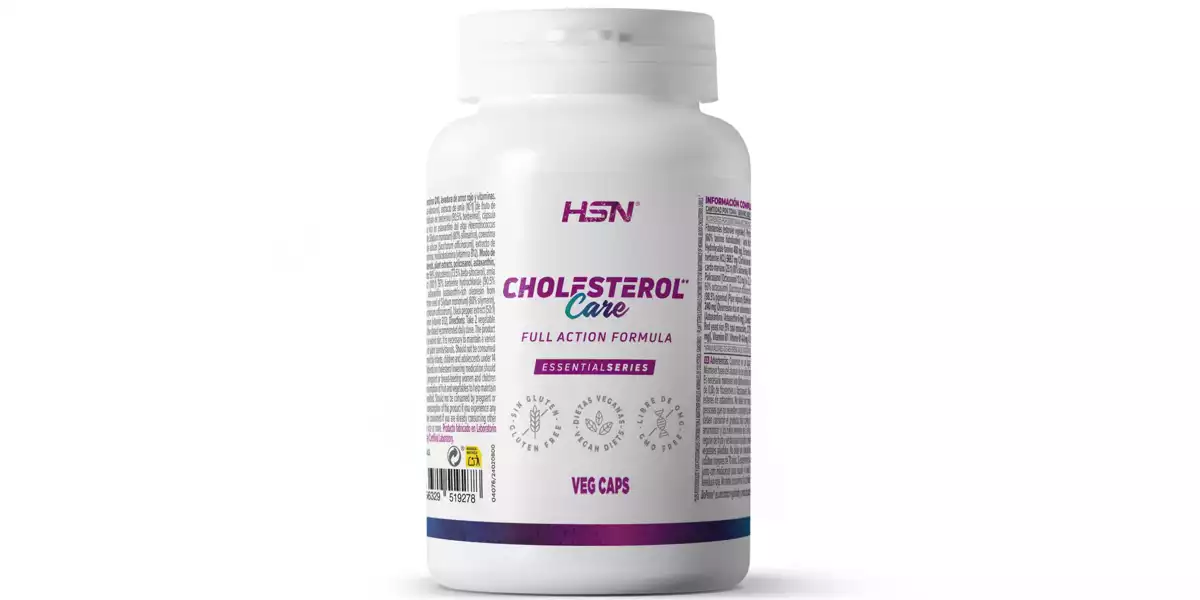
Cholesterol Care by EssentialSeries
Healthy lifestyle
Although the products mentioned above can be very helpful in reducing cholesterol levels, they are completely ineffective if they are not combined with a healthy lifestyle.
It is also very important to engage in regular physical exercise according to each person’s physical and clinical condition. Once these factors are under control, it is time to add some type of dietary supplement to support the reduction of LDL cholesterol.
Related posts on this topic:
- Foods that reduce cholesterol
- Keys to a fitness lifestyle
- 12 benefits of practicing sport for health
- Why are good habits important from childhood?
- Properties and benefits of apple pectin