New study done with HSN caffeine!
Scientists from the Universities of Seville and Alcalá have chosen HSN caffeine as the benchmark for maximum purity and quality to carry out their research. You can read more about the study here.
Caffeine tablets - A classic within your reach
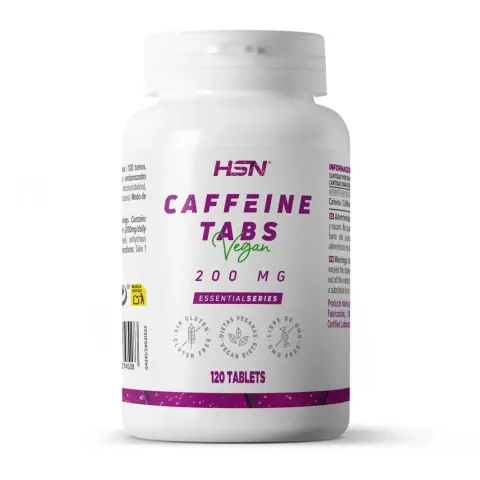
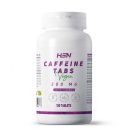
Caffeine 200mg from EssentialSeries is a food supplement in tablet/compressed form, made with synthetic caffeine as the main ingredient.
Caffeine can be found in many foods in the usual diet of people worldwide, but caffeine tablets are a more convenient way to consume an effective dose of this alkaloid to enjoy its functional effects. Plus, thanks to this format, you can avoid the characteristic taste of the main source of caffeine in food: coffee, if you’re not a fan of it.
HSN’s Caffeine 200mg comes in small, fast-release tablets for more effective use and to enjoy them without taste.
High potency dose - Effectiveness and safety
200mg per tablet - why this dose?
When defining a caffeine dose in a pre-dosed format like tablets, it’s important to decide what dose to use, as it greatly affects compatibility with people who are more or less sensitive and the need to take more or fewer units.
For us, it’s always been clear: 200mg of pure caffeine is the best dose.
Considering that the minimum effective dose to notice significant effects on concentration is 75mg, and the ergogenic dose of caffeine is around 3mg/kg of body weight (210mg for 70kg); 200mg is the ideal average dose to fully benefit from caffeine’s properties regardless of the goal or individual sensitivity.
Uncoated tablets - Fast dispersion
The uncoated tablet format has several important advantages from a functional and consumer perspective.
First, these tablets offer faster caffeine release in the body, since they don’t need extra time to dissolve a coating. This can be especially beneficial for people seeking a quick effect, like those needing a rapid boost in mental alertness or immediate prep for sports.
Also, since uncoated tablets are basically compressed caffeine with very few agents to help compression and maintain it, purity in the formula is a plus for users concerned about unnecessary additives.
HSN’s uncoated caffeine tablets are a practical, simple, and convenient way to use high-concentration caffeine.
Small-sized tablets for easy intake
Tablets without fillers can be made smaller, as we’ve done at HSN with caffeine. This offers a big advantage in terms of comfort and ease of use.
For many consumers, especially those who struggle swallowing big pills, smaller tablets are much easier and more comfortable to take. This is especially relevant for caffeine, as it can be used by a wide range of people, including those looking for a quick 'kick' before studying or training, who don’t have to be used to taking large capsules or tablets, since caffeine might be the only product they use.
Another important advantage of the small size is portability. Users can conveniently carry caffeine with them, whether at work, school, or during exercise. This portability allows quick and easy access to caffeine, which is especially useful for those with set intake times who aren’t at home when they need it.
In short, the small tablet format was purposely developed to offer a more practical and comfortable way to use caffeine.
Synthetic caffeine vs natural caffeine, which to choose?
Synthetic caffeine and natural caffeine are chemically identical. Both forms have the same molecular structure, C8H10N4O2, meaning regardless of origin, they act the same way in the human body. Caffeine’s potency isn’t affected by whether it comes from a natural source like coffee or tea, or if it’s synthetically produced in a lab. Both forms metabolize the same way, producing the same effects at the same level.
The choice between synthetic and natural caffeine is therefore a matter of personal preference and context. Some prefer natural caffeine because they associate it with coffee’s origin, others may opt for synthetic caffeine for convenience and often a more affordable price.
In short, the decision depends on individual preferences, not differences in caffeine’s effectiveness itself.
If you want to use natural caffeine, you can do so with HSN’s vegetable capsule option: Natural Caffeine 200mg Capsules.
Tablets vs capsules, which suits me better?
Caffeine tablets and capsules mainly differ in shape, composition, and dissolution time.
Tablets have dissolution and absorption in the body that can be a bit slower compared to capsules if coated, but when uncoated, like HSN’s caffeine tablets, their breakdown and absorption is often faster than capsules.
Still, caffeine absorption in the stomach is very similar between both forms, and any noticeable change depends on product formulation, so it’s not comparable across brands or different galenic compositions.
The choice between tablets and capsules depends on personal preferences and specific goals. Some find one easier to swallow than the other, which will be the main factor influencing your choice. In any case, both forms effectively provide caffeine’s benefits and have the same properties when dosed equally.
The decision depends on personal comfort and usage preferences.
What about powder?
Caffeine tablets offer significant advantages in terms of transport convenience and precise dosing. Being compressed into a solid, stable form, tablets are easy to carry anywhere—in a bag, backpack, or even a pocket. This portability makes them ideal for people needing a quick, convenient caffeine dose while out and about. Also, tablets provide precise dosing, as each contains 200mg here, eliminating the need to measure and ensuring consistent intake every time. This precision is crucial for those carefully controlling caffeine intake to avoid adverse effects from overconsumption.
On the other hand, caffeine powder offers unmatched flexibility to combine with other compounds in custom formulas that can be prepared by mixing it with other 'RAW' food supplements.
Caffeine powder is ideal for more experienced users who make their own blends in homemade pre-workout formulas, as it can be easily measured and adjusted to get the exact dose needed each time.
Usually, predosed caffeine formats (tablets or capsules) are recommended for people not used to caffeine or looking for a convenient way to take it anytime, anywhere.
While caffeine powder is preferred by those who only use caffeine at home and usually combine it with other powdered food supplements to prepare their own mixes based on their interests.
If you’re looking for caffeine powder, you can also find it at HSN, click HERE.
How much is 200mg? Equivalent in common foods
Caffeine amounts in foods vary greatly depending on cultivation (for coffee and tea), brand, and preparation, but some references for the amount equivalent to 200mg as provided by one HSN tablet are:
- Between 2 and 3 average-sized black coffees, prepared normally in a moka pot.
- About 3 large cups of black tea.
- More than 2 liters of traditional cola drinks.
- A bit more than one large can (500ml) of energy drink.
- 3 tablespoons of instant soluble coffee.
As you can see, caffeine tablets are much more practical than many of these options, allowing you to avoid the taste, sugar, and any other characteristics that come with those foods.
Caffeine properties you might be interested in
Caffeine is a compound widely used especially by athletes and students, as this alkaloid, consumed under certain established conditions, has beneficial properties for academic and sports performance.
To improve concentration and alertness, you need at least 75mg; these are the main effects why caffeine is so popular among students.
To improve endurance capacity, athletes use doses of 3mg/kg body weight, one hour before physical exercise.
Caffeine is one of the most scientifically studied food supplements with the most solidly established properties, almost on par with creatine monohydrate, and is considered an essential part of a pre-workout combo with stimulants or a nootropic formula for students.
FAQ
If I’m sensitive to caffeine, can I take this product?
It depends on your sensitivity, but probably not.
If you’re someone who negatively feels the effects of a cup of coffee because your caffeine metabolism isn’t positive, 200mg caffeine is too high a dose for you.
Until what time in the afternoon can I take caffeine?
It’s usually recommended to take caffeine no later than 6 hours before bedtime so it doesn’t affect falling asleep, but this depends greatly on user sensitivity, as some people can use caffeine before late afternoon-evening workouts and sleep fine.
Do I need to take caffeine pills with food?
No, it’s not necessary, but on an empty stomach the stimulant effect may be more noticeable.
What to combine caffeine with before training?
The best products are:
What to combine caffeine with before studying?
You can combine it with:
Scientific references
- Szumiło, M., ͆wiąder, K., Belniak, P., Wojciechowska, J., & Poleszak, E. (2015). The influence of excipients on physical properties of tablets and dissolution of caffeine. Acta Poloniae Pharmaceutica - Drug Research, 72(4), 791–797.
- Grgic, J., Grgic, I., Pickering, C., Schoenfeld, B. J., Bishop, D. J., & Pedisic, Z. (2019). Wake up and smell the coffee: Caffeine supplementation and exercise performance - An umbrella review of 21 published meta-analyses. British Journal of Sports Medicine.
- Perera, V., Gross, A. S., & McLachlan, A. J. (2012). Measurement of CYP1A2 activity: a focus on caffeine as a probe. Current Drug Metabolism, 13(5), 667–678.
- Drake, C., Roehrs, T., Shambroom, J., & Roth, T. (2013). Caffeine effects on sleep taken 0, 3, or 6 hours before going to bed. Journal of Clinical Sleep Medicine : JCSM : Official Publication of the American Academy of Sleep Medicine, 9(11), 1195–1200.
- Cappelletti, S., Daria, P., Sani, G., & Aromatario, M. (2014). Caffeine: Cognitive and Physical Performance Enhancer or Psychoactive Drug? Current Neuropharmacology, 13(1), 71–88.
- Fisone, G., Borgkvist, A., & Usiello, A. (2004). Caffeine as a psychomotor stimulant: Mechanism of action. Cellular and Molecular Life Sciences, 61(7–8), 857–872.