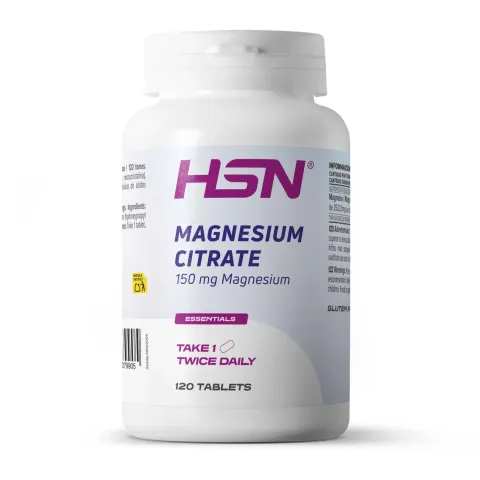
What is our Magnesium citrate?
Magnesium citrate from EssentialSeries is a food supplement in tablet form designed to complement your diet with this mineral. We use magnesium in citrate form, a compound that binds the mineral to citric acid.
Magnesium is a nutrient we get from food. It’s found in everyday foods such as nuts, pulses and whole grains, and plays a part in functions that matter to our daily lives.
As well as contributing to normal muscle function, magnesium contributes to the normal functioning of the nervous system. It also contributes to normal energy-yielding metabolism and electrolyte balance, which relates to the balance of minerals in the body.
HSN quality and a composition you can understand
We choose citrate as our source of magnesium and offer it in tablets suitable for vegetarians and vegans. A practical format if you prefer to take this mineral separately and organise supplements around your diet and needs.
Elemental magnesium: the amount of mineral that matters. Citrate contains magnesium and a citric acid component. When we talk about elemental magnesium, we mean the actual amount of the mineral the product provides. At HSN, we clearly show this figure so you can compare and choose with confidence.
We develop and manufacture supplements in our own facilities, paying close attention to the selection of raw materials and the production process. That’s how we bring to life the idea that’s been with us from the start: quality at the right price.
Who might our Magnesium citrate be right for?
- For adults who want to complement their magnesium intake. It may be worth considering if you don’t eat many pulses, seeds, nuts or whole grains and want a specific source of the mineral while adding more variety to your meals.
- For those who train and pay attention to their diet. If you do strength training, running, cycling, swimming or team sports, magnesium can be part of your nutrition plan when you need to complement your intake. Its contribution to normal muscle function makes it relevant to an active routine.
- For those who appreciate a simple format. Tablets are easy to take with you and can be taken with water whenever it best fits your day. They’re also suitable for a vegetarian or vegan diet.
For athletes, it’s important to look at the diet as a whole, especially when food intake is reduced or certain food groups are restricted to compete in weight categories, for example. The joint statement on sports nutrition published in 2016 by the American College of Sports Medicine (ACSM), the Academy of Nutrition and Dietetics and Dietitians of Canada highlights its importance.
Magnesium-rich foods to add to your meals
Foods that stand out for their magnesium content include pumpkin seeds and chia seeds, along with nuts such as almonds and cashews. You can add them to yoghurt, use them in a salad or include them in breakfast.
Pulses, such as beans, lentils and chickpeas, also provide magnesium. So do whole grains, including oats, brown rice and wholemeal bread, which give you plenty of ways to vary your meals.
Leafy green vegetables, such as spinach, are another food source of this mineral. Combining different food groups throughout the week helps spread your intake across several meals.
Oats and seeds for breakfast, pulses for lunch or a salad with leafy greens and nuts are simple ways to include more magnesium in your diet. Our product can help you complement that intake when you need to.
How to fit magnesium into your daily routine
Link it to a habit you already have. You can take the tablets with water alongside one of your meals, following the directions on the label. Choosing a regular time is often easier than planning to take them around a workout that happens at a different time each day.
If you train in the morning, you can fit it into your meal routine for the day; if you train in the afternoon, you can stick to the same habit. How you use it should reflect your nutrition plan and the magnesium intake you want to complement, on both training and rest days.
The Spanish Agency for Food Safety and Nutrition (AESAN) reminds us that food supplements should be used as part of a varied, balanced diet and healthy lifestyle habits. At HSN, we encourage you to maintain a healthy lifestyle.
Recommended combinations based on your goal
Vitamin D3: to complement your intake of nutrients related to bone health
If your diet or nutrition plan also calls for extra vitamin D, you can use our Vegan vitamin D3, sourced from lichen. Vitamin D contributes to the maintenance of normal bones, as does magnesium.
This combination lets you include both nutrients separately and organise how you use them according to your needs, including if you follow a vegan diet.
Protein: a practical combination if you do strength training
If you want to round out your protein intake, our Evowhey protein can be used to make a shake or add protein to breakfasts and snacks. Protein contributes to the maintenance of muscle mass, while magnesium contributes to normal protein synthesis.
A practical way to organise this routine is to use protein to round out a meal that’s low in it and take magnesium citrate with water at your usual time.
Sports drink: to plan endurance sessions
If you do cycling, long-distance running or triathlon, you could consider Evotonic to prepare a drink with carbohydrates and mineral salts for longer sessions.
As part of this plan, Magnesium citrate can complement your daily intake of the mineral, while the sports drink can be used during activity according to the session’s fluid and nutrition needs.
Other magnesium options in our range
At HSN, we offer different forms and formats of magnesium so you can choose what suits you best. Here are some alternatives to our Magnesium citrate tablets:
| Alternative | What it offers | When it might suit you |
| Magnesium citrate powder | The citrate form in a powder format from RawSeries. | If you prefer to add the product to a drink. |
| Magnesium bisglycinate | Magnesium bound to glycine, in vegetable capsules. | If you’re looking for the bisglycinate form and prefer capsules. |
| Magnesium malate | Another way to get magnesium, available in tablets. | If you prefer malate and want to stick with tablets. |
| Cognimag | Combines Magtein® and ATA Mg® with vitamin B5. | If you’re looking for a formula with pantothenic acid, which contributes to normal mental performance. |
When choosing, consider the form of magnesium, the amount of elemental magnesium and the format you find most convenient. These options let you tailor your choice to how you prefer to use it.
Frequently asked questions about our Magnesium citrate
What’s the best magnesium for athletes?
Your choice should fit your diet, the intake you need to complement and how you prefer to take it. Our citrate tablets are a practical option if you want to take magnesium separately. If you’re unsure, our Nutrinfo team can help you assess which form and format are best for you.
Is it better to take it in the morning or at night?
You can choose the time that best fits your routine, while following the directions for use. Taking it with breakfast, lunch or dinner may help you remember. The most practical approach is to find a habit you can stick to.
Do I need more magnesium if I train more?
Training volume is one of the factors to consider when planning your diet, along with what you eat and your individual needs. Before changing your intake, it’s worth reviewing your diet as a whole and the products you already use, without exceeding the recommended daily dose.
Can I combine different types of magnesium?
Some formulas contain several sources of magnesium. If you use separate products, keep track of the total amount of elemental magnesium and follow the directions on each pack. Choosing an option that covers your planned intake can make your routine simpler.
Our Magnesium citrate makes it easy: an excellent source of magnesium, a clearly stated amount and tablets suitable for vegans. Choose convenience with our own manufacturing and HSN quality at a fair price.
References
- Jahnen-Dechent, W., and Ketteler, M. (2012). Magnesium basics. Clinical Kidney Journal, 5(Suppl. 1), i3–i14. DOI: 10.1093/ndtplus/sfr163.
- Thomas, D. T., Erdman, K. A., and Burke, L. M. (2016). American College of Sports Medicine Joint Position Statement. Nutrition and Athletic Performance. Medicine & Science in Sports & Exercise, 48(3), 543–568. DOI: 10.1249/MSS.0000000000000852.
- Touyz, R. M., de Baaij, J. H. F., and Hoenderop, J. G. J. (2024). Magnesium Disorders. The New England Journal of Medicine, 390, 1998–2009. DOI: 10.1056/NEJMra1510603.